Autonomous Logistics: Level 4 Trucking Corridors for 48-Hour Supply Chains
Advertisements
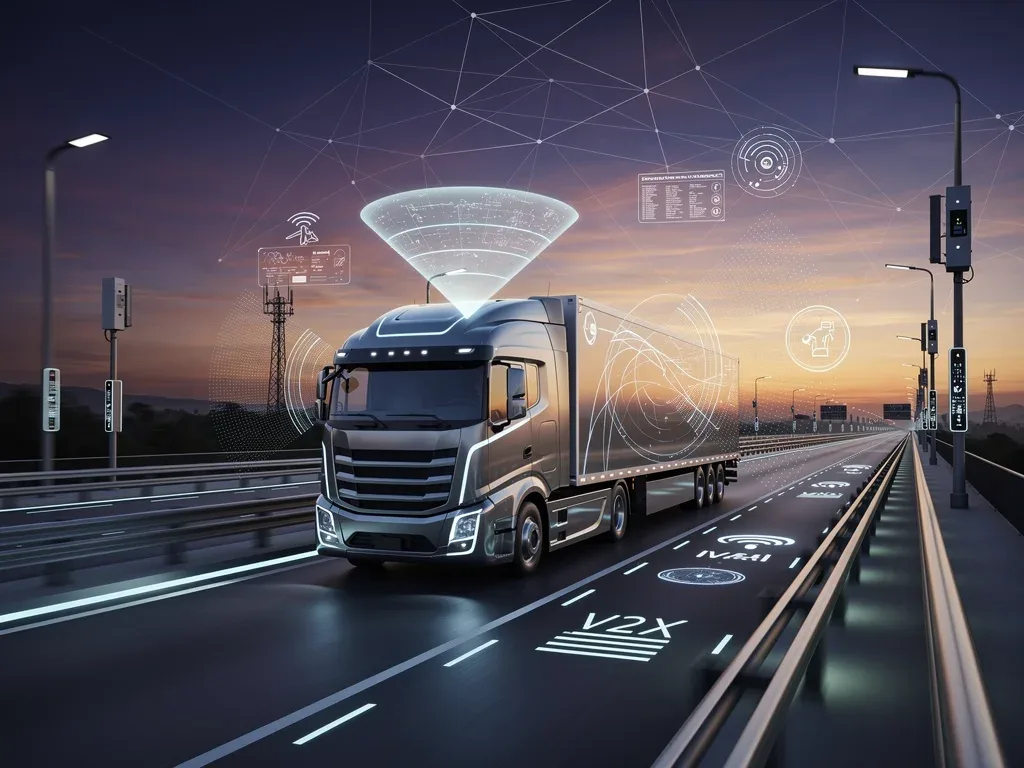
The advent of autonomous logistics fleets operating within nationwide Level 4 trucking corridors is poised to redefine supply chain dynamics, facilitating 48-hour delivery windows across the United States.
The landscape of logistics is on the cusp of a monumental transformation, driven by the emergence of autonomous logistics fleets and the strategic development of nationwide Level 4 trucking corridors. This paradigm shift promises to compress delivery times, enhance safety, and fundamentally alter how goods move across the vast expanse of the United States. Imagine a future where goods traverse thousands of miles within a mere 48 hours, a vision rapidly transitioning from concept to tangible reality.
Understanding Level 4 Autonomy in Trucking
Level 4 autonomy represents a significant leap forward in self-driving technology, distinguishing itself from earlier stages by its ability to operate independently under specific conditions without human intervention. This level is crucial for the efficient and safe deployment of autonomous logistics fleets on designated trucking corridors. Unlike Level 3, where a human driver must be ready to take over, Level 4 systems can handle all driving tasks within their operational design domain (ODD), which in this context, refers to the planned trucking corridors.
The implications of Level 4 autonomy for long-haul trucking are profound. It means trucks can travel for extended periods without mandatory rest stops for drivers, significantly increasing operational hours and reducing transit times. This capability directly underpins the ambition of achieving 48-hour supply chains, as the continuous movement of goods becomes a tangible reality. The technology relies on a sophisticated array of sensors, AI algorithms, and high-definition mapping to navigate, perceive surroundings, and make real-time driving decisions.
Key Characteristics of Level 4 Autonomous Trucks
Level 4 autonomous trucks are equipped with advanced systems that allow for highly automated driving. These systems are designed to manage complex road scenarios and environmental conditions within their designated operational zones.
- Sensor Fusion: Integrating data from cameras, radar, lidar, and ultrasonic sensors for a comprehensive view of the environment.
- High-Definition Mapping: Utilizing pre-mapped routes with extreme precision for accurate localization and path planning.
- Redundant Systems: Implementing backup systems for critical functions to ensure safety in case of component failure.
- Advanced AI Algorithms: Employing machine learning for decision-making, predictive analysis, and adaptive driving.
The development of Level 4 autonomy is not just about technology; it's about building trust and regulatory frameworks that ensure these vehicles can operate safely and reliably on public roads. Collaboration between tech companies, manufacturers, and government bodies is essential to establish the necessary standards and infrastructure for widespread adoption. This foundational understanding sets the stage for envisioning truly autonomous logistics fleets.
The Vision of Nationwide Trucking Corridors
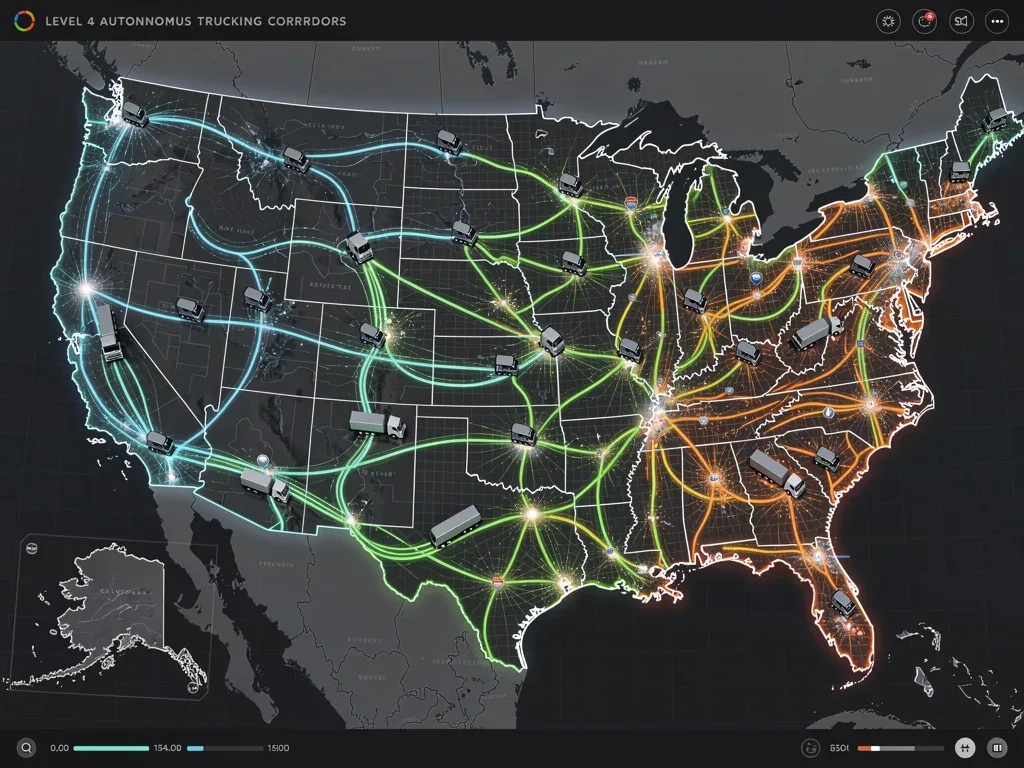
The concept of nationwide Level 4 trucking corridors is central to unlocking the full potential of autonomous logistics fleets. These are not merely existing highways with autonomous trucks but rather specially designated and potentially adapted routes designed to optimize the operation of self-driving vehicles. Such corridors would feature enhanced digital infrastructure, communication networks, and perhaps even dedicated lanes to facilitate seamless and continuous autonomous operations.
The creation of these corridors would involve significant investment in infrastructure, including advanced V2X (Vehicle-to-Everything) communication systems, high-precision GPS, and potentially charging or refueling stations specifically designed for autonomous vehicles. These dedicated routes would allow autonomous trucks to operate at peak efficiency, minimizing human interaction and maximizing speed and consistency. The strategic placement of these corridors would connect major manufacturing hubs, distribution centers, and ports across the country.
Strategic Design and Implementation
Designing effective autonomous trucking corridors requires careful planning and coordination. It's not just about drawing lines on a map but creating an ecosystem where autonomous vehicles can thrive.
- Digital Infrastructure: High-bandwidth communication for real-time data exchange and remote monitoring.
- Smart Roadside Units: Sensors and communication devices embedded in infrastructure to provide additional environmental data.
- Designated Rest Areas: Safe and secure locations for human operators to take over for the 'first and last mile' or for maintenance.
- Interstate Collaboration: Coordinated efforts among states to ensure seamless transitions across borders.
The idea is to create a 'digital railway' for trucks, where the vehicles operate with machine-like precision and predictability. This predictability is a cornerstone for guaranteeing the 48-hour delivery promise. By minimizing unexpected delays and maximizing continuous movement, these corridors will become the backbone of future supply chains. The vision extends beyond mere transportation; it encompasses a holistic approach to logistics where infrastructure, technology, and operational protocols converge.
Impact on 48-Hour Supply Chains
The convergence of autonomous logistics fleets and Level 4 trucking corridors is poised to dramatically transform supply chains, making 48-hour deliveries a standard rather than an exception. This ambitious goal is achievable due to several key factors that autonomous trucking uniquely offers. Firstly, the ability for trucks to operate continuously without mandated human rest periods means goods can move around the clock, significantly reducing transit times. This non-stop operation directly addresses one of the biggest bottlenecks in traditional long-haul trucking.
Secondly, autonomous systems are designed for optimal fuel efficiency and consistent speeds, leading to more predictable arrival times. This predictability allows for tighter scheduling and better inventory management across the entire supply chain. Companies can reduce their reliance on buffer stock, freeing up capital and warehouse space. The precision of autonomous navigation also minimizes deviations and potential delays caused by human error or unexpected route changes.
Furthermore, the reduction in human-related operational costs, such as driver wages and benefits for long-haul segments, could lead to more cost-effective transportation. These savings, combined with improved efficiency, translate into a more agile and responsive supply chain, capable of meeting the ever-increasing demands of consumers and businesses for faster delivery. The shift to 48-hour supply chains will necessitate a re-evaluation of current logistics models and a greater emphasis on integration and automation at every stage.
Benefits for Logistics and Consumers
The ripple effect of 48-hour supply chains extends far beyond just faster delivery. It creates a cascade of benefits for various stakeholders.
- Reduced Inventory Costs: Businesses can operate with leaner inventories due to predictable and rapid replenishment.
- Enhanced Freshness: Perishable goods can reach consumers faster, extending shelf life and reducing waste.
- Increased Competitiveness: Companies offering 48-hour delivery gain a significant edge in the market.
- Improved Customer Satisfaction: Consumers benefit from quicker access to products, driving loyalty and demand.
The shift to a 48-hour delivery standard is not merely an incremental improvement; it is a fundamental redefinition of logistical expectations. This capability will reshape consumer behavior, business strategies, and even urban planning as distribution networks adapt to this new pace. The ability to guarantee such rapid transit will be a game-changer for e-commerce and traditional retail alike, fostering a more dynamic and interconnected economy.
Economic and Societal Implications
The widespread adoption of autonomous logistics fleets and Level 4 trucking corridors will usher in significant economic and societal changes. Economically, the increased efficiency and reduced operational costs can lead to lower prices for goods, stimulating consumer spending and economic growth. Businesses, particularly those in manufacturing and retail, will benefit from optimized supply chains, allowing them to scale operations and respond more quickly to market demands. The investment in infrastructure for these corridors will also create new jobs in construction, technology development, and maintenance.
However, the societal implications, particularly concerning employment, require careful consideration. The automation of long-haul trucking will undoubtedly impact the jobs of truck drivers. While some roles may shift towards 'first and last mile' operations, remote monitoring, or maintenance of autonomous vehicles, there will be a need for retraining and upskilling programs to support the workforce transition. Policymakers and industry leaders must collaborate to address these challenges proactively, ensuring a just transition for affected workers.
Beyond employment, there are broader societal benefits. Autonomous trucks, driven by sophisticated AI, are expected to significantly reduce accidents caused by human error, leading to safer roads. Furthermore, optimized routing and fuel efficiency can contribute to a smaller carbon footprint, aligning with environmental sustainability goals. The reduction in road congestion, particularly in urban areas, could also improve overall traffic flow and reduce commute times for other drivers. The long-term economic and societal benefits, therefore, extend beyond mere logistical improvements.
Addressing Challenges and Opportunities
The path to a fully autonomous logistics ecosystem is fraught with challenges, but also immense opportunities.
- Regulatory Frameworks: Developing consistent federal and state regulations for autonomous vehicle operation.
- Cybersecurity: Protecting autonomous systems from cyber threats and ensuring data integrity.
- Public Acceptance: Building trust and confidence among the general public regarding autonomous technology.
- Workforce Transition: Implementing programs to retrain and reskill truck drivers for new roles.
The successful integration of autonomous logistics fleets hinges on overcoming these hurdles through innovation, collaboration, and thoughtful policy. The opportunities for economic growth, enhanced safety, and environmental stewardship are too significant to ignore, making the pursuit of this future a compelling endeavor.
Technological Advancements Driving Autonomy
The rapid evolution of autonomous logistics fleets is underpinned by a confluence of groundbreaking technological advancements. Artificial intelligence (AI) and machine learning (ML) algorithms are at the heart of these systems, enabling trucks to perceive, predict, and react to their environment with increasing sophistication. These algorithms process vast amounts of data from an array of sensors, learning from every mile driven and continuously improving their decision-making capabilities. The ability to learn and adapt is critical for navigating diverse road conditions and unexpected events.
Sensor technology has also made immense strides, with lidar, radar, and high-resolution cameras becoming more powerful, compact, and affordable. Lidar provides precise 3D mapping, radar excels in adverse weather conditions, and cameras offer rich visual data. The fusion of these sensor inputs creates a robust and redundant perception system, crucial for Level 4 autonomy. Furthermore, the development of high-performance computing platforms specifically designed for in-vehicle AI processing has made real-time complex decision-making possible.
Communication technologies, particularly 5G and future iterations, play a vital role in enabling vehicle-to-infrastructure (V2I) and vehicle-to-vehicle (V2V) communication. This connectivity allows autonomous trucks to share information about road conditions, traffic, and potential hazards, creating a more cooperative and safer driving environment within the corridors. The synergy of these technologies is what propels the vision of truly autonomous logistics fleets from concept to reality, enabling unprecedented levels of efficiency and safety.
Innovations Powering Autonomous Trucking
Several key technological innovations are converging to make autonomous trucking a viable and transformative reality.
- Edge Computing: Processing data closer to the source to reduce latency and enable faster decision-making.
- Predictive Analytics: Using AI to forecast potential issues like maintenance needs or traffic congestion, allowing for proactive adjustments.
- Digital Twin Technology: Creating virtual replicas of physical assets to simulate and optimize operations before deployment.
- Advanced Actuators: More precise and reliable steering, braking, and acceleration systems that respond instantly to autonomous commands.
These innovations collectively contribute to the robustness, reliability, and safety of autonomous logistics fleets. As these technologies continue to mature and integrate, the capabilities of Level 4 autonomous trucks will only expand, further cementing their role in the future of supply chain management and making the 48-hour delivery goal increasingly attainable. The continuous refinement of these systems is paramount for widespread adoption.

Challenges and Regulatory Landscape
While the promise of autonomous logistics fleets is immense, significant challenges remain, particularly in the regulatory and legal spheres. The current patchwork of state-specific regulations for autonomous vehicles creates a complex environment for companies operating nationwide. A unified federal framework is essential to provide clarity, consistency, and a predictable operating environment for autonomous trucking across state lines. This framework needs to address issues such as liability in case of accidents, operational standards, and data privacy.
Public acceptance is another crucial factor. Despite advancements, skepticism and concerns about safety persist among some segments of the population. Building trust requires transparent communication, rigorous testing, and a proven track record of safety. Education campaigns can help inform the public about the benefits and safety features of autonomous vehicles, fostering greater acceptance. The transition will also demand robust cybersecurity measures to protect these highly connected vehicles from hacking and other digital threats.
Infrastructure readiness is also a challenge. While dedicated corridors are envisioned, the existing road network may require upgrades to support the full capabilities of autonomous trucks, including better lane markings, reliable cellular coverage, and smart roadside units. Overcoming these hurdles will require close collaboration between government agencies, technology developers, and the logistics industry to create a cohesive and supportive ecosystem for autonomous logistics fleets. The complexity of these challenges underscores the need for a phased and strategic approach.
Key Obstacles to Overcome
The journey to fully integrate autonomous logistics fleets into nationwide supply chains involves navigating several complex obstacles.
- Legal and Liability Frameworks: Establishing clear rules for accountability in autonomous vehicle operations.
- Interoperability Standards: Ensuring different autonomous systems can communicate and operate seamlessly on shared infrastructure.
- Infrastructure Investment: Funding and implementing necessary upgrades to support autonomous corridors.
- Ethical Considerations: Addressing complex decision-making scenarios for autonomous systems in unavoidable accident situations.
Addressing these challenges is not merely a technical exercise but a societal one, requiring broad consensus and innovative solutions. The regulatory landscape must evolve at a pace that facilitates innovation while ensuring public safety and addressing legitimate concerns. Only through a concerted effort can the full potential of autonomous logistics fleets be realized, paving the way for the envisioned 48-hour supply chains.
The Future of Logistics: Beyond 48 Hours
The establishment of nationwide Level 4 trucking corridors and the widespread deployment of autonomous logistics fleets represent a foundational shift, but the future of logistics extends even further than the impressive goal of 48-hour supply chains. This initial transformation will pave the way for even more advanced capabilities and efficiencies. We can anticipate the integration of autonomous trucking with other emerging technologies, such as drone delivery for the 'last mile' and AI-powered predictive demand forecasting, creating a truly end-to-end autonomous supply chain.
Imagine a scenario where goods are manufactured, transported across the country by autonomous trucks, sorted by automated warehouses, and delivered to the consumer's doorstep by drones, all orchestrated by intelligent algorithms. This level of integration would minimize human intervention, reduce errors, and optimize every segment of the logistics pipeline. The data generated by these autonomous systems will also provide unprecedented insights into supply chain performance, enabling continuous optimization and resilience against disruptions.
Furthermore, the concept of 'dynamic routing' will become more sophisticated, with autonomous fleets adjusting their paths in real-time based on traffic, weather, and demand fluctuations. This agility will not only maintain the 48-hour delivery promise but could potentially push it even lower for certain routes and products. The future of logistics is not just about faster delivery but about creating a hyper-efficient, resilient, and intelligent network that can adapt to an ever-changing world, consistently exceeding current expectations.
Long-Term Vision for Autonomous Logistics
The long-term vision for autonomous logistics builds upon the current advancements, aiming for a fully integrated and highly optimized global supply chain.
- Global Autonomous Networks: Expanding corridors beyond national borders to create international autonomous trade routes.
- Predictive Maintenance: AI systems anticipating and scheduling maintenance for autonomous vehicles before failures occur.
- Sustainable Logistics: Further reductions in emissions through optimized routes, electric autonomous trucks, and efficient energy consumption.
- Hyper-Personalized Delivery: Tailoring delivery options and speeds to individual customer preferences with unprecedented flexibility.
This future vision paints a picture of a logistics ecosystem that is not only faster and more efficient but also more sustainable and responsive to individual needs. The journey starting with autonomous logistics fleets and Level 4 corridors is merely the first major step towards a completely reinvented global supply chain, one that promises to deliver goods with unparalleled speed, precision, and environmental consciousness. The possibilities are truly transformative, setting new benchmarks for efficiency and customer satisfaction.
| Key Aspect | Brief Description |
|---|---|
| Level 4 Autonomy | Trucks operate independently within defined corridors, requiring no human intervention. |
| Nationwide Corridors | Dedicated and digitally enhanced routes for optimal autonomous truck operation. |
| 48-Hour Supply Chains | Achievable goal due to continuous operation and optimized autonomous logistics. |
| Economic Impact | Increased efficiency, reduced costs, potential job shifts, and safer roads. |
Frequently Asked Questions About Autonomous Logistics
What distinguishes Level 4 autonomous trucking from Level 3?▼Level 4 autonomous trucking allows the vehicle to operate completely independently within a defined operational design domain (ODD) without requiring human intervention. Level 3 still necessitates a human driver to be ready to take over when prompted by the system, making Level 4 a significant advancement in self-sufficiency.
How will nationwide trucking corridors facilitate 48-hour supply chains?▼Dedicated Level 4 trucking corridors enable continuous operation of autonomous trucks without human rest stops, significantly reducing transit times. Enhanced digital infrastructure within these corridors optimizes routes and minimizes delays, making 48-hour nationwide deliveries a feasible reality for most goods.
What are the main economic benefits of autonomous logistics fleets?▼Autonomous logistics fleets promise reduced operational costs through improved fuel efficiency and optimized routes. They also lead to more predictable delivery times, allowing businesses to lower inventory costs and enhance overall supply chain efficiency, ultimately boosting economic growth and consumer satisfaction.
What challenges must be addressed for widespread adoption of autonomous trucking?▼Key challenges include developing a unified federal regulatory framework, ensuring public acceptance through proven safety records, and investing in advanced infrastructure upgrades. Addressing cybersecurity concerns and managing the workforce transition for truck drivers are also critical for successful widespread adoption.
How will autonomous logistics impact the environment?▼Autonomous logistics is expected to positively impact the environment by optimizing routes for fuel efficiency and reducing idling times, leading to lower carbon emissions. The eventual transition to electric autonomous trucks operating on these corridors will further contribute to a more sustainable and greener logistics industry.
Conclusion
The journey towards widespread autonomous logistics fleets operating within nationwide Level 4 trucking corridors is not merely an incremental improvement but a fundamental re-engineering of the supply chain. The promise of 48-hour deliveries across the United States is a testament to the transformative power of this technology, offering unprecedented efficiency, safety, and economic benefits. While challenges in regulation, infrastructure, and public acceptance remain, the convergence of advanced AI, sophisticated sensors, and dedicated corridors is paving the way for a future where goods move faster, smarter, and more sustainably. This evolution will reshape industries, consumer expectations, and the very fabric of how commerce is conducted, marking a new era in logistics.
