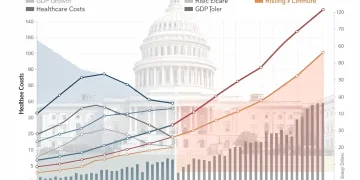
Healthcare Expenditure: Macro Consequences for US Stability
Rising healthcare expenditure, now 5.5% of GDP growth, significantly impacts US economic stability, influencing fiscal policy, household finances, and long-term national competitiveness.

Tracking the $1.2 Trillion Infrastructure Push: 2026 Economic Indicators
The $1.2 trillion infrastructure push in 2026 is poised to reshape the US economic landscape; understanding key indicators like GDP growth, employment figures, and inflation rates is crucial for assessing its comprehensive impact and long-term sustainability.

De-Dollarization Reality Check: US Dollar Still Dominant
Despite ongoing discussions about de-dollarization, the US dollar firmly maintains its position as the world's primary reserve currency, facilitating approximately 85% of global foreign exchange transactions.

How New Import Tariffs of 10% Influence Retail Prices
New national import tariffs of 10% are directly influencing domestic retail prices by increasing production costs for businesses, which subsequently pass these elevated expenses onto consumers through higher goods and services prices.

30-Year Mortgage Rate Below 6.2%: Reshaping US Housing
The recent drop in the 30-year mortgage rate below 6.2% is significantly reshaping the national housing market, boosting buyer confidence, influencing home prices, and potentially stimulating a new wave of real estate activity across the United States.

Federal Reserve Cuts Rates to 3.75%: Impact on US Borrowing
The Federal Reserve's recent decision to reduce benchmark interest rates to 3.75% signals significant shifts for national borrowing costs, impacting everything from consumer loans to business investments and the overall economic landscape across the United States.

Commercial Real Estate Defaults Exceed $25 Billion: Systemic Ripple Effect
Commercial real estate defaults exceeding $25 billion are sending shockwaves through the U.S. financial system, posing significant risks to regional banks, investors, and the broader economy, demanding immediate attention and strategic mitigation.

2026 Labor Market Shift: Real Wage Growth Exceeds 3.1%
The 2026 labor market has seen real wage growth exceed 3.1% across crucial US industries, propelled by significant technological integration, skills-based demands, and strategic policy shifts.

The $34 Trillion National Debt: Economic Consequences for Taxpayers
The $34 trillion national debt milestone carries significant practical economic consequences for everyday taxpayers, influencing inflation, interest rates, government spending, and future economic stability in the United States.

2026 Capital Gains Tax Adjustments: Impact on Institutional Liquidity
The 2026 capital gains tax policy adjustments are poised to significantly reshape institutional liquidity, influencing investment decisions, asset allocation, and overall market stability across the United States.