De-Dollarization Reality Check: US Dollar Still Dominant
Advertisements
The de-dollarization reality check reveals that despite persistent narratives of its decline, the US dollar overwhelmingly continues to dominate global foreign exchange, accounting for roughly 85% of all transactions.
In recent years, the concept of de-dollarization reality check has gained considerable traction, fueling debates about the future of the US dollar's role in global finance. Yet, a closer examination of the data consistently reveals a different picture: the US dollar unequivocally remains the world's most influential currency, driving an astounding 85% of global foreign exchange transactions. This article delves into the foundational reasons behind this enduring dominance and scrutinizes the challenges and prospects for alternative currencies.
Understanding the US Dollar's Global Hegemony
The US dollar's unparalleled position in global finance isn't a mere accident; it's a meticulously built edifice supported by decades of economic stability, robust institutions, and pervasive market trust. This hegemony extends far beyond simple trade, embedding itself into various facets of international economic activity.
Its role as the primary reserve currency means central banks worldwide hold significant dollar reserves to manage their own currency's stability and facilitate international transactions. This demand, in turn, reinforces its value and liquidity, creating a self-perpetuating cycle of dominance.
The Pillars of Dollar Strength
- Economic Scale and Stability: The sheer size and resilience of the U.S. economy, coupled with its predictable legal and political framework, offer a safe haven for global capital.
- Deep and Liquid Financial Markets: U.S. capital markets are the deepest and most liquid in the world, making it easy to buy and sell dollar-denominated assets without significantly impacting prices.
- Petrodollar System: The agreement for oil to be priced and traded in U.S. dollars ensures constant global demand for the currency, underpinning its transactional utility.
The dollar's role as a safe-haven asset during times of global crisis further solidifies its standing. When uncertainty strikes, investors and nations flock to the dollar, driving up its value and demand. This inherent characteristic makes any immediate shift away from it a complex and challenging endeavor.
In essence, the dollar's global hegemony is a multifaceted phenomenon, deeply intertwined with the structure of international trade, finance, and geopolitical relations. Any discussion of de-dollarization must first acknowledge these fundamental strengths.
The Myth of Rapid De-Dollarization
Despite numerous headlines and discussions about a looming de-dollarization, the data paints a picture of remarkable stability for the US dollar. Narratives often highlight bilateral trade agreements in local currencies or the rise of digital currencies, but these developments, while notable, have yet to fundamentally alter the dollar's global standing.
The notion of a swift decline often overlooks the immense inertia and interconnectedness of the global financial system, which is largely denominated and settled in dollars. Dismantling this intricate web would require a coordinated and sustained effort from multiple economic powers, a scenario that remains largely theoretical.
Challenges for Alternative Currencies
For any currency to genuinely challenge the dollar's dominance, it must possess several critical attributes:
- Trust and Rule of Law: Investors require confidence in a country's legal and political stability, ensuring their assets are secure and contracts enforceable.
- Convertibility and Liquidity: The currency must be freely convertible and its markets deep enough to absorb large transactions without significantly impacting prices.
- Absence of Capital Controls: Restrictions on capital movement deter international investors and limit a currency's global appeal.
Currently, no single currency or bloc of currencies meets all these criteria to the extent the US dollar does. The Euro, while a significant global currency, faces internal political complexities. The Chinese Yuan, despite China's economic might, is hindered by capital controls and a less transparent financial system.
Therefore, while the conversation around de-dollarization persists, the practical realities of global finance suggest that any significant shift will be a gradual, generational process rather than an abrupt paradigm change. The existing infrastructure and established trust in the dollar are formidable barriers to rapid displacement.
Why 85% of Global Foreign Exchange Still Relies on the Dollar
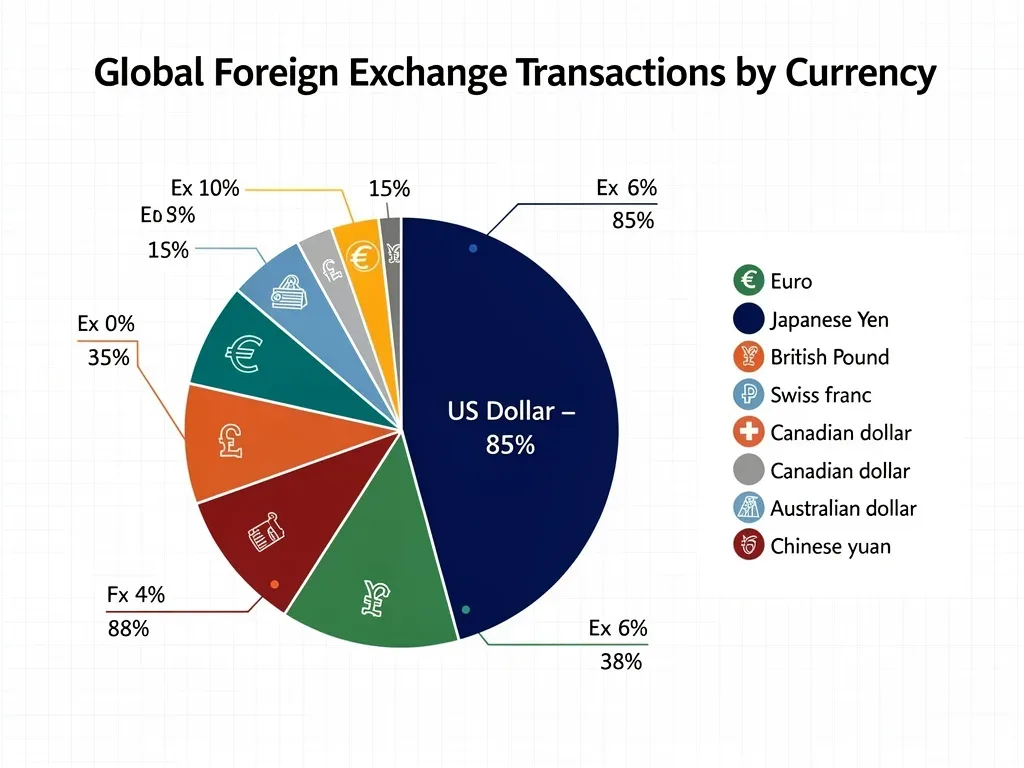
The figure of 85% is not arbitrary; it reflects the dollar's extensive use across virtually all international financial activities. This isn't just about trade in goods and services; it encompasses a broader spectrum of global economic interactions. From international loans and bonds to commodity pricing and foreign exchange reserves, the dollar is the default medium.
Consider the daily operations of multinational corporations. They often invoice in dollars, regardless of where their goods are produced or sold, simply because it simplifies accounting and reduces currency risk. This operational convenience is a powerful, often overlooked, driver of dollar demand.
Key Drivers of Dollar FX Dominance
- Trade Invoicing: A large proportion of global trade, particularly in commodities like oil and gas, is invoiced in dollars. This necessitates holding and transacting in dollars for importers and exporters alike.
- Cross-border Lending and Borrowing: Many international loans and bonds are denominated in dollars, making it the go-to currency for global capital markets.
- Central Bank Reserves: Central banks globally hold significant portions of their foreign exchange reserves in dollars, providing a buffer against economic shocks and facilitating international payments.
The network effect also plays a crucial role. The more a currency is used, the more convenient and cost-effective it becomes for others to use it, creating a positive feedback loop. The dollar benefits immensely from this, making it incredibly difficult for any challenger to gain comparable traction.
Consequently, the 85% figure is a testament to the dollar's deep integration into the global financial architecture, a position that has been solidified over decades and is not easily dislodged by intermittent calls for de-dollarization.
Geopolitical Implications and Economic Stability
The US dollar's dominance carries significant geopolitical weight, granting the United States considerable influence on the global stage. This influence is often referred to as the 'exorbitant privilege,' allowing the U.S. to borrow at lower rates and exert pressure through financial sanctions.
However, this dominance also comes with responsibilities. The U.S. economy's stability and the Federal Reserve's monetary policy decisions have ripple effects worldwide, influencing inflation, interest rates, and economic growth in other nations. This interconnectedness means that global economic stability is often tied to the health and management of the dollar.
The Dollar as a Tool of Foreign Policy
The ability to impose financial sanctions, effectively cutting off entities from the dollar-denominated global financial system, is a potent foreign policy tool. While controversial, its effectiveness stems directly from the dollar's widespread use.
This power, however, can also be a double-edged sword, potentially incentivizing some nations to seek alternatives to reduce their vulnerability. Yet, finding a viable, equally liquid, and trusted alternative remains a formidable challenge for these nations.
The geopolitical landscape is constantly shifting, and while some countries may express desires to reduce their reliance on the dollar, the practicalities of international finance often dictate continued engagement with the dollar system due to its unmatched liquidity and stability.
The Role of Digital Currencies and CBDCs
The emergence of digital currencies, including cryptocurrencies and central bank digital currencies (CBDCs), often fuels speculation about their potential to disrupt the dollar's reign. While these technologies represent significant innovations, their immediate impact on the global foreign exchange landscape is likely to be incremental rather than revolutionary.
Cryptocurrencies like Bitcoin, despite their growing popularity, suffer from extreme volatility, scalability issues, and regulatory uncertainties, making them unsuitable as primary reserve or transactional currencies for large-scale international trade. Their decentralized nature, while appealing to some, also presents challenges for sovereign states and their monetary policies.
Central Bank Digital Currencies (CBDCs)
- Efficiency Gains: CBDCs could streamline cross-border payments, potentially reducing costs and settlement times.
- Policy Control: They offer central banks greater control over monetary policy and financial surveillance.
- Interoperability Challenges: A lack of universal standards and interoperability between different national CBDCs could hinder their widespread international adoption.
Even if major economies launch their own CBDCs, the fundamental drivers of currency dominance – economic stability, market depth, and trust – would still apply. A digital dollar or digital euro would still need to contend with the same challenges and advantages that their physical counterparts face.
Ultimately, while digital currencies will undoubtedly evolve and integrate into the financial system, they are more likely to complement existing structures rather than entirely replace the dollar's foundational role in global foreign exchange in the foreseeable future.
Future Outlook: Gradual Shifts, Not Sudden Falls
Looking ahead, the prospect of a complete de-dollarization or a sudden collapse of the dollar's dominance seems highly improbable. The existing financial infrastructure, deeply entrenched market practices, and the sheer volume of dollar-denominated assets create an immense inertia that resists rapid change.
Instead, what is more likely is a gradual evolution towards a more multipolar currency system, where other currencies, such as the Euro and the Chinese Yuan, gain marginal market share. This would be a slow process, driven by shifts in global economic power, trade patterns, and geopolitical alliances.
Factors Influencing Future Currency Dynamics
Several factors will shape the future currency landscape:
- Economic Performance of Major Powers: Sustained economic growth and stability in other regions could bolster their currencies' international appeal.
- Geopolitical Realignment: Major geopolitical shifts could accelerate efforts by certain blocs to reduce dollar reliance.
- Technological Advancements: Further innovations in digital finance and cross-border payment systems could create new avenues for currency use.
However, for any currency to truly rival the dollar, it must overcome significant hurdles related to trust, liquidity, and the absence of capital controls. These are not easily surmountable obstacles and require deep institutional reforms and a commitment to open, transparent financial markets.
Therefore, while the conversation around a de-dollarization reality check is important for understanding global economic trends, the reality is that the US dollar's formidable position in global foreign exchange is set to continue for the foreseeable future, albeit within an evolving international financial system.
| Key Point | Brief Description |
|---|---|
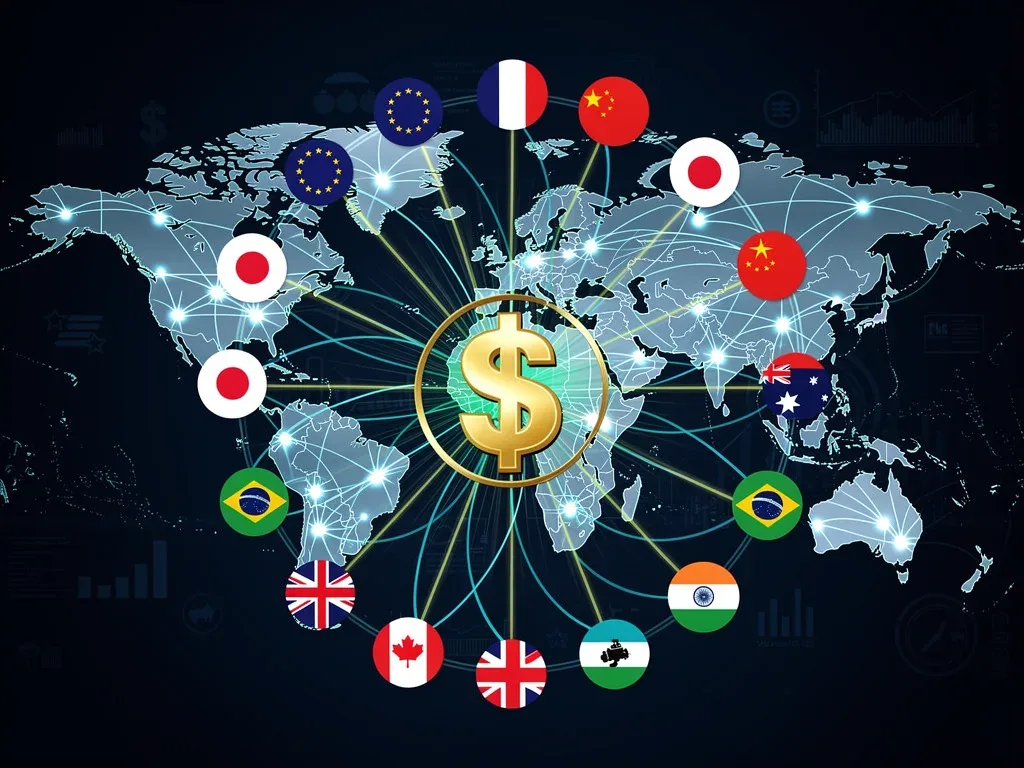
| Dollar Dominance | The US dollar accounts for 85% of global foreign exchange transactions, underscoring its enduring role. |
| Pillars of Strength | Backed by U.S. economic stability, deep financial markets, and the petrodollar system. |
| Challenges for Alternatives | Other currencies lack the trust, liquidity, and absence of capital controls needed to compete effectively. |
| Future Outlook | Expect gradual shifts towards a multipolar currency system, not a sudden de-dollarization. |
Frequently Asked Questions About De-Dollarization
What is de-dollarization?▼De-dollarization refers to the process of reducing the global reliance on the US dollar for international trade, finance, and as a reserve currency. It involves countries seeking alternative currencies or mechanisms for these transactions, often driven by geopolitical or economic motivations.
Why does the US dollar dominate global foreign exchange?▼The US dollar dominates due to the immense size and stability of the U.S. economy, the depth and liquidity of its financial markets, its role as a safe-haven asset, and the widespread use of the dollar in international trade invoicing and commodity pricing, particularly oil.
Are other currencies challenging the dollar's dominance?▼While currencies like the Euro and Chinese Yuan are gaining some international traction, they face significant hurdles. These include internal political complexities for the Euro and capital controls and a less transparent financial system for the Yuan, preventing them from matching the dollar's overall reach.
What role do digital currencies play in de-dollarization?▼Digital currencies, including cryptocurrencies and CBDCs, are emerging but are unlikely to cause a rapid de-dollarization. Cryptocurrencies are volatile, and while CBDCs could improve cross-border payments, they still require the underlying economic stability and trust that the dollar currently provides.
Will the US dollar lose its global reserve status soon?▼A sudden loss of the dollar's global reserve status is highly improbable. Any shift will likely be gradual, evolving towards a more multipolar currency system over decades, driven by significant changes in global economic power, not an abrupt collapse.
Conclusion
The de-dollarization reality check reveals a complex and deeply entrenched global financial system where the US dollar remains the undisputed leader. Despite ongoing discussions and initiatives aimed at reducing its influence, the dollar's foundational strengths—economic stability, unparalleled market liquidity, and widespread trust—continue to underpin its role in 85% of global foreign exchange transactions. While a future shift towards a more diversified currency landscape is possible, it will be a protracted and evolutionary process, rather than a sudden paradigm change, as no single alternative currency currently possesses the comprehensive attributes required to unseat the dollar's formidable global standing.
