Commercial Real Estate Defaults Exceed $25 Billion: Systemic Ripple Effect
Advertisements
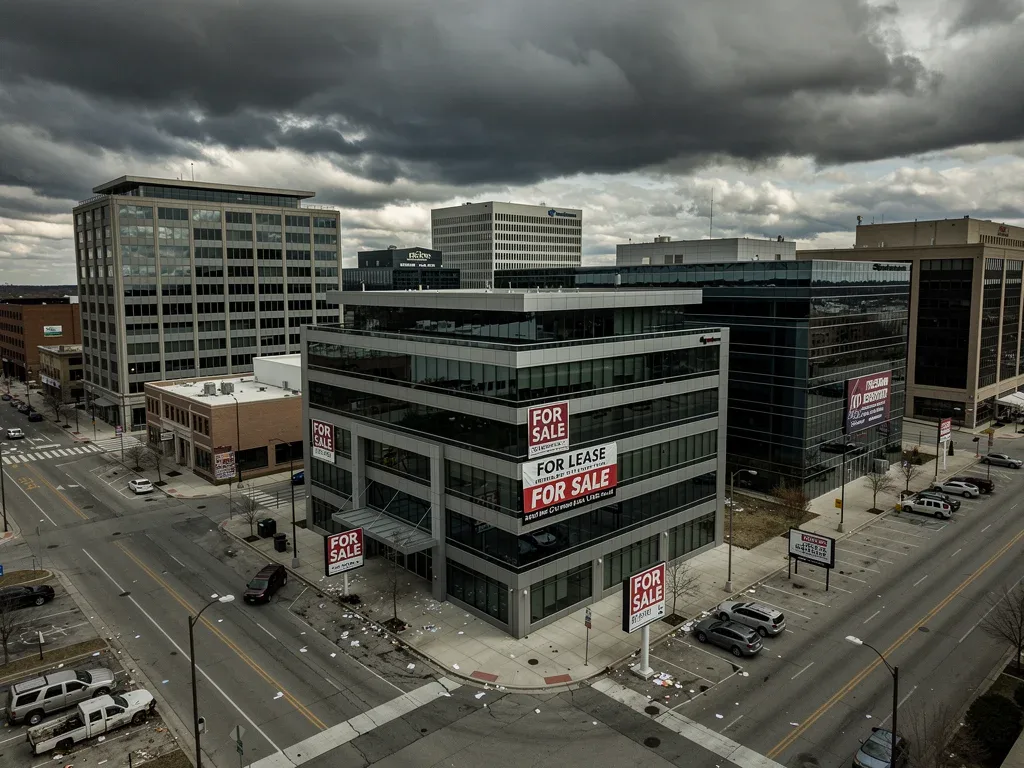
Over $25 billion in commercial real estate defaults are creating a systemic ripple effect across the U.S. economy, threatening financial stability and impacting various sectors.
The landscape of the U.S. economy is currently grappling with a significant challenge: commercial real estate defaults. With defaults now exceeding an alarming $25 billion, the systemic ripple effect is becoming increasingly evident, raising concerns about financial stability and the broader economic outlook. This situation warrants a deep dive into its causes, impacts, and potential resolutions.
Understanding the $25 Billion Default Threshold
The figure of $25 billion in commercial real estate defaults is not merely a number; it represents a substantial portion of the market facing severe financial distress. This threshold signifies a critical point where individual property issues coalesce into a broader systemic risk, demanding attention from financial institutions, policymakers, and investors alike.
Several factors have converged to push defaults to this level. The most prominent include the lasting impacts of remote work, rising interest rates, and tighter lending standards. These elements have created a perfect storm, diminishing property values and increasing the cost of financing, thereby making it difficult for many commercial property owners to service their debts.
The Shift to Remote Work and its Consequences
The pandemic-induced shift to remote and hybrid work models has profoundly altered the demand for office space. Many companies have downsized their physical footprints, leading to higher vacancy rates and reduced rental income for landlords. This decline in occupancy directly impacts the ability of property owners to generate sufficient revenue to cover their mortgage payments.
- Decreased office occupancy rates across major U.S. cities.
- Significant reduction in rental income for commercial property owners.
- Increased pressure on property valuations, leading to negative equity.
- Long-term structural changes in how businesses utilize physical space.
This structural change is not a temporary blip but a fundamental re-evaluation of commercial space needs, contributing significantly to the current default crisis. The challenge lies in adapting existing infrastructure to new demands, a process that takes time and substantial investment.
The $25 billion mark underscores the severity and widespread nature of the problem, indicating that the distress is not isolated to a few struggling properties but is a pervasive issue affecting diverse segments of the commercial real estate market. This widespread impact suggests a need for comprehensive strategies rather than piecemeal solutions.
The Systemic Ripple Effect on Financial Institutions
The extensive defaults in commercial real estate are sending significant ripple effects through the financial system, particularly impacting regional banks. These institutions often have a higher concentration of commercial real estate loans in their portfolios compared to larger, more diversified national banks. The exposure to these struggling assets poses a direct threat to their stability and, by extension, to the broader economy.
As loans go into default, banks are forced to write down the value of these assets, which can erode their capital reserves. This erosion can trigger a cascade of negative consequences, including tighter lending conditions, reduced credit availability, and a general loss of confidence in the banking sector. The interconnectedness of the financial system means that distress in one area can quickly spread.
Regional Banks at the Forefront of Risk
Regional banks are particularly vulnerable due to their business models, which often involve a significant focus on local commercial real estate markets. Unlike their larger counterparts, they may lack the extensive geographic or sector diversification to absorb large-scale losses from this specific asset class. This concentration elevates the risk of financial instability.
- Higher percentage of commercial real estate loans in regional bank portfolios.
- Limited diversification compared to national and international banks.
- Potential for significant capital erosion from loan write-downs.
- Increased regulatory scrutiny and pressure on balance sheets.
The potential for a credit crunch is a serious concern. If regional banks become overly cautious due to mounting losses, they may curtail lending to other sectors of the economy, stifling growth and investment. This tightening of credit can affect small businesses, residential mortgages, and consumer loans, creating a broader economic slowdown.
Moreover, the crisis could lead to a wave of mergers and acquisitions in the banking sector, as stronger institutions absorb weaker ones. While this might stabilize individual banks, it could also lead to reduced competition and fewer choices for borrowers. The systemic implications are profound, touching upon everything from local economies to national financial policy.
Impact on Investors and Property Values
The escalating commercial real estate defaults are having a tangible and often severe impact on investors across the spectrum, from large institutional funds to individual property owners. The direct consequence is a significant downturn in property values, particularly for office buildings and certain retail spaces that have been hit hardest by changing consumer and business behaviors. This decline in value can lead to substantial losses for those holding these assets.
For investors, the situation presents a dual challenge: existing portfolios are depreciating, and new investment opportunities are clouded by uncertainty. Many are now re-evaluating their strategies, shifting away from traditional commercial assets towards more resilient sectors, or adopting a wait-and-see approach. The market is experiencing a repricing, but the bottom is still unclear, making investment decisions particularly complex.
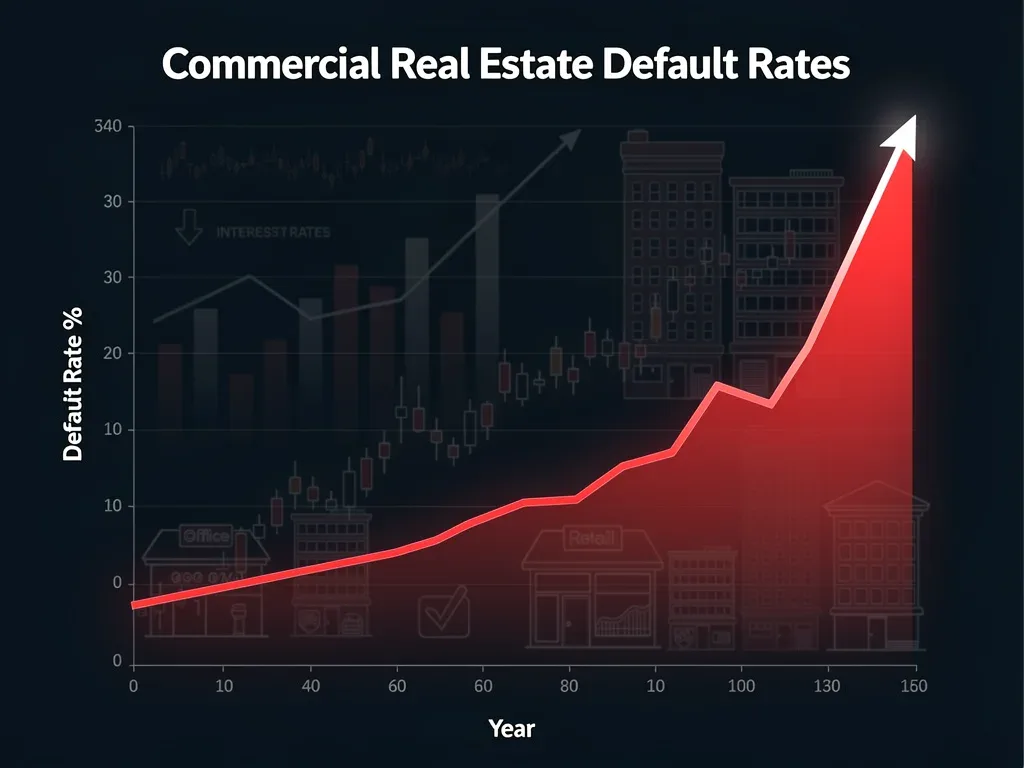
Real Estate Investment Trusts (REITs) with heavy exposure to distressed commercial properties are feeling the pinch, with their share prices often reflecting the underlying asset value declines. This affects not only institutional investors but also individual investors who hold REITs in their retirement accounts or investment portfolios.
The Repricing of Commercial Assets
The market is undergoing a significant repricing, where the perceived value of commercial properties is being adjusted downwards to reflect new realities. This repricing is driven by higher vacancy rates, lower rental income projections, and the increased cost of capital. For many owners, this means that their property is now worth less than the outstanding mortgage.
- Significant decline in valuation for office and retail properties.
- Increased difficulty in refinancing existing loans at favorable terms.
- Potential for widespread foreclosures and distressed asset sales.
- Shift in investor sentiment towards more stable property types.
This repricing can trigger further defaults, creating a vicious cycle. As property values fall, lenders may demand additional collateral or accelerate loan repayments, which many owners are unable to provide. The influx of distressed properties onto the market can further depress values, exacerbating the problem.
Ultimately, investors are facing a period of heightened risk and uncertainty. While some opportunistic investors may see this as a chance to acquire assets at a discount, the overall market sentiment remains cautious. The long-term implications for urban development and the allocation of capital are substantial, potentially reshaping cityscapes and investment priorities for years to come.
Government and Regulatory Responses
In the face of mounting commercial real estate defaults, government bodies and regulatory agencies are under increasing pressure to formulate effective responses. The primary goal is to mitigate systemic risk, prevent widespread financial contagion, and support economic stability. However, finding the right balance between intervention and market forces is a delicate act.
Regulators are closely monitoring the exposure of financial institutions, particularly regional banks, to distressed commercial real estate loans. There is a focus on ensuring banks have adequate capital reserves and robust risk management practices in place to absorb potential losses. Stress tests and enhanced reporting requirements are likely to become more prevalent.
Potential Policy Interventions
Several policy interventions could be considered to address the crisis. These range from direct financial assistance programs to regulatory adjustments aimed at easing the burden on borrowers and lenders. However, each intervention comes with its own set of challenges and potential unintended consequences.
- Targeted loan modification programs for struggling property owners.
- Government-backed guarantees for certain commercial real estate loans.
- Adjustments to accounting rules to provide banks with more flexibility.
- Stimulus packages aimed at revitalizing urban centers and increasing demand for commercial space.
The debate around government intervention often centers on moral hazard: the risk that providing assistance might encourage risky behavior in the future. Policymakers must weigh the immediate need for stability against the long-term implications of their actions. The lessons learned from past financial crises are crucial in guiding these decisions.
Furthermore, local governments play a vital role in urban planning and development. Policies that encourage adaptive reuse of vacant commercial spaces, incentivize new businesses, or promote mixed-use developments can help to revitalize struggling areas and create new demand for commercial properties. Collaborative efforts between federal, state, and local entities will be essential for a comprehensive response.
The Broader Economic Implications
The ripple effect of over $25 billion in commercial real estate defaults extends far beyond the immediate financial sector, reaching into the broader U.S. economy. This situation has the potential to impact employment, consumer spending, and overall economic growth, creating a challenging environment for businesses and individuals alike.
When commercial properties default, it often leads to job losses in property management, construction, and related services. Vacant buildings also depress local economies by reducing property tax revenues, which in turn affects funding for public services like schools and infrastructure. This creates a downward spiral that can be difficult to reverse.

A credit crunch, stemming from bank losses and increased caution, could make it harder for small and medium-sized businesses to secure loans for expansion or even day-to-day operations. This would stifle job creation and reduce investment, further slowing economic activity. Consumer confidence can also be affected by news of financial instability, leading to reduced spending.
Urban Transformation and Redevelopment Challenges
The crisis is accelerating a necessary, albeit painful, urban transformation. Many cities are grappling with how to repurpose vast amounts of empty office and retail space. This presents both a challenge and an opportunity for redevelopment, requiring innovative solutions and significant capital investment.
- Increased unemployment in construction and real estate sectors.
- Decreased municipal tax revenues impacting public services.
- Potential for a broader credit crunch affecting diverse businesses.
- Opportunities for urban revitalization through adaptive reuse projects.
The transformation of urban centers will require careful planning and collaboration between private developers, city planners, and community stakeholders. Converting office buildings into residential units, mixed-use spaces, or even specialized facilities like laboratories or data centers could breathe new life into struggling downtown areas.
However, these projects are complex and costly, often requiring significant regulatory flexibility and financial incentives. The economic implications are thus intertwined with long-term urban policy and the future of how Americans live, work, and interact within their cities. The scale of the defaults underscores the urgency of addressing these broader economic and social challenges.
Navigating the Path Forward: Strategies and Outlook
Addressing the crisis of commercial real estate defaults exceeding $25 billion requires a multi-faceted approach involving strategic adjustments from property owners, lenders, and policymakers. The path forward will not be simple, but proactive measures can help mitigate further damage and foster a more resilient market.
For property owners, this means critically evaluating their portfolios, considering debt restructuring, and exploring adaptive reuse options for underperforming assets. Lenders, on their part, need to be prepared for increased loan losses and work constructively with borrowers to find viable solutions, rather than resorting immediately to foreclosure.
Adaptive Reuse and Market Diversification
One of the most promising strategies for revitalizing distressed commercial properties is adaptive reuse. This involves converting underutilized office or retail spaces into residential units, hotels, or mixed-use developments that better meet current market demands. This approach can breathe new life into urban cores and create value where none currently exists.
- Converting vacant office buildings into residential apartments.
- Repurposing retail spaces for experiential businesses or community hubs.
- Diversifying real estate portfolios away from single-use commercial properties.
- Investing in sectors with strong demand, such as industrial or data centers.
Market diversification is also crucial. Investors are increasingly looking beyond traditional office and retail spaces towards industrial properties, data centers, and specialized healthcare facilities, which have shown greater resilience. This shift in investment focus can help balance portfolios and reduce overall exposure to volatile sectors.
The outlook remains uncertain, with a high degree of variability depending on interest rate trajectories, economic growth, and the willingness of all stakeholders to collaborate. However, by embracing innovation, strategic planning, and a pragmatic approach, the commercial real estate market can navigate these turbulent waters and emerge stronger. The long-term health of the economy depends on successfully managing this transition.
| Key Aspect | Brief Description |
|---|---|
| Default Volume | Over $25 billion in commercial real estate loans are currently in default, signaling significant market distress. |
| Systemic Risk | These defaults pose a substantial systemic risk, particularly to regional banks with concentrated CRE portfolios. |
| Driving Factors | Remote work, rising interest rates, and tighter lending standards are key contributors to the default surge. |
| Economic Impact | Broad economic implications include job losses, reduced tax revenues, potential credit crunch, and urban transformation challenges. |
Frequently Asked Questions About Commercial Real Estate Defaults
What exactly constitutes a commercial real estate default?▼A commercial real estate default occurs when a borrower fails to meet the terms of their loan agreement, typically by missing mortgage payments. This can also include violating other loan covenants, such as maintaining certain occupancy rates or financial ratios, leading to a breach of contract with the lender.
Why are regional banks more exposed to these defaults?▼Regional banks often have a higher concentration of commercial real estate loans in their portfolios compared to larger national banks. Their business models are frequently tied to local markets, making them more vulnerable to localized downturns and specific asset class issues like the current office market struggles.
How does remote work contribute to commercial real estate defaults?▼Remote work significantly reduces the demand for traditional office spaces, leading to higher vacancy rates and lower rental income for property owners. This decline in revenue makes it difficult for owners to cover their mortgage payments, pushing properties into financial distress and eventual default.
What are the potential broader economic impacts of these defaults?▼The broader economic impacts include a potential credit crunch as banks tighten lending, job losses in related sectors, decreased municipal tax revenues, and a slowdown in overall economic growth. It can also lead to significant urban transformation challenges as cities adapt to new commercial space needs.
What strategies can help mitigate the risks of commercial real estate defaults?▼Mitigation strategies include adaptive reuse of distressed properties, debt restructuring, and diversification of real estate portfolios. Government support through targeted programs and regulatory adjustments, alongside collaborative efforts between stakeholders, are also crucial for navigating this challenging period effectively.
Conclusion
The current landscape of commercial real estate defaults, now surpassing $25 billion, represents a critical juncture for the U.S. economy. The systemic ripple effect is undeniable, touching regional banks, investors, and urban development in profound ways. While the challenges are significant, understanding the underlying causes and exploring strategic responses—from adaptive reuse to prudent financial management and policy interventions—offers a path towards mitigating further risk and fostering resilience. The successful navigation of this complex environment will ultimately shape the future of commercial real estate and its integral role within the national economic framework.
