Credit Card Delinquency Rates Hit 3.2%: What It Means for You
Advertisements

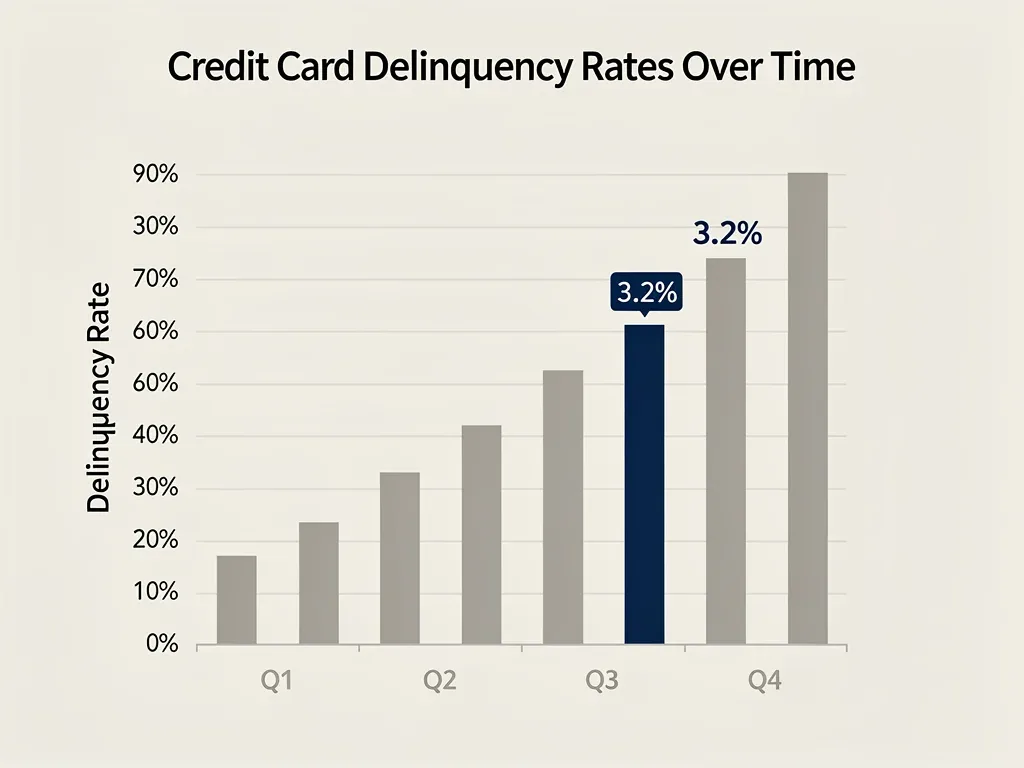
The rise in credit card delinquency rates to 3.2% signifies a critical turning point in consumer financial health across the United States, reflecting mounting economic pressures on households and potentially signaling broader economic shifts.
When credit card delinquency rates climb to 3.2%, it's more than just a statistic; it's a profound indicator of shifting consumer financial health. This figure, representing a significant portion of outstanding balances becoming 90 or more days past due, serves as a critical pivot point, urging us to examine the underlying pressures affecting American households and the broader economic landscape.
Understanding the Delinquency Rate Surge
The recent jump in credit card delinquency rates to 3.2% is a stark reminder of the financial vulnerabilities many consumers face. This isn't merely a minor fluctuation; it represents a substantial increase that impacts millions of households and has ripple effects throughout the economy. Understanding what drives this surge is crucial for both individuals and policymakers.
Several macroeconomic factors contribute to this concerning trend. Persistent inflation, while showing signs of cooling, has eroded purchasing power, forcing consumers to rely more heavily on credit to cover essential expenses. Coupled with rising interest rates, the cost of carrying credit card debt has become significantly more burdensome, making it harder for individuals to keep up with their payments.
Inflation's Relentless Grip on Household Budgets
Inflation has been a pervasive force, pushing up the prices of everything from groceries and gasoline to housing and healthcare. For many, wages have not kept pace with these escalating costs, leading to a widening gap between income and expenditure. This forces individuals to make difficult choices, often turning to credit cards as a short-term solution.
- Increased Cost of Living: Everyday necessities are more expensive, straining disposable income.
- Stagnant Real Wages: For many, paychecks haven't grown enough to offset inflation, reducing real purchasing power.
- Reliance on Credit: Credit cards become a default mechanism for bridging budget shortfalls, accumulating debt.
The Impact of Rising Interest Rates
The Federal Reserve's efforts to combat inflation through interest rate hikes have a direct and significant impact on credit card debt. Most credit cards have variable interest rates, meaning that as the prime rate increases, so does the annual percentage rate (APR) on outstanding balances. This makes minimum payments higher and the debt harder to pay down.
The confluence of these factors creates a challenging environment for consumers. Even those with stable employment may find themselves struggling to manage their credit card obligations, leading to an increase in late payments and, eventually, delinquencies. This cycle can be incredibly difficult to break, exacerbating financial stress for individuals and families.
In conclusion, the surge in delinquency rates is a multifaceted issue, driven primarily by the dual pressures of persistent inflation and rising interest rates. These economic forces combine to diminish consumer purchasing power and increase the cost of borrowing, pushing more households into financial distress and highlighting a critical shift in consumer credit health.
Economic Indicators and Consumer Behavior Shifts
The 3.2% credit card delinquency rate is not an isolated event; it correlates with a broader set of economic indicators that collectively paint a picture of shifting consumer behavior and economic strain. Analyzing these interconnected factors helps us understand the depth and potential longevity of this trend.
One key indicator is the personal savings rate, which has seen a notable decline in recent periods. During the pandemic, many households accumulated savings due to stimulus checks and reduced spending opportunities. However, those reserves have largely been depleted, leaving less cushion for unexpected expenses or economic downturns. This depletion forces greater reliance on credit.
Depleting Savings and Emergency Funds
The robust savings built up during the pandemic proved to be temporary for many. As inflation took hold and economic uncertainties lingered, households began drawing down their savings to maintain their standard of living. This trend is particularly concerning because a lack of emergency savings directly correlates with an increased likelihood of falling behind on debt payments.
- Post-Pandemic Savings Drawdown: Funds accumulated during lockdowns have been spent.
- Lack of Financial Buffer: Many households lack adequate savings for unexpected costs.
- Increased Vulnerability: Without savings, credit becomes the only option during financial shocks.
The Role of Wage Growth and Employment Stability
While the job market has remained relatively strong, wage growth, particularly for lower and middle-income earners, has not always kept pace with inflation. This disparity means that despite having jobs, many individuals are experiencing a decline in their real income. Furthermore, concerns about job security in certain sectors can lead to a more cautious approach to spending, but also a greater need for credit when essential costs rise.
Consumer confidence surveys also reflect this changing sentiment. While not uniformly negative, a growing number of consumers express concerns about their financial future and the overall economic outlook. This cautiousness can lead to reduced discretionary spending, but for those already stretched thin, it can also manifest as increased credit card usage for necessities, ultimately contributing to higher delinquency rates.
In essence, the rise in credit card delinquencies is a symptom of broader economic shifts, including depleted savings, inadequate wage growth relative to inflation, and a general unease about future financial stability. These factors combine to alter consumer behavior, making debt management more challenging for a significant portion of the population.
The Ripple Effect: Beyond Individual Households
While the immediate impact of rising credit card delinquency rates is felt by individual cardholders, the consequences extend far beyond personal finances. A sustained increase in delinquencies can have a significant ripple effect on the broader economy, affecting financial institutions, lending practices, and even the overall economic growth trajectory.
For banks and other financial lenders, higher delinquency rates translate directly into increased loan losses. When borrowers fail to repay their debts, lenders must write off those amounts, which can impact their profitability and capital reserves. This, in turn, can lead to a tightening of lending standards, making it harder for consumers and businesses to access credit.
Lenders Tighten Credit Standards
As the risk of default increases, financial institutions typically respond by becoming more conservative in their lending practices. This means:
- Higher Credit Score Requirements: It becomes more difficult for individuals with less-than-perfect credit to obtain new credit cards or loans.
- Reduced Credit Limits: Existing cardholders may see their credit limits cut, reducing their available credit.
- Increased Interest Rates: Lenders may charge higher interest rates to offset the perceived risk, further burdening borrowers.
This tightening of credit can create a negative feedback loop. If access to credit becomes restricted, it can dampen consumer spending, which is a major driver of economic growth. Businesses that rely on consumer demand may see their sales decline, potentially leading to job losses and further economic contraction. This scenario underscores how individual financial distress can snowball into systemic economic challenges.
Moreover, a significant rise in delinquencies can also impact the housing market and other asset classes. If individuals are struggling to manage credit card debt, they may also face difficulties with mortgage payments or other secured loans, potentially leading to foreclosures or repossessions. This interconnectedness highlights the systemic risk posed by widespread financial distress.
In summary, the 3.2% delinquency rate is a bellwether for broader economic health. Its implications extend from individual financial hardship to tighter credit markets, reduced consumer spending, and potential impacts on overall economic stability and growth. Addressing this trend requires a holistic approach that considers its far-reaching consequences.
Strategies for Consumers to Navigate Rising Delinquencies
Given the challenging economic landscape indicated by the rising credit card delinquency rates, consumers must adopt proactive strategies to safeguard their financial health. While external factors are at play, individuals can take concrete steps to manage their debt, improve their credit, and build financial resilience.
The first and most crucial step is to gain a clear understanding of one's current financial situation. This involves tracking income and expenses, identifying areas where spending can be reduced, and creating a realistic budget. A comprehensive budget serves as a roadmap for financial stability, helping to prioritize payments and avoid further debt accumulation.
Creating and Sticking to a Realistic Budget
A budget is more than just a list of numbers; it's a tool for financial empowerment. By meticulously tracking where every dollar goes, individuals can identify unnecessary expenditures and reallocate funds towards debt repayment or savings. Consistency is key; a budget is only effective if it's regularly reviewed and adjusted as circumstances change.
- Track All Income and Expenses: Understand your cash flow thoroughly.
- Identify Non-Essential Spending: Cut back on discretionary items to free up funds.
- Automate Savings and Payments: Set up automatic transfers to ensure consistency.
Prioritizing High-Interest Debt
When faced with multiple credit card debts, it's often advisable to prioritize paying down those with the highest interest rates first. This strategy, known as the "debt avalanche" method, can save a significant amount of money on interest payments over time. Alternatively, some prefer the "debt snowball" method, paying off the smallest balance first for psychological momentum.
Another powerful strategy is to consolidate high-interest debt into a lower-interest loan, such as a personal loan or a balance transfer credit card (if eligible and the introductory APR is genuinely low). This can simplify payments and reduce the overall cost of borrowing, making it easier to pay down the principal. However, it's vital to ensure that new debt isn't accumulated after consolidation.
Ultimately, navigating a period of rising delinquencies requires discipline, planning, and a willingness to make necessary adjustments. By taking control of their finances, prioritizing debt repayment, and exploring consolidation options, consumers can mitigate the risks associated with a challenging credit environment and work towards greater financial security.
Policy Responses and Future Outlook
The escalating credit card delinquency rates necessitate a thoughtful examination of potential policy responses and their implications for the future economic outlook. Governments and regulatory bodies often intervene during periods of consumer financial stress to mitigate widespread hardship and stabilize the financial system.
One potential area of focus for policymakers could be consumer protection measures. This might include stricter regulations on credit card interest rates, fees, or more transparent disclosure requirements. The goal would be to prevent predatory lending practices and ensure that consumers have a clear understanding of their financial obligations.
Regulatory Scrutiny and Consumer Protection
As delinquency rates climb, there's often increased pressure on regulators to act. Potential policy considerations include:
- Interest Rate Caps: Debates may re-emerge regarding capping credit card interest rates to protect vulnerable borrowers.
- Fee Limitations: Restrictions on late fees, over-limit fees, or other charges could be implemented.
- Enhanced Disclosure: Requirements for clearer, more understandable terms and conditions for credit products.
Beyond regulatory action, there could also be discussions around broader economic support programs. This might involve initiatives aimed at boosting wage growth, providing financial literacy education, or offering targeted assistance to households struggling with debt. Such programs aim to address the root causes of financial distress rather than just its symptoms.

The future outlook for credit card delinquency rates will largely depend on the trajectory of inflation, interest rates, and the labor market. If inflation continues to moderate and interest rates stabilize or even decrease, it could provide some relief for consumers. Conversely, a prolonged period of high inflation and interest rates could exacerbate the problem, leading to further increases in delinquencies.
In conclusion, addressing the rising delinquency rates requires a multi-pronged approach involving both individual responsibility and potential policy interventions. The future financial health of consumers and the broader economy will hinge on how effectively these challenges are met, emphasizing the need for adaptive strategies and vigilant monitoring.
The Historical Context of Delinquency Rates
To fully appreciate the significance of the current 3.2% credit card delinquency rate, it's essential to place it within a historical context. Delinquency rates are cyclical, often reflecting broader economic trends, and understanding past patterns can provide valuable insights into the potential trajectory of the current situation.
Looking back at previous economic downturns, such as the 2008 financial crisis or the early 1990s recession, credit card delinquency rates typically surged. During those periods, widespread job losses, tightened credit markets, and a general sense of economic uncertainty led to a significant increase in consumers' inability to meet their debt obligations. The current rate, while concerning, is not yet at the peaks seen during those extreme crises, but its upward trend is noteworthy.
Lessons from Past Economic Downturns
Historical data reveals common patterns during periods of rising delinquencies:
- Job Market Weakness: Significant job losses often precede or coincide with spikes in delinquency.
- Credit Crunch: Lenders become more risk-averse, restricting access to credit.
- Consumer Overextension: Periods of easy credit can lead to consumers taking on more debt than they can manage.
Comparing the current environment to these historical precedents reveals both similarities and differences. While the job market has remained relatively robust, the unique combination of high inflation and rapidly rising interest rates presents a distinct challenge. This differs from previous crises driven primarily by unemployment or asset bubbles.
Furthermore, consumer debt levels have reached record highs in recent years, even before the recent surge in delinquencies. This elevated starting point means that even a moderate increase in financial strain can have a more pronounced effect on delinquency rates than in periods where overall debt levels were lower. The sheer volume of outstanding credit card debt amplifies the impact of each percentage point increase in delinquency.
Understanding this historical context helps us avoid both complacency and undue panic. The current 3.2% rate is a strong signal that economic pressures are mounting on consumers, warranting careful attention and proactive measures, even if it hasn't yet reached the crisis levels of the past. It serves as a crucial indicator for anticipating future economic shifts and underscores the importance of resilient financial planning.
Personal Credit Health: A Proactive Approach
In an environment where credit card delinquency rates are rising, maintaining robust personal credit health becomes paramount. A strong credit score and a manageable debt-to-income ratio are not just abstract numbers; they are critical components of financial stability, influencing everything from loan approvals to insurance premiums.
Regularly monitoring your credit report is a fundamental aspect of proactive credit management. This allows you to identify any inaccuracies, detect potential fraud, and understand the factors influencing your credit score. Free annual credit reports are available from the major credit bureaus, providing an invaluable resource for staying informed.
Key Pillars of a Strong Credit Score
Building and maintaining excellent credit involves several key practices:
- Payment History: Consistently making payments on time is the single most important factor.
- Credit Utilization: Keep your credit card balances low relative to your credit limits (ideally below 30%).
- Length of Credit History: A longer history of responsible credit use is generally better.
- Types of Credit: A mix of credit (e.g., credit cards, installment loans) can be beneficial.
Another vital aspect is to avoid opening too many new credit accounts in a short period. While tempting to seek out new lines of credit, each application can temporarily lower your credit score. Strategic credit management involves using existing credit responsibly rather than constantly seeking new sources.
Furthermore, actively working to reduce existing credit card debt, particularly high-interest balances, is crucial. Not only does this save money on interest, but it also improves your credit utilization ratio, which has a significant positive impact on your credit score. Consider debt management plans or credit counseling services if you feel overwhelmed and need professional guidance.
In conclusion, taking a proactive approach to personal credit health is an investment in your financial future. By understanding the components of your credit score, regularly monitoring your reports, and diligently managing your debt, individuals can navigate periods of economic uncertainty with greater confidence and resilience, protecting themselves from the broader trends of rising delinquencies.
| Key Point | Brief Description |
|---|---|
| Delinquency Rate Surge | Credit card delinquency rates hitting 3.2% signals significant financial strain on U.S. consumers. |
| Economic Drivers | Driven by persistent inflation, rising interest rates, and depleted household savings. |
| Broader Impact | Affects financial institutions, leading to tighter credit, and can dampen overall economic growth. |
| Consumer Actions | Individuals can mitigate risk by budgeting, prioritizing high-interest debt, and monitoring credit. |
Frequently Asked Questions About Credit Card Delinquency
What does a 3.2% credit card delinquency rate signify?▼A 3.2% credit card delinquency rate means that 3.2% of all outstanding credit card balances are 90 or more days past due. This figure indicates a significant deterioration in consumer financial health and signals mounting debt repayment challenges for a notable portion of cardholders.
What are the primary causes of rising credit card delinquencies?▼The main drivers include persistent high inflation eroding purchasing power, leading to increased reliance on credit for necessities. Additionally, rising interest rates make carrying credit card debt more expensive, pushing more consumers into difficulty with their monthly payments.
How do rising delinquency rates affect the broader economy?▼Higher delinquency rates can lead to financial institutions tightening lending standards, making it harder for consumers and businesses to access credit. This can reduce consumer spending, potentially slowing economic growth and impacting various sectors of the economy.
What steps can consumers take to manage credit card debt?▼Consumers should focus on creating a realistic budget, prioritizing high-interest debt repayment, and exploring debt consolidation options. Regularly monitoring credit reports and avoiding unnecessary new credit can also help maintain financial stability during challenging times.
Is the current delinquency rate historically high?▼While 3.2% is a significant increase and cause for concern, it is not yet at the peak levels seen during major economic crises like the 2008 financial crisis. However, the upward trend indicates a critical pivot point in consumer credit health, warranting close attention.
Conclusion
The ascent of credit card delinquency rates to 3.2% represents a critical juncture for consumer credit health in the United States. This figure is not merely an abstract statistic but a tangible reflection of the economic pressures facing millions of American households, driven by persistent inflation, elevated interest rates, and the erosion of personal savings. The ripple effects extend far beyond individual financial struggles, impacting lending institutions, potentially tightening credit availability, and influencing the broader economic trajectory. For consumers, a proactive and disciplined approach to budgeting, debt management, and credit monitoring is essential. Simultaneously, policymakers may need to consider targeted interventions to safeguard financial stability and protect vulnerable borrowers. Understanding this pivot point is crucial for navigating the evolving economic landscape and fostering greater financial resilience across the nation.
