Federal Reserve Rate Cut 2026: Market Impact Analysis
Advertisements
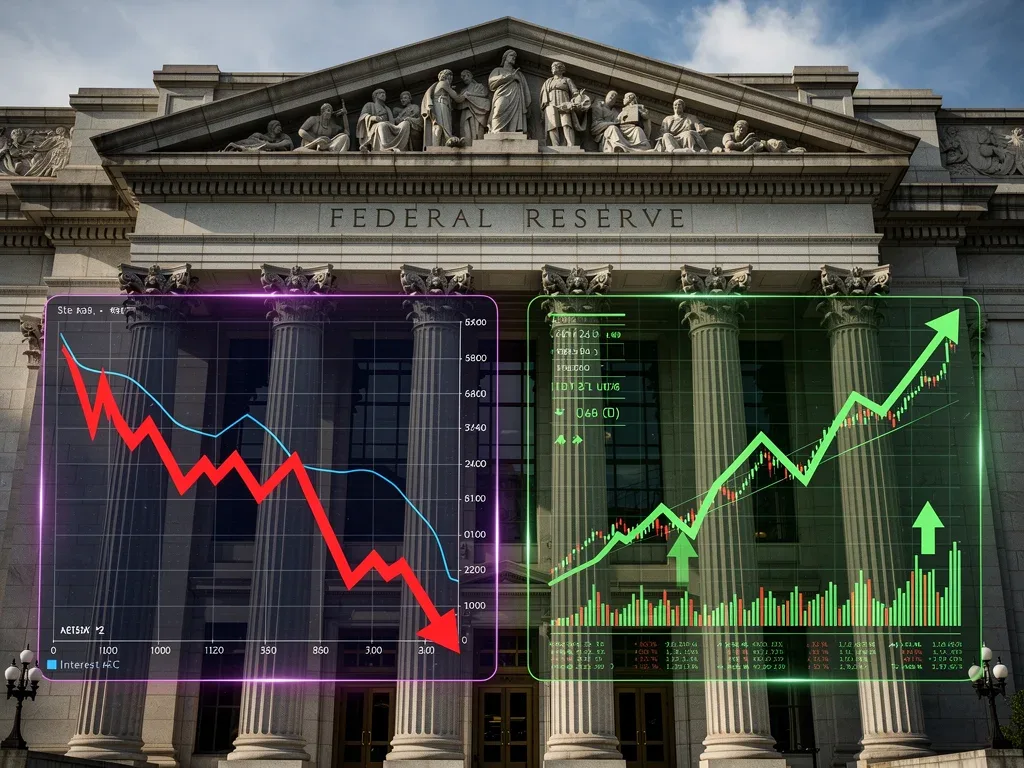
The Federal Reserve's anticipated 25 basis point rate cut in 2026 is poised to stimulate economic activity by lowering borrowing costs, thereby influencing investment decisions, consumer spending, and the broader financial landscape.
The financial world is abuzz with speculation and analysis regarding the potential impact of the Federal Reserve's upcoming decisions. Specifically, the projected Federal Reserve Cuts Benchmark Rate by 25 Basis Points: Key Market Impact for 2026 is a topic of paramount importance for investors, businesses, and everyday consumers alike. What exactly does such a move signify for the economy, and how might it reshape our financial futures?
Understanding the Federal Reserve's Role and Rate Cuts
The Federal Reserve, often simply called the Fed, serves as the central bank of the United States. Its primary mandates include maximizing employment, stabilizing prices, and moderating long-term interest rates. These goals are achieved through various monetary policy tools, with the federal funds rate being one of the most powerful. A cut in this benchmark rate sends ripples throughout the entire financial system.
When the Federal Reserve cuts its benchmark rate, it typically signals a desire to stimulate economic growth. Lowering the federal funds rate reduces the cost for banks to borrow from each other overnight, which in turn influences the interest rates banks charge their customers for loans. This can lead to cheaper mortgages, car loans, and business financing, encouraging borrowing and spending.
The Mechanics of a Rate Cut
A 25 basis point cut, though seemingly small, can have a significant psychological and practical effect on markets. It indicates the Fed's assessment of the economic landscape, suggesting either a need to prevent a slowdown or a belief that inflation is sufficiently under control to allow for more accommodative policy. The decision is rarely made in isolation; it reflects a careful calibration of economic indicators and future projections.
- Reduced borrowing costs: Direct impact on variable-rate loans and new credit.
- Increased consumer spending: Cheaper credit encourages purchases of big-ticket items.
- Business investment boost: Lower loan costs make expansion projects more attractive.
- Stock market reaction: Typically positive, as lower rates can boost corporate profits and make equities more appealing than bonds.
In essence, a rate cut is a powerful lever the Fed uses to influence the pace of economic activity. For 2026, such a move would be interpreted as a strategic effort to sustain growth and ensure economic resilience in a potentially evolving global environment.
Impact on Financial Markets and Investments
The announcement of a Federal Reserve Cuts Benchmark Rate by 25 Basis Points: Key Market Impact for 2026 will undoubtedly send immediate tremors through financial markets. Investors will be scrutinizing every detail, adjusting their portfolios in anticipation of the shifts. The stock market, bond market, and even alternative investments will feel the effects.
Stock Market Dynamics
Historically, a rate cut is often viewed favorably by the stock market. Lower interest rates reduce the cost of capital for companies, leading to higher profitability and, consequently, increased stock valuations. Furthermore, lower rates make fixed-income investments less attractive, prompting investors to shift capital into equities in search of better returns.
- Growth stocks often benefit: Companies relying on future earnings growth tend to perform well.
- Dividend stocks may see increased demand: As bond yields fall, dividend-paying stocks become more appealing for income-focused investors.
- Potential for increased volatility: Initial market reactions can be sharp, with sectors reacting differently based on their sensitivity to interest rates.
However, the broader economic context is crucial. If the rate cut is perceived as a reaction to significant economic weakness, the market's initial enthusiasm might be tempered by concerns about future corporate earnings. Investors will be looking for clear signals from the Fed about the underlying reasons for the cut.
Bond Market and Fixed Income
The bond market typically reacts inversely to interest rate changes. When the Federal Reserve cuts rates, existing bonds with higher yields become more valuable, and new bonds are issued at lower yields. This can lead to capital gains for current bondholders but lower returns for those investing in new fixed-income securities.
The yield curve, which plots the yields of bonds across different maturities, is also closely watched. A rate cut can influence its shape, potentially signaling expectations for future economic growth and inflation. Long-term bond yields might fall less dramatically if investors anticipate future inflation or continued economic expansion, creating a steeper yield curve.
Overall, a rate cut in 2026 would necessitate a re-evaluation of fixed-income strategies, with a focus on duration management and credit quality to navigate the changing yield environment effectively.
Consumer Spending and Borrowing Behavior
One of the most direct and tangible impacts of a Federal Reserve Cuts Benchmark Rate by 25 Basis Points: Key Market Impact for 2026 is on the everyday consumer. Lower interest rates translate into more affordable borrowing, which can significantly influence purchasing decisions and overall household finances.
Mortgages and Housing Market
The housing market is particularly sensitive to interest rate changes. A reduction in the benchmark rate typically leads to lower mortgage rates, making homeownership more accessible and affordable. This can stimulate demand, potentially leading to increased home sales and, in some cases, rising property values.
- Refinancing opportunities: Existing homeowners with variable-rate mortgages or those looking to reduce their monthly payments may opt to refinance.
- Increased affordability: Lower monthly payments can qualify more buyers, especially first-time homeowners.
- Construction boost: Developers may find it cheaper to finance new projects, potentially increasing housing supply.
However, the impact on housing is not solely dependent on interest rates. Factors such as housing supply, demographic trends, and regional economic conditions also play a crucial role. A rate cut acts as a tailwind, but it doesn't guarantee a booming market.
Credit Cards and Personal Loans
While the federal funds rate doesn't directly dictate credit card interest rates, it does influence the prime rate, which many variable-rate credit products are tied to. A rate cut can lead to a slight decrease in interest rates for credit cards, personal loans, and auto loans, making borrowing marginally cheaper for consumers.
This marginal reduction can collectively free up disposable income for households, potentially leading to increased spending on goods and services. For individuals with significant variable-rate debt, even a small reduction in interest payments can provide welcome relief and improve their financial flexibility.
Business Investment and Corporate Strategy
Businesses, from small enterprises to large corporations, are highly attuned to interest rate movements. A Federal Reserve Cuts Benchmark Rate by 25 Basis Points: Key Market Impact for 2026 can significantly alter corporate financing costs and investment decisions, shaping strategic planning for the coming years.
Capital Expenditure and Expansion
Lower borrowing costs make it cheaper for companies to finance new investments, such as upgrading equipment, expanding facilities, or investing in research and development. This can lead to increased capital expenditure, which is a key driver of economic growth and productivity.
- Reduced cost of debt: Companies can issue bonds or take out loans at lower interest rates.
- Enhanced project viability: Projects that were previously marginal due to high financing costs may now become profitable.
- Mergers and acquisitions: Cheaper financing can also fuel M&A activity, as companies find it more affordable to acquire competitors or complementary businesses.
For businesses operating in capital-intensive sectors, such as manufacturing or infrastructure, a rate cut can be a substantial boon, encouraging long-term growth initiatives. It signals a supportive monetary environment that can foster innovation and job creation.
Corporate Earnings and Valuation
Beyond direct investment, lower interest rates can positively impact corporate earnings in several ways. Reduced interest expenses on existing debt improve the bottom line, and increased consumer demand can lead to higher revenues. These factors collectively contribute to stronger financial performance and potentially higher stock valuations.
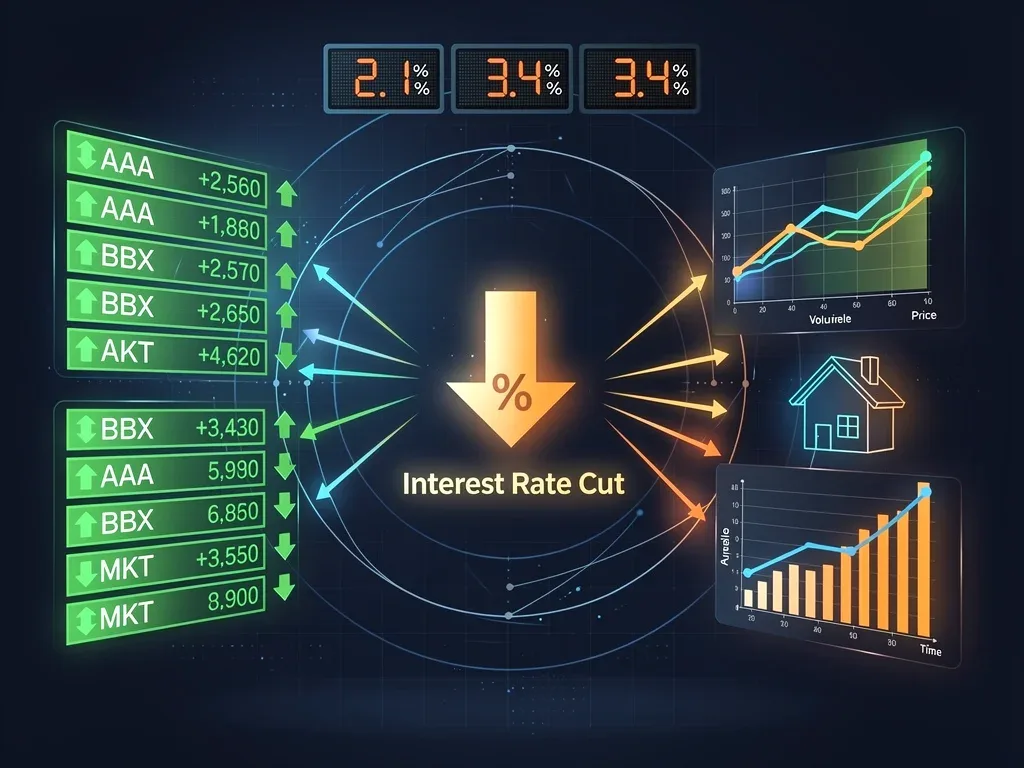
Furthermore, the discounted cash flow (DCF) models used by analysts to value companies are sensitive to the discount rate. A lower interest rate typically translates to a lower discount rate, which increases the present value of future earnings, thereby boosting theoretical company valuations.
Therefore, businesses will likely adapt their strategies to capitalize on the more favorable financing environment, potentially leading to a period of accelerated investment and growth.
Inflationary Pressures and Economic Growth Outlook
The Federal Reserve's decision to cut rates is inherently linked to its assessment of inflation and the broader economic growth outlook. A Federal Reserve Cuts Benchmark Rate by 25 Basis Points: Key Market Impact for 2026 suggests a delicate balancing act between stimulating growth and managing potential inflationary risks.
Inflationary Implications
While rate cuts are designed to stimulate the economy, a common concern is their potential to ignite inflation. By making money cheaper and more abundant, the Fed risks increasing demand beyond the economy's productive capacity, leading to rising prices. However, a 25 basis point cut is generally considered a modest adjustment, less likely to trigger runaway inflation unless underlying economic conditions are already highly inflationary.
- Demand-pull inflation: Increased consumer and business spending can push prices up.
- Wage growth: A tighter labor market, fueled by economic expansion, can lead to higher wages, potentially contributing to inflation.
- Fed's vigilance: The Fed will closely monitor inflation metrics, ready to adjust policy if price stability is threatened.
The timing of the 2026 cut would likely imply that the Fed believes inflation is either under control or that the economy needs a boost more urgently than inflation needs to be tamed further. This reflects a forward-looking perspective on price stability.
Economic Growth Projections
A rate cut is a direct attempt to foster stronger economic growth. By reducing borrowing costs and encouraging investment and spending, the Fed aims to boost GDP, create jobs, and improve overall economic well-being. For 2026, this could translate into a more robust economic environment than would otherwise be the case.
Analysts will be adjusting their growth forecasts, factoring in the stimulative effect of lower rates. Sectors that are particularly sensitive to interest rates, such as housing, automotive, and capital goods, are likely to see accelerated growth. The overall outlook for 2026 could shift towards more optimistic projections, assuming other economic fundamentals remain sound.
Global Economic Repercussions and Currency Markets
The influence of the Federal Reserve Cuts Benchmark Rate by 25 Basis Points: Key Market Impact for 2026 extends far beyond U.S. borders. Given the dollar's status as the world's primary reserve currency, changes in U.S. monetary policy have significant global repercussions, particularly for currency markets and international trade.
Impact on the U.S. Dollar
A rate cut typically makes a country's currency less attractive to foreign investors, as lower interest rates reduce the return on dollar-denominated assets. This can lead to a weakening of the U.S. dollar against other major currencies. A weaker dollar has a dual effect on the U.S. economy:
- Exports become cheaper: U.S. goods and services become more affordable for foreign buyers, potentially boosting export volumes.
- Imports become more expensive: Foreign goods and services cost more for U.S. consumers and businesses, which can contribute to import-driven inflation.
- Capital flows: Foreign direct investment into the U.S. might slow down, while U.S. investment abroad could increase.
For multinational corporations, currency fluctuations can significantly impact their earnings when revenues and expenses are translated back into U.S. dollars. Companies with substantial international operations will need to carefully manage their currency exposure.
Global Financial Stability
Emerging markets and countries heavily reliant on dollar-denominated debt are particularly sensitive to Fed policy. A weaker dollar can ease the burden of servicing dollar-denominated debt for these nations, as their local currencies can buy more dollars. This can provide a degree of financial relief and stability, potentially encouraging global economic activity.

Conversely, if other central banks do not follow suit with their own rate cuts, the interest rate differential could widen, influencing capital flows and investment decisions worldwide. The Fed's actions in 2026 will therefore be a critical factor in shaping the global economic narrative, affecting trade balances, investment patterns, and overall financial interconnectedness.
Strategic Outlook for Investors and Businesses in 2026
As the prospect of a Federal Reserve Cuts Benchmark Rate by 25 Basis Points: Key Market Impact for 2026 looms, both investors and businesses must adopt forward-looking strategies to capitalize on the evolving economic landscape. This involves re-evaluating risk, identifying opportunities, and adapting to new market realities.
Investor Portfolio Adjustments
For investors, 2026 could be a year to rebalance portfolios. With lower interest rates, growth-oriented investments might become more attractive. This could mean increasing exposure to equities, particularly in sectors poised to benefit from increased consumer spending and business investment, such as technology, consumer discretionary, and industrials.
- Re-evaluating bond allocations: Shifting from long-duration bonds to shorter-duration or inflation-protected securities.
- Focus on quality growth: Identifying companies with strong fundamentals that can thrive in a lower-rate environment.
- Consider real assets: Real estate and commodities might offer diversification and inflation protection if economic activity picks up significantly.
Diversification remains paramount. While rate cuts generally favor equities, unexpected economic shifts can still introduce volatility. A well-diversified portfolio, tailored to individual risk tolerance and financial goals, will be crucial for navigating the 2026 market.
Business Adaptations and Opportunities
Businesses should seize the opportunity presented by lower borrowing costs to invest in strategic initiatives. This could include accelerating digital transformation projects, expanding into new markets, or enhancing operational efficiencies. The competitive landscape will likely intensify as access to capital becomes easier.
Companies should also review their debt structures, potentially refinancing existing high-interest debt to reduce their financial burden. Furthermore, a stronger domestic economy, fueled by consumer spending, could open new avenues for product and service innovation aimed at the U.S. market.
Preparing for the 2026 rate cut means proactive planning for both individuals and corporations, ensuring they are well-positioned to leverage the opportunities and mitigate the risks associated with a changing monetary policy.
| Key Impact Area | Brief Description of Impact |
|---|---|
| Stock Market | Typically sees positive momentum due to lower borrowing costs and increased corporate profitability. |
| Consumer Spending | Boosted by cheaper loans (mortgages, auto, personal) and increased disposable income. |
| Business Investment | Encouraged by reduced cost of capital, leading to expansion and innovation. |
| U.S. Dollar Value | Often weakens against other currencies, making exports cheaper and imports more expensive. |
Frequently Asked Questions About the 2026 Fed Rate Cut
What does a 25 basis point rate cut by the Federal Reserve mean?▼A 25 basis point cut means the Federal Reserve is lowering its target federal funds rate by 0.25%. This move typically aims to stimulate economic activity by making borrowing cheaper for banks, which then passes on to consumers and businesses through lower loan interest rates.
How will a rate cut affect my mortgage and other loans?▼For variable-rate mortgages and other loans, a rate cut generally leads to lower interest payments. For new fixed-rate mortgages, rates will likely decrease, making homeownership more affordable. Auto loans and credit card rates may also see slight reductions.
What is the expected impact on the stock market in 2026?▼The stock market often reacts positively to rate cuts. Lower borrowing costs can boost corporate profits, and reduced bond yields make equities more attractive. However, the overall economic context and reasons for the cut also play a significant role in market sentiment.
Could a rate cut lead to increased inflation?▼Yes, a rate cut can potentially contribute to inflation by stimulating demand. When money is cheaper, consumers and businesses spend more, which can push prices up. The Federal Reserve carefully monitors inflation to ensure price stability while promoting economic growth.
How will this affect the U.S. dollar's value internationally?▼A rate cut typically makes the U.S. dollar less attractive to foreign investors seeking higher returns, potentially leading to a weakening of the dollar against other major currencies. This can make U.S. exports cheaper and imports more expensive.
Conclusion
The anticipated Federal Reserve Cuts Benchmark Rate by 25 Basis Points: Key Market Impact for 2026 marks a pivotal moment for the U.S. and global economies. This strategic monetary adjustment is poised to ripple through financial markets, influencing investment decisions, consumer behavior, and corporate strategies. While offering the promise of stimulated economic growth and more affordable borrowing, it also necessitates careful consideration of potential inflationary pressures and shifts in currency markets. Both individuals and businesses must remain agile and informed to navigate the opportunities and challenges presented by this evolving economic landscape, ensuring resilience and prosperity in the years to come.
