Unemployment Near 4.1%: Labor Market Cooldown & Growth
Advertisements

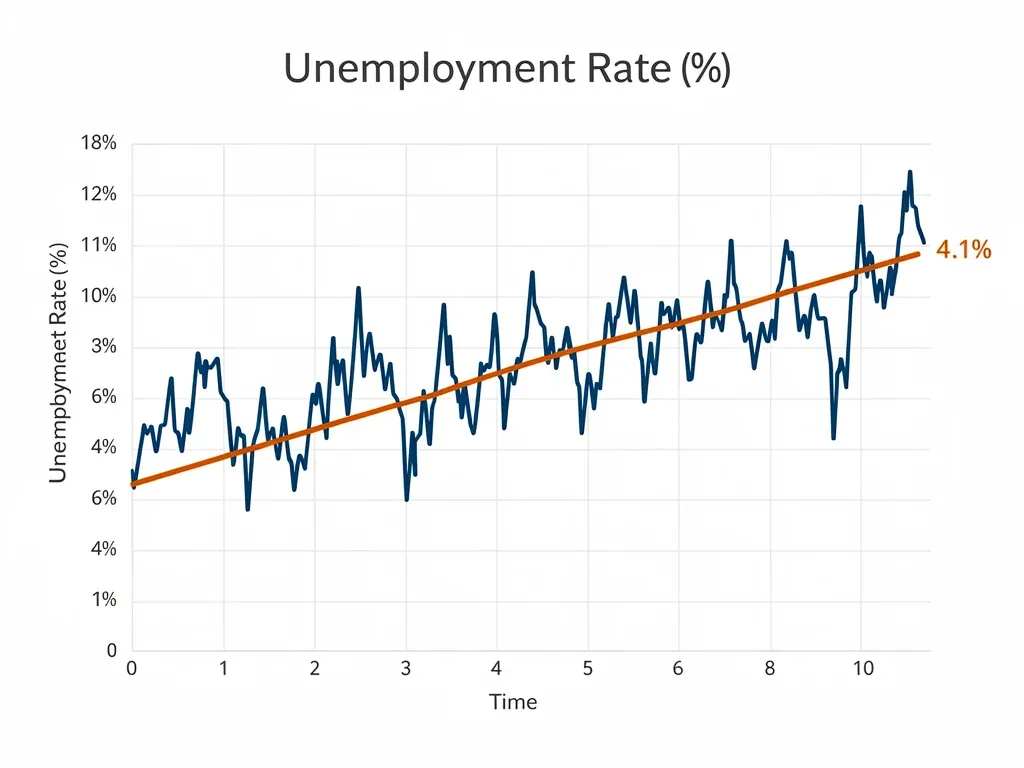
National unemployment fluctuating near 4.1% suggests a significant shift in the US labor market dynamics, impacting economic growth and requiring careful analysis of its short-term and long-term implications for workers and businesses.
As the United States witnesses its national unemployment fluctuate near 4.1%: what labor market cooldown means for economic growth becomes a critical question for economists, policymakers, and everyday citizens alike. This slight uptick or stabilization, following a period of unprecedented tightness, signals a potential recalibration that could redefine economic trajectories.
Understanding the Current Unemployment Landscape
The recent stabilization of the national unemployment rate around 4.1% marks a noticeable shift from the historically low figures observed in previous periods. This level, while still relatively healthy by historical standards, invites a deeper examination into its underlying causes and potential consequences. It suggests a labor market that is easing its intense demand, moving towards a more balanced, albeit less frenetic, state.
This cooldown is not necessarily a sign of economic distress but rather a natural adjustment. After years of rapid job creation and intense competition for talent, various factors, including monetary policy adjustments and global economic headwinds, contribute to this new equilibrium. Understanding this nuance is crucial for interpreting the broader economic outlook.
Factors Contributing to the Cooldown
Several key elements are converging to influence the current state of the labor market. These factors interact in complex ways, creating a multifaceted environment that impacts both employers and employees.
- Monetary Policy Tightening: The Federal Reserve's interest rate hikes aimed at curbing inflation have a direct impact on borrowing costs for businesses, potentially slowing expansion and hiring.
- Global Economic Slowdown: International trade tensions and slower growth in major economies can reduce demand for U.S. exports, affecting domestic production and employment.
- Supply Chain Normalization: As supply chain disruptions ease, some of the urgency in hiring to meet backlogs might diminish, leading to more measured recruitment.
- Shifting Consumer Demand: Changes in consumer spending patterns, moving from goods to services, can lead to sectoral adjustments in employment.
The interplay of these factors creates a dynamic situation where certain sectors might experience more pronounced cooling than others. This uneven impact requires a granular analysis to fully grasp the implications for the overall economy. A balanced perspective is essential to avoid overstating or understating the significance of these shifts.
In conclusion, the current unemployment landscape is a product of several converging economic forces. While the 4.1% rate is not alarming, it necessitates a careful look at the drivers behind the cooldown and how they might shape future employment trends. This understanding forms the bedrock for anticipating broader economic shifts.
Implications for Economic Growth and Stability
A labor market cooldown, as evidenced by the 4.1% unemployment rate, carries significant implications for overall economic growth and stability. While a red-hot labor market can be inflationary and unsustainable, a moderate cooling can be beneficial, allowing for more sustainable growth without overheating. However, the delicate balance lies in preventing a cooldown from spiraling into a significant downturn.
The rate of job creation, wage growth, and consumer spending are all intrinsically linked to the health of the labor market. A slowdown in hiring might temper wage increases, which could help combat inflation. Simultaneously, if too many people lose their jobs or struggle to find new ones, consumer confidence and spending could decline, impacting GDP growth.
Wage Growth and Inflationary Pressures
One of the primary implications of a labor market cooldown is its effect on wage growth and, consequently, inflation. During periods of tight labor markets, employers often increase wages to attract and retain talent, contributing to inflationary pressures. A moderating labor market can alleviate some of this pressure.
The relationship between wage growth and inflation is complex. While slower wage growth can help bring down inflation, it also impacts the purchasing power of consumers. Policymakers often walk a tightrope, aiming for a 'soft landing' where inflation cools without triggering a recession.
- Reduced Wage Spirals: A less competitive job market can slow the pace of wage increases, helping to stabilize prices across the economy.
- Improved Business Margins: For businesses, a moderation in wage growth can lead to improved profit margins, potentially encouraging investment in other areas.
- Consumer Spending Impact: Slower wage growth could lead to more cautious consumer spending, which forms a significant portion of economic activity.
The ongoing monitoring of wage data alongside inflation figures is crucial for understanding the trajectory of the economy. The goal is to achieve a balance where wages grow sustainably, reflecting productivity gains, without fueling an inflationary spiral. This balance is key to long-term economic health.
Ultimately, the 4.1% unemployment rate suggests a labor market that is finding a new rhythm. The challenge for economic stability lies in ensuring this rhythm supports sustainable growth, keeps inflation in check, and maintains a healthy level of employment for the workforce.
Sectoral Analysis: Where the Cooldown Hits Hardest
The national unemployment rate, while an important aggregate figure, often masks significant variations across different sectors of the economy. A labor market cooldown rarely affects all industries equally. Understanding these sectoral disparities is essential for a comprehensive view of the economic landscape and for pinpointing areas of potential vulnerability or resilience.
Some sectors, particularly those that experienced rapid expansion during the pandemic or are highly sensitive to interest rate changes, might feel the effects of a cooldown more acutely. Conversely, others might remain robust, driven by persistent demand or structural growth trends. This uneven impact means that while the overall picture shows moderation, individual experiences can vary widely.
Industries Showing Signs of Slowdown
Certain sectors are already indicating a more pronounced slowdown in hiring or even experiencing job contractions. These often include areas that benefited from temporary surges in demand or are now facing increased scrutiny due to economic uncertainties.
- Technology Sector: After a hiring boom, many tech companies have announced layoffs or hiring freezes, driven by rising interest rates impacting venture capital and a focus on profitability over rapid growth.
- Real Estate and Construction: Higher mortgage rates and borrowing costs have cooled the housing market, leading to reduced demand for new construction and related services.
- Manufacturing: Global demand fluctuations and supply chain adjustments can lead to more cautious hiring in manufacturing, particularly in industries tied to discretionary consumer spending.
These sector-specific trends highlight the importance of looking beyond the headline unemployment figure. A 4.1% national rate can still mean significant challenges for workers in certain industries, necessitating targeted support and retraining initiatives. The resilience of the overall economy depends on the ability of these sectors to adapt and reallocate labor efficiently.
Conversely, other sectors might continue to show strength, driven by demographic shifts, ongoing technological advancements, or essential services. Healthcare, for instance, often remains robust due to an aging population and continuous demand for medical services. Understanding these contrasting dynamics is crucial for economic forecasting and policy formulation. The differential impact of the labor market cooldown across sectors underscores the complexity of the current economic environment. Policymakers and businesses must consider these varied experiences to formulate effective strategies.
The Federal Reserve's Role and Policy Responses
The Federal Reserve plays a pivotal role in navigating the labor market cooldown, particularly as the national unemployment fluctuates near 4.1%: what labor market cooldown means for economic growth is heavily influenced by monetary policy. The Fed's dual mandate of maximizing employment and maintaining price stability puts it in a delicate position, especially when the economy is undergoing significant adjustments.
Historically, the Fed has utilized interest rate adjustments and quantitative easing/tightening to influence economic activity. In a cooling labor market, the challenge is to prevent excessive tightening that could tip the economy into recession, while also ensuring inflation remains on a downward trajectory. The communication from the Fed regarding its future intentions becomes as important as its actions, shaping market expectations and business decisions.
Balancing Inflation Control with Employment Goals
The current environment presents a complex balancing act for the Federal Reserve. After a period where inflation surged, the focus has been on bringing prices back to target levels. However, doing so without causing undue harm to the labor market is a primary concern.
Interest rate hikes, while effective in cooling demand and inflation, can also slow hiring and investment. The Fed must carefully assess incoming economic data, including unemployment rates, wage growth, and inflation indicators, to determine the appropriate pace and magnitude of its policy actions. This careful calibration is essential to achieve a 'soft landing' for the economy.
- Data-Dependent Approach: The Fed emphasizes a data-dependent approach, meaning future policy decisions will be based on the latest economic indicators rather than a predetermined path.
- Forward Guidance: Clear communication about future policy intentions helps manage market expectations and reduces uncertainty for businesses and consumers.
- Risk Assessment: The Fed continuously assesses the risks of both persistent inflation and an economic downturn, adjusting its strategy as new information becomes available.
The decisions made by the Federal Reserve in the coming months will be crucial in determining whether the labor market cooldown leads to a period of stable, sustainable growth or if it precipitates a more significant economic contraction. Their ability to manage expectations and respond flexibly to economic data will be paramount.
In conclusion, the Fed's role in guiding the economy through this labor market adjustment is central. Their policy choices will significantly influence the trajectory of unemployment, inflation, and overall economic health, making their actions a key determinant of future growth.
Impact on Businesses and Workforce Adaptation
The labor market cooldown, with the national unemployment rate hovering around 4.1%, presents both challenges and opportunities for businesses and necessitates significant adaptation from the workforce. For companies, a less frenetic hiring environment might ease some of the pressures of talent acquisition and wage inflation. However, it also demands strategic adjustments to maintain productivity and morale.
For the workforce, this period may require a renewed focus on skill development, adaptability, and understanding evolving industry needs. The shift from an employee-driven market to one with more balanced power dynamics means that job seekers might face more competition and a longer search process. Both employers and employees must be agile in responding to these changing conditions.
Strategies for Businesses in a Cooling Market
Businesses need to re-evaluate their strategies in a labor market that is cooling but not yet cold. This involves a careful balance of cost control, talent retention, and strategic growth planning.
- Optimizing Workforce Management: Companies may focus more on efficiency and productivity from their existing workforce, investing in training and technology rather than aggressive new hires.
- Strategic Hiring: While overall hiring may slow, targeted hiring for critical roles or skill gaps will remain important, with a greater emphasis on finding the right fit.
- Employee Retention: With less pressure to offer exorbitant wages to new hires, businesses can focus on retaining their current talent through competitive benefits, career development, and a positive work environment.
- Innovation and Automation: A cooling market can accelerate the adoption of automation and AI to enhance productivity and reduce reliance on a rapidly expanding workforce.
The ability of businesses to adapt to these new dynamics will be a significant factor in their long-term success. Those that can pivot quickly, optimize their operations and invest wisely in their human capital will be better positioned to thrive. The emphasis shifts from sheer growth to sustainable and efficient operations.
For the workforce, continuous learning and skill diversification become even more critical. Individuals who can demonstrate adaptability and a willingness to acquire new competencies will be more resilient in a fluctuating job market. The cooldown is a call for both businesses and individuals to reassess and refine their strategies for engagement and growth. This period of recalibration offers an opportunity for a more sustainable and productive economic future, provided stakeholders respond thoughtfully and strategically.
Historical Context and Future Projections
Placing the current national unemployment rate of 4.1% in historical context provides valuable perspective on its significance. While higher than the immediate post-pandemic lows, it remains below the long-term average for the United States, which has often hovered closer to 5-6% in previous decades. This suggests that even with a cooldown, the labor market is still relatively robust compared to many historical periods.
Understanding past cycles of economic expansion and contraction, and how the labor market responded, can inform future projections. The key question is whether this cooldown represents a healthy rebalancing or the precursor to a more significant downturn. Economic models and expert analyses offer varying outlooks, underscoring the inherent uncertainty in forecasting.
Lessons from Past Economic Cycles
History offers valuable insights into how labor markets respond to economic shifts. Periods of rapid growth often lead to tight labor markets and inflationary pressures, which are then addressed by monetary policy, often resulting in a cooldown.
- 1990s Dot-Com Boom and Bust: A period of intense job creation in tech followed by a sharp contraction, demonstrating how sectoral booms can create volatility.
- 2008 Financial Crisis: A severe recession led to a dramatic spike in unemployment, illustrating the potential for external shocks to impact the labor market profoundly.
- Post-COVID Recovery: An unprecedented rapid recovery saw unemployment plummet, highlighting the economy's resilience but also creating inflationary pressures.
These historical examples remind us that economic cycles are a natural part of market dynamics. The current cooldown, while distinct in its particulars, shares characteristics with previous adjustments. Learning from these past experiences helps policymakers and businesses prepare for potential future scenarios.
Looking ahead, projections for the labor market vary. Some economists anticipate a continued gradual cooldown, with unemployment potentially ticking up slightly further as inflation is brought under control. Others fear that aggressive monetary policy could lead to a more severe contraction. The path forward will depend on a confluence of factors, including geopolitical events, technological advancements, and domestic policy decisions.
The current 4.1% unemployment rate, therefore, is not just a statistic but a data point within a larger historical and projected narrative. Its interpretation requires a deep understanding of economic forces and a cautious approach to forecasting, acknowledging both the resilience and fragility inherent in complex economic systems.
Navigating the New Normal: Strategies for Individuals
For individuals, the labor market cooldown, reflected in the national unemployment fluctuate near 4.1%: what labor market cooldown means for economic growth, necessitates a proactive approach to career management. The era of abundant job opportunities and rapid wage increases might be tempering, requiring workers to adapt their strategies for job searching, career development, and financial planning.
This 'new normal' doesn't imply a bleak outlook, but rather a more competitive and perhaps more discerning job market. Individuals who are prepared, skilled, and adaptable will be better positioned to thrive. It's a time to assess personal strengths, identify areas for growth, and strategically plan for career resilience.
Key Strategies for Career Resilience
In a cooling labor market, standing out and securing desirable employment requires more than just a strong resume. It demands a holistic approach to career development and personal branding.
- Skill Enhancement and Reskilling: Continuously acquiring new skills, especially in demand-driven areas like AI, data analytics, and green technologies, can significantly boost employability.
- Networking and Relationship Building: Strong professional networks become even more valuable for uncovering opportunities and gaining insights into industry trends.
- Financial Prudence: Building an emergency fund and managing personal finances wisely provides a buffer against potential job market uncertainties.
- Adaptability and Flexibility: Being open to new roles, industries, or even temporary contracts can broaden opportunities in a dynamic market.
- Personal Branding: Cultivating a strong online presence and a clear professional narrative can help differentiate individuals in a competitive landscape.
These strategies are not merely reactive measures but proactive steps towards building a robust and adaptable career path. The ability to anticipate shifts, embrace lifelong learning, and maintain a positive outlook will be instrumental in navigating the evolving labor market.
The cooldown presents an opportunity for individuals to invest in themselves and their future. By focusing on continuous improvement and strategic planning, workers can not only weather potential economic shifts but also emerge stronger and more resilient. The emphasis moves from simply finding a job to building a sustainable and fulfilling career in an ever-changing economic environment.
| Key Aspect | Description |
|---|---|
| Unemployment Rate | Stabilizing near 4.1%, indicating a cooldown from historical lows. |
| Economic Growth Impact | Aims for sustainable growth, avoiding overheating and high inflation. |
| Monetary Policy | Federal Reserve balancing inflation control with employment goals. |
| Individual Adaptation | Focus on skill enhancement, networking, and financial prudence. |
Frequently Asked Questions About the Labor Market Cooldown
What does a 4.1% unemployment rate signify for the economy?▼A 4.1% unemployment rate indicates a cooling labor market, moving from intense tightness to a more balanced state. While higher than recent lows, it's still healthy by historical standards, suggesting sustainable growth without excessive inflationary pressures.
How does the labor market cooldown affect inflation?▼A cooldown typically lessens upward pressure on wages, which can help mitigate inflation. Slower wage growth means businesses face lower labor costs, potentially leading to more stable prices for goods and services across the economy.
Which sectors are most impacted by the current labor market cooldown?▼Sectors that experienced rapid growth or are sensitive to interest rates, like technology, real estate, and some areas of manufacturing, are often more impacted. Other sectors, such as healthcare, may remain more resilient due to consistent demand.
What role does the Federal Reserve play in managing this cooldown?▼The Federal Reserve uses monetary policy, primarily interest rate adjustments, to balance inflation control and employment goals. Their aim is to achieve a 'soft landing' where inflation cools without causing a significant economic downturn or high unemployment.
What should individuals do to adapt to a cooling labor market?▼Individuals should focus on skill enhancement, continuous learning, and networking. Financial prudence, including building emergency savings, and maintaining adaptability to new roles or industries are also crucial for career resilience.
Conclusion
The fluctuation of the national unemployment rate near 4.1% signals a significant and deliberate recalibration within the US labor market. This cooldown, while a departure from the intense tightness of recent years, is not necessarily a harbinger of distress but rather an indication of an economy seeking a more sustainable equilibrium. It presents a complex interplay of challenges and opportunities for businesses, policymakers, and individuals. For businesses, it's a call to optimize operations and strategically invest in talent retention and innovation. For policymakers, it underscores the delicate balance required to manage inflation without stifling economic growth. And for individuals, it highlights the increasing importance of adaptability, continuous skill development, and proactive career planning. Ultimately, understanding and strategically responding to this evolving labor market is essential for fostering resilient economic growth and stability in the years to come.
