How New Import Tariffs of 10% Influence Retail Prices
Advertisements
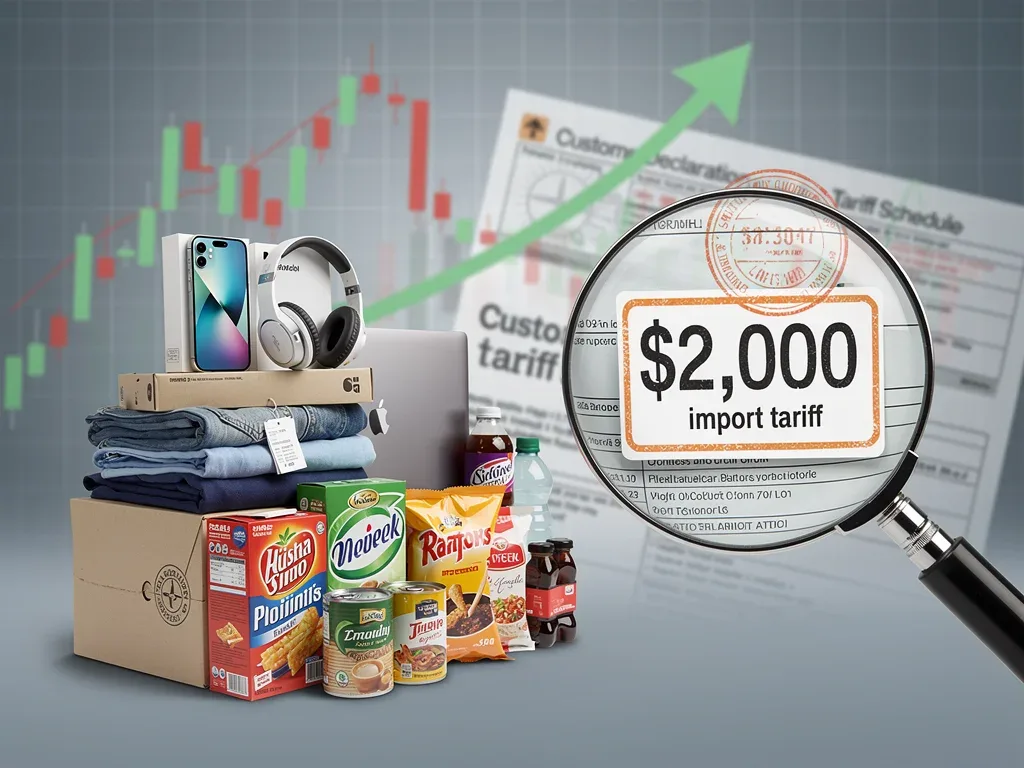
New national import tariffs of 10% are directly influencing domestic retail prices by increasing production costs for businesses, which subsequently pass these elevated expenses onto consumers through higher goods and services prices.
The economic landscape is in constant flux, and understanding how new national import tariffs of 10% are directly influencing domestic retail prices is crucial for every consumer and business owner in the United States. These policy changes, often implemented with specific economic goals in mind, inevitably ripple through the supply chain, ultimately affecting the cost of everyday goods.
Understanding Import Tariffs and Their Immediate Impact
Import tariffs are essentially taxes levied on imported goods and services. When the government imposes a new national import tariff of 10%, it means that for every dollar's worth of goods brought into the country, an additional ten cents must be paid at the border. This direct cost increase immediately affects importers and manufacturers who rely on international supply chains.
Initially, this additional cost is borne by the importing businesses. However, in a competitive market, these businesses rarely absorb the full extent of the tariff. Instead, they typically pass a significant portion, if not all, of these increased costs onto the next stage of the supply chain, which eventually reaches the consumer in the form of higher retail prices. This mechanism is a fundamental aspect of how tariffs influence the economy.
The Mechanics of Tariff Implementation
The implementation of tariffs involves a complex process that begins with legislative action or executive orders. Once a tariff is enacted, customs agencies are responsible for collecting the duties. The specific goods targeted by tariffs can vary widely, from raw materials and intermediate components to finished consumer products.
- Legislative Approval: Tariffs often require congressional approval, though some can be imposed via executive action under specific trade laws.
- Customs Collection: The U.S. Customs and Border Protection (CBP) is responsible for collecting tariff duties at ports of entry.
- Targeted Goods: Tariffs can be highly specific, focusing on particular product categories, or broad, covering entire sectors.
The immediate impact is felt by companies that source components or finished goods from abroad. They must recalibrate their pricing strategies to account for the new tax, which can lead to difficult decisions about maintaining profit margins versus retaining market share.
In conclusion, the imposition of a 10% import tariff is not a standalone event; it sets in motion a series of economic adjustments. The initial burden falls on importers, but the economic reality dictates that these costs will likely be distributed throughout the market, directly impacting the domestic retail prices consumers pay for goods.
The Supply Chain: From Port to Price Tag
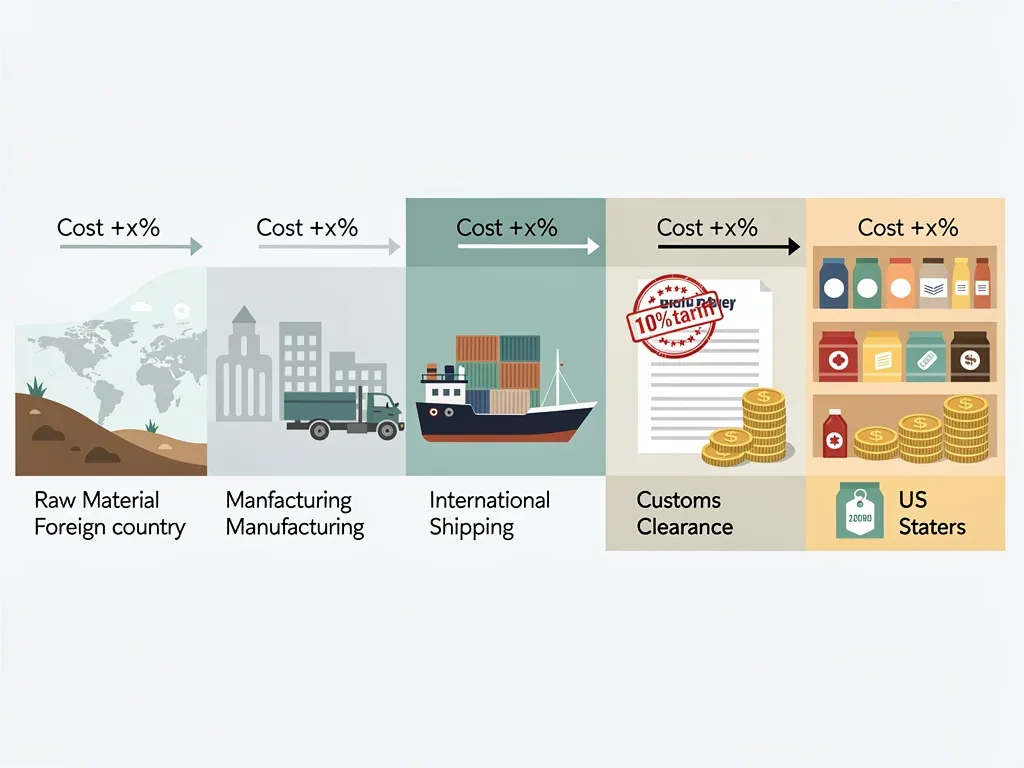
The journey of a product from its origin country to a consumer's shopping cart involves a complex global supply chain. When new national import tariffs of 10% are introduced, every link in this chain can experience increased pressure, ultimately translating into higher costs at the retail level. This intricate process highlights how interconnected global trade is with local pricing.
Consider a product manufactured overseas. The raw materials might come from one country, processed in another, assembled in a third, and then shipped to the United States. At each border crossing, or upon entry into the U.S., tariffs can add to the cost. This cumulative effect is what ultimately drives up the final retail price.
Cost Accumulation Along the Chain
The 10% tariff isn't just applied once; it can compound if a product's components are also subject to tariffs. For instance, if a U.S. manufacturer imports raw materials, processes them, and then imports a finished good that incorporates those materials, both stages could incur tariff costs. This layering of tariffs significantly inflates the overall production cost.
- Raw Materials: Tariffs on basic commodities like steel or aluminum increase the cost for manufacturers.
- Intermediate Goods: Components used in assembly, such as circuit boards or textile parts, become more expensive.
- Finished Products: The direct import of completed consumer goods directly incurs the 10% tariff.
These accumulated costs are then factored into the wholesale price, and subsequently, the retail price. Retailers, facing higher acquisition costs, must adjust their pricing to maintain their profit margins, which are often very thin. This adjustment is a direct response to the tariff, not an arbitrary price hike.
In summary, the supply chain acts as a conduit for tariff costs. From the moment a tariff is applied to raw materials or finished goods, those costs begin to accumulate, eventually pushing up the price tag that consumers see at their local stores, demonstrating how new national import tariffs of 10% are directly influencing domestic retail prices.
Consumer Behavior and Purchasing Power Shifts
The direct impact of new national import tariffs of 10% on domestic retail prices extends far beyond mere price increases; it fundamentally alters consumer behavior and significantly diminishes purchasing power. When prices for essential and non-essential goods rise, households must make difficult budgetary adjustments, influencing everything from daily spending to long-term financial planning.
Consumers react to higher prices in various ways. Some may reduce their consumption of tariff-affected goods, opting for cheaper alternatives if available, or simply buying less. Others might shift their spending towards domestically produced goods, assuming they are not indirectly affected by the tariffs on imported components. This shift can have both positive and negative consequences for the economy.
Budgetary Adjustments for Households
For many American households, especially those with fixed or lower incomes, even a 10% increase in the price of certain goods can strain their budgets. This can lead to a reallocation of funds, where money previously spent on discretionary items is now directed towards covering the increased cost of necessities.
- Reduced Discretionary Spending: Less money for entertainment, dining out, or non-essential purchases.
- Prioritization of Essentials: Greater focus on allocating funds for food, housing, and utilities, which may also see indirect price increases.
- Search for Alternatives: Consumers actively seek out lower-cost brands, generic products, or substitute goods.
The cumulative effect of these individual budgetary adjustments can lead to a slowdown in overall consumer spending, which is a significant driver of economic growth. Businesses, in turn, may experience reduced sales volumes, potentially leading to lower profits, and in some cases, job cuts or reduced investment.
Ultimately, the increase in domestic retail prices due to these tariffs forces consumers to be more deliberate and conservative with their spending. This directly impacts their quality of life and contributes to broader economic shifts, illustrating a key way new national import tariffs of 10% are directly influencing domestic retail prices.
Sector-Specific Impacts: Who Feels the Pinch Most?
While new national import tariffs of 10% generally influence domestic retail prices across the board, their impact is not uniformly distributed. Certain sectors, due to their reliance on imported goods, global supply chains, or price sensitivity, feel the pinch much more acutely than others. Understanding these sector-specific vulnerabilities is key to grasping the full economic ramifications.
Industries heavily dependent on imported components or finished products, such as electronics, apparel, and certain segments of manufacturing, are particularly susceptible. These sectors often operate on thin margins, and a 10% tariff can significantly erode profitability, leading to higher consumer prices or even business closures.
Vulnerable Industries and Their Responses
The electronics industry, for example, frequently relies on complex global supply chains for components like microchips, displays, and specialized plastics. A 10% tariff on these inputs can make the production of smartphones, computers, and other gadgets significantly more expensive, leading to higher retail prices for consumers.
Similarly, the apparel sector, where a vast majority of clothing is imported, sees direct price increases. Retailers and brands might try to absorb some costs initially, but sustained tariffs inevitably translate into higher prices for clothing, footwear, and accessories.
- Electronics: Increased costs for components lead to higher prices for consumer electronics.
- Apparel: Direct tariffs on finished garments mean more expensive clothing for shoppers.
- Automotive: Tariffs on parts or assembled vehicles can raise car prices and repair costs.
- Home Goods: Furniture, appliances, and decor items made with imported materials or manufactured abroad become pricier.
In response, businesses in these sectors may explore various strategies, including diversifying their supply chains to non-tariff countries, shifting some production back to the U.S. (reshoring), or innovating to reduce other costs. However, these adjustments often take time and can be costly, further contributing to short-term price volatility.
In summary, while tariffs affect the entire economy, their impact is disproportionately felt by sectors with high import reliance. These industries face the difficult choice of absorbing costs, passing them to consumers, or fundamentally restructuring their operations, all of which underscore how new national import tariffs of 10% are directly influencing domestic retail prices.
Economic Theory: Tariffs, Inflation, and Protectionism
The imposition of new national import tariffs of 10% is rooted in economic theories concerning international trade, often with aims of protectionism, but they inevitably carry implications for inflation and domestic retail prices. From an economic standpoint, tariffs are a tool to influence trade balances and protect domestic industries, but their effects are rarely confined to these initial intentions.
When tariffs are implemented, the cost of imported goods rises. This can lead to two main economic outcomes: either consumers pay higher prices for imported goods, or they shift their demand to domestically produced alternatives. In either scenario, the overall price level within the economy, or inflation, is likely to be affected.
Inflationary Pressures from Tariffs
Tariffs act as a direct cost push on the price of goods. When the price of imports increases, businesses that use these imports as inputs face higher production costs. To maintain profitability, these businesses will often pass these increased costs onto consumers, leading to higher retail prices. This is a classic example of cost-push inflation.
- Direct Cost Increase: Tariffs directly add to the cost of imported goods, making them more expensive.
- Reduced Competition: Higher import prices can reduce foreign competition, allowing domestic producers to raise their prices.
- Supply Chain Disruptions: Tariffs can force businesses to seek new, potentially more expensive, suppliers, further driving up costs.
Furthermore, if domestic industries respond to reduced foreign competition by raising their own prices, even without direct tariff costs, this contributes to overall inflation. The aim of protectionism is to shield domestic industries from foreign competition, but a side effect can be reduced pressure on domestic firms to keep prices low, as they face less external market discipline.
In summary, while tariffs are often used for strategic economic reasons like protecting local jobs or industries, their inherent nature as an added tax on goods means they are a significant contributor to inflationary pressures. This directly translates to how new national import tariffs of 10% are directly influencing domestic retail prices, making everything from electronics to apparel more expensive for the average American household.
Mitigating Strategies for Businesses and Consumers
As new national import tariffs of 10% continue to influence domestic retail prices, both businesses and consumers are compelled to adopt various mitigating strategies to navigate the changing economic landscape. These strategies aim to either reduce the impact of increased costs or adapt to the new pricing realities, ensuring sustainability for businesses and affordability for consumers.
For businesses, adapting to tariffs often involves re-evaluating their global sourcing strategies, exploring domestic production options, or enhancing operational efficiencies. Consumers, on the other hand, must become more discerning shoppers, seeking out value, considering alternative products, and adjusting their spending habits to cope with higher prices.

Business Adaptations to Tariff Pressures
Businesses facing tariffs have several avenues to explore. One common approach is to diversify their supply chains, seeking suppliers in countries not subject to the new tariffs. This can be a complex and time-consuming process but can offer long-term cost savings.
Another strategy is to invest in domestic production, or reshoring, to reduce reliance on imported goods. While this often requires significant capital investment, it can insulate businesses from future tariff shocks and potentially create local jobs. Furthermore, businesses might focus on improving internal efficiencies to offset increased import costs.
- Supply Chain Diversification: Sourcing materials or finished goods from non-tariffed countries.
- Reshoring Production: Bringing manufacturing back to the United States to avoid import duties.
- Operational Efficiency: Implementing cost-cutting measures in other areas of the business to absorb tariff costs.
- Product Innovation: Developing new products or modifying existing ones to use fewer imported components.
Consumer Strategies for Managing Higher Prices
Consumers also play a crucial role in adapting to tariff-induced price increases. The most immediate strategy is to become a more budget-conscious shopper. This involves comparing prices across different retailers, taking advantage of sales and promotions, and prioritizing essential purchases over discretionary ones.
Exploring generic or store-brand alternatives for commonly purchased items can also yield significant savings. Additionally, some consumers may opt for durable goods with longer lifespans, even if the initial cost is higher, to reduce the frequency of replacement purchases affected by tariffs.
- Budgeting and Price Comparison: Carefully tracking expenses and shopping around for the best deals.
- Alternative Products: Opting for generic brands or domestically produced goods where possible.
- Reduced Consumption: Simply buying less of non-essential items or delaying major purchases.
- DIY and Repair: Extending the life of existing products through maintenance and repairs rather than buying new ones.
In conclusion, both businesses and consumers must proactively adjust their strategies to mitigate the financial impact of tariffs. These adaptations, while challenging, are essential in managing how new national import tariffs of 10% are directly influencing domestic retail prices and maintaining economic stability.
Long-Term Economic Outlook and Policy Debates
The long-term economic outlook concerning new national import tariffs of 10% and their influence on domestic retail prices is a subject of ongoing debate among economists, policymakers, and industry leaders. While immediate effects are often clear, the sustained impact over several years can be complex, involving shifts in global trade patterns, domestic industrial growth, and consumer welfare.
One perspective suggests that tariffs, if strategically applied, could foster domestic industry growth, leading to job creation and reduced reliance on foreign goods. However, another view warns of potential retaliatory tariffs from other countries, which could harm U.S. exports and further escalate global trade tensions, ultimately leading to higher prices for a wider range of goods.
Potential for Domestic Industry Growth
Proponents of tariffs often argue that they provide a necessary shield for nascent or struggling domestic industries. By making imported goods more expensive, tariffs can level the playing field, allowing local producers to compete more effectively. This could lead to increased investment in domestic manufacturing, technological innovation, and job creation within the U.S.
- Increased Domestic Production: Tariffs can incentivize businesses to produce goods within the country.
- Job Creation: Growth in domestic industries can lead to more employment opportunities.
- Technological Advancement: Investment in local production can spur innovation and R&D.
However, critics counter that such growth often comes at a significant cost to consumers, who pay higher prices, and to other domestic industries that rely on imported inputs. The benefits of protectionism are often debated against the broader costs to the economy.
Challenges and Global Trade Implications
The imposition of tariffs rarely occurs in a vacuum. Other countries may respond with their own retaliatory tariffs on U.S. exports, creating a trade war scenario. This can significantly harm American businesses that rely on international markets, leading to reduced export revenues and potentially job losses in export-oriented sectors.
Moreover, tariffs can disrupt established global supply chains, forcing companies to reconfigure their operations at considerable expense. This can lead to inefficiencies, reduced product variety, and further upward pressure on prices. The long-term effects on international relations and trade agreements are also a significant concern.
- Retaliatory Tariffs: Other countries may impose tariffs on U.S. exports, harming American businesses.
- Supply Chain Disruption: Companies may struggle to find alternative suppliers, leading to inefficiencies.
- Reduced Global Trade: Tariffs can lead to a contraction in international trade volumes, impacting global economic growth.
In conclusion, while new national import tariffs of 10% are directly influencing domestic retail prices in the short term, their long-term economic consequences are multifaceted and subject to intense debate. The balance between protecting domestic industries and ensuring consumer affordability, alongside maintaining stable international trade relations, remains a critical challenge for policymakers.
| Key Aspect | Brief Description |
|---|---|
| Direct Cost Increase | 10% tariff adds directly to import costs for businesses. |
| Retail Price Impact | Businesses pass increased costs to consumers via higher retail prices. |
| Consumer Behavior Shift | Higher prices lead to reduced purchasing power and altered spending habits. |
| Sectoral Vulnerability | Industries reliant on imports (e.g., electronics, apparel) are most affected. |
Frequently Asked Questions About Import Tariffs
What exactly is an import tariff?▼An import tariff is a tax imposed by a government on goods and services imported from another country. It increases the cost of foreign goods, making them less competitive compared to domestically produced items, and generates revenue for the imposing country.
How quickly do tariffs affect retail prices?▼The speed at which tariffs affect retail prices can vary. Some immediate impacts are seen within weeks as new stock arrives, while others might take months as existing inventories are depleted and new, tariff-affected goods enter the market.
Do tariffs always lead to higher consumer prices?▼While tariffs typically lead to higher consumer prices, businesses might absorb some costs to remain competitive. However, for significant tariffs like 10%, a substantial portion is usually passed on to consumers, leading to noticeable retail price increases.
Can tariffs protect domestic jobs and industries?▼Tariffs are often implemented with the goal of protecting domestic jobs and industries by making imported goods more expensive. This can encourage local production, but it also risks retaliatory tariffs from other countries and higher costs for consumers.
What can consumers do to cope with higher prices?▼Consumers can cope by budgeting carefully, comparing prices, seeking generic or store-brand alternatives, and prioritizing essential purchases. Exploring domestically produced goods that are less affected by import tariffs can also be a viable strategy.
Conclusion
The introduction of new national import tariffs of 10% undeniably creates a ripple effect across the U.S. economy, with a direct and significant influence on domestic retail prices. From the initial burden on importers to the eventual impact on consumer purchasing power, every stage of the supply chain feels the pressure. While tariffs are often intended to protect domestic industries and balance trade, their immediate consequence is typically an increase in the cost of goods for the average American household. Both businesses and consumers must remain agile, adapting their strategies to navigate this evolving economic landscape. Understanding these dynamics is crucial for making informed financial decisions and comprehending the broader implications for the nation's economic health and global trade relations.
