The $34 Trillion National Debt: Economic Consequences for Taxpayers
Advertisements

The $34 trillion national debt milestone presents tangible economic consequences for everyday taxpayers, manifesting as inflationary pressures, higher interest rates, and potential reductions in public services.
The United States recently crossed a sobering financial threshold: a national debt exceeding $34 trillion. For many, such colossal figures seem abstract, far removed from their daily lives. However, the reality is that the $34 trillion national debt milestone: practical economic consequences for everyday taxpayers are profound and far-reaching, influencing everything from the cost of living to future economic opportunities. Understanding these implications is crucial for every American.
Understanding the $34 Trillion National Debt
The national debt represents the total amount of money the U.S. federal government owes to its creditors, including public investors, foreign governments, and even its own agencies. This debt accumulates when the government spends more than it collects in revenue, leading to budget deficits. Over decades, these deficits have compounded, pushing the national debt to unprecedented levels.
Reaching $34 trillion is not merely a statistical benchmark; it signals a growing imbalance in the nation's finances. This immense sum is financed through the issuance of Treasury bonds, notes, and bills, which are essentially loans taken out by the government. The willingness of investors to purchase these securities is critical to sustaining government operations, but it also comes with obligations that ultimately fall on the taxpayer.
How the Debt Accumulates
The accumulation of national debt is a complex interplay of various factors. Government spending on programs like Social Security, Medicare, defense, and infrastructure often outpaces tax revenues. Economic downturns can exacerbate this, as tax receipts decline while demand for social safety nets increases. Furthermore, significant events like wars or pandemics often necessitate massive government expenditures, adding rapidly to the debt.
- Budget Deficits: When government spending exceeds revenue in a given fiscal year.
- Interest Payments: A substantial portion of the budget is allocated to paying interest on existing debt.
- Economic Recessions: Lead to lower tax revenues and increased government spending on unemployment benefits and stimulus.
- Major Crises: Wars, natural disasters, or public health emergencies require significant federal funding.
The sheer scale of the $34 trillion debt means that even small changes in interest rates or economic growth can have massive implications for the federal budget. This continuous cycle of borrowing and spending creates a burden that is passed down through generations, affecting the economic landscape for years to come.
Impact on Inflation and Purchasing Power
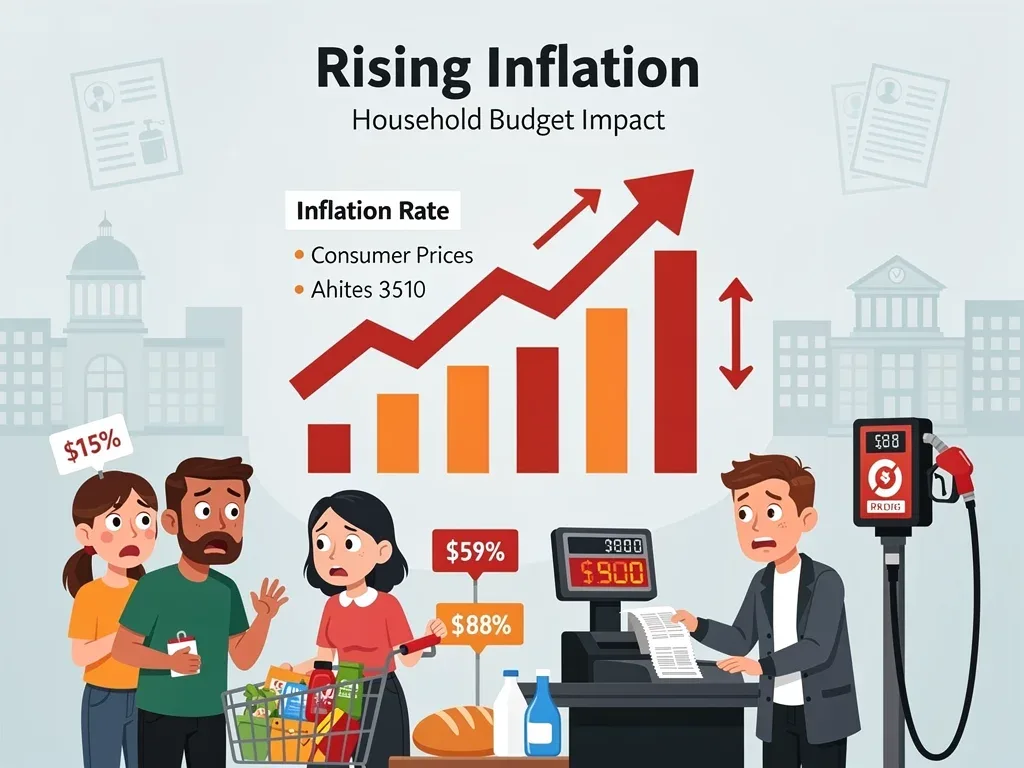
One of the most immediate and tangible consequences of a burgeoning national debt is its potential influence on inflation. When the government consistently runs large deficits and finances them through borrowing, it can increase the money supply in the economy. This, in turn, can lead to a devaluation of the currency and an increase in the price of goods and services, eroding the purchasing power of every dollar.
For everyday taxpayers, this means their hard-earned money buys less than it used to. The rising cost of essentials like groceries, housing, and fuel directly impacts household budgets, making it harder to save, invest, or maintain a comfortable standard of living. This inflationary pressure is a silent tax, disproportionately affecting those on fixed incomes or with limited financial flexibility.
The Link Between Debt and Inflation
Economists often debate the direct correlation between national debt and inflation, but a common theory suggests that sustained high levels of government borrowing can signal a lack of fiscal discipline. This perception can lead to a loss of confidence in the currency, prompting investors to demand higher returns or seek more stable assets. Furthermore, if the central bank monetizes the debt by printing more money, it directly fuels inflation.
The current economic environment, characterized by supply chain disruptions and strong consumer demand, has already seen significant inflationary spikes. A large national debt can exacerbate these pressures, making it more challenging for policymakers to control rising prices without triggering a recession. This delicate balancing act directly affects the financial stability of ordinary citizens.
- Increased Money Supply: Government borrowing can expand the monetary base.
- Devaluation of Currency: Erodes the value of savings and income.
- Higher Consumer Prices: Directly impacts the cost of living for families.\
- Reduced Savings Value: Inflation diminishes the real return on savings and investments.
Ultimately, the inflationary consequences of a large national debt mean that taxpayers are effectively paying more for everything, even if their nominal incomes remain unchanged. This hidden cost can be more damaging than direct taxation, as it subtly erodes economic well-being over time.
Rising Interest Rates and Borrowing Costs
Another significant consequence of a large national debt is its potential to drive up interest rates across the economy. When the government needs to borrow more money, it increases demand for capital in financial markets. To attract investors, the Treasury may have to offer higher interest rates on its bonds. This upward pressure on government borrowing costs can then spill over into the broader economy, affecting individuals and businesses.
For everyday taxpayers, this translates into higher borrowing costs for a variety of financial products. Mortgage rates can increase, making homeownership less affordable or increasing monthly payments for existing homeowners. Car loans, credit card interest, and student loan rates can also rise, placing additional financial strain on households. Businesses face higher costs for capital, which can slow investment, job creation, and economic growth.
Government Debt and Market Rates
The mechanism by which government debt influences market rates is fairly straightforward. If the supply of available capital remains constant, but the government's demand for borrowing increases, the price of that capital (the interest rate) goes up. This phenomenon is often referred to as 'crowding out,' where government borrowing crowds out private sector investment by making capital more expensive or less accessible.
Moreover, a persistently high national debt can lead to concerns among investors about the government's ability to repay its obligations. To compensate for this perceived risk, investors demand even higher interest rates, creating a feedback loop that further exacerbates borrowing costs. This dynamic can significantly impact the long-term economic outlook for the nation.
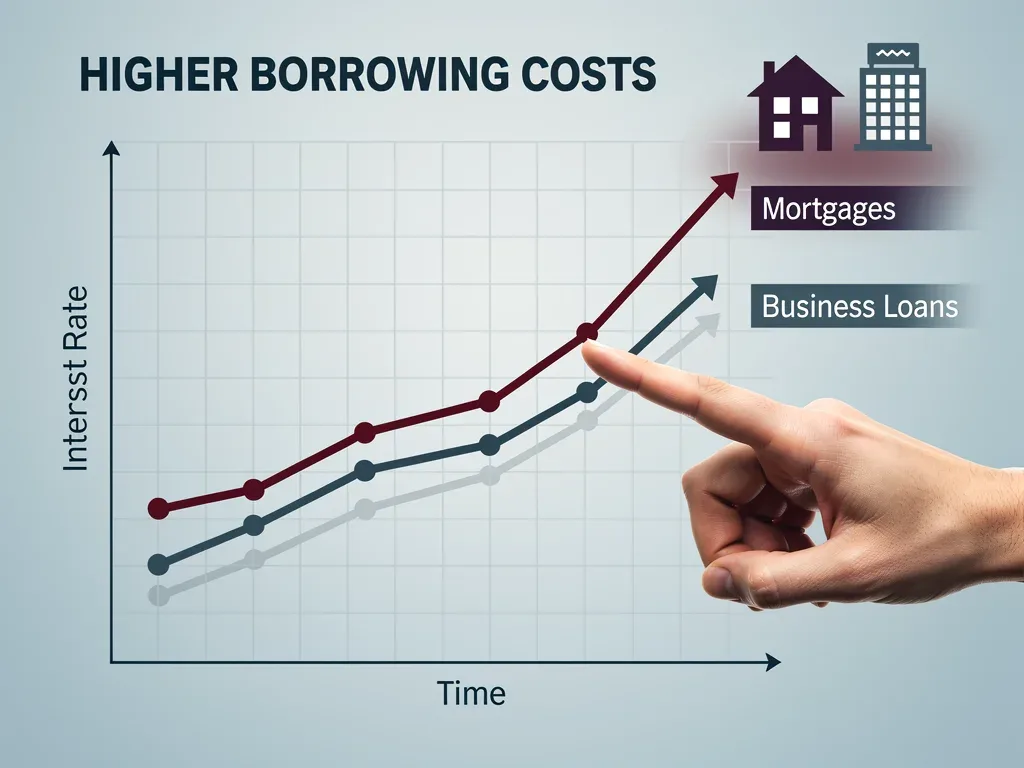
- Higher Mortgage Rates: Increases the cost of homeownership.
- Expensive Consumer Loans: Affects car loans, credit cards, and personal loans.
- Reduced Business Investment: Higher capital costs deter expansion and innovation.\
- Increased Government Interest Payments: Diverts funds from other essential services.
The burden of higher interest rates is a direct consequence that everyday taxpayers experience through their monthly bills and reduced opportunities for economic advancement. It means a larger portion of their income is allocated to debt servicing, leaving less for consumption, savings, or investment.
Future Tax Burdens and Public Services
The $34 trillion national debt represents a deferred tax burden for current and future generations of Americans. While the government can borrow today to finance current spending, that money eventually needs to be repaid, along with interest. This repayment will ultimately come from taxpayers, either through higher taxes, reduced government services, or a combination of both.
Consider the sheer scale of interest payments alone. A significant portion of the federal budget is already dedicated to servicing the debt. As the debt grows and interest rates potentially rise, this portion will consume an even larger share of tax revenues, leaving fewer resources for critical public services such as education, infrastructure, scientific research, and national defense. This diversion of funds can have long-term consequences for the nation's competitiveness and quality of life.
Generational Equity and Economic Opportunity
The concept of generational equity becomes particularly relevant when discussing the national debt. Current generations are enjoying the benefits of government spending, while future generations will bear the primary responsibility for repaying the debt. This can lead to reduced economic opportunities for younger Americans, as they may face higher taxes, fewer public services, and a potentially slower-growing economy.
Policymakers face difficult choices in balancing current needs with future fiscal responsibility. Ignoring the debt can lead to an unsustainable trajectory, while aggressive measures to reduce it could involve painful cuts to popular programs or significant tax increases. These decisions directly affect the pocketbooks and well-being of every taxpayer.
- Higher Taxes: Potential increases in income, property, or sales taxes.
- Reduced Public Services: Cuts to education, infrastructure, and social programs.
- Intergenerational Transfer of Wealth: Future generations inherit a larger debt burden.\
- Slower Economic Growth: Due to reduced investment in productive areas.
The long-term implications of the national debt are perhaps the most concerning, as they threaten the economic prosperity and standard of living for future Americans. It is a challenge that requires thoughtful and sustained policy solutions.
Dollar Strength and Global Economic Standing
The health of a nation's finances directly influences the strength of its currency and its standing in the global economy. A continuously growing national debt, especially one that appears unsustainable, can lead to a decrease in confidence in the U.S. dollar. While the dollar currently holds its position as the world's primary reserve currency, persistent fiscal imbalances could erode this status over time.
A weakening dollar can have a mixed impact on everyday taxpayers. On one hand, it can make U.S. exports cheaper, potentially boosting domestic industries. On the other hand, it makes imports more expensive, contributing to inflation, particularly for goods like oil and consumer electronics. Furthermore, a less stable dollar could deter foreign investment in the U.S., impacting job creation and economic growth.
Geopolitical Implications of Debt
Beyond direct economic impacts, a massive national debt can also have geopolitical consequences. Nations that hold a significant portion of U.S. debt, such as China and Japan, gain a certain degree of leverage. While the U.S. remains a global economic powerhouse, a precarious fiscal situation could limit its ability to respond to international crises or project influence abroad, potentially affecting national security and trade relationships.
Maintaining the dollar's status and the nation's economic credibility is vital for global stability and the prosperity of American citizens. A strong dollar generally reflects confidence in the U.S. economy and its government's ability to manage its finances responsibly. Any erosion of this confidence can have far-reaching effects on everyday economic life.
- Currency Devaluation: Makes imports more expensive and fuels inflation.
- Loss of Investor Confidence: Could lead to capital flight and higher borrowing costs.
- Geopolitical Vulnerability: Increases reliance on foreign creditors.
- Reduced Global Influence: A weaker economic position can diminish diplomatic power.
The global economic standing of the United States is intrinsically linked to its fiscal health. A large and growing national debt poses a risk to both the dollar's strength and the nation's influence on the world stage, with tangible consequences for American taxpayers.
Strategies for Addressing the National Debt
Addressing the $34 trillion national debt is a monumental challenge that requires a multi-faceted approach and bipartisan cooperation. There is no single, easy solution, and any effective strategy will likely involve a combination of spending cuts, revenue increases, and policies aimed at fostering sustained economic growth. The choices made today will determine the economic landscape for future generations of taxpayers.
One primary strategy involves controlling government spending. This could mean scrutinizing discretionary spending, reforming entitlement programs like Social Security and Medicare, and finding efficiencies across federal agencies. However, such measures are often politically difficult, as they can impact popular programs or specific constituencies.
Balancing Revenue and Expenditure
Another approach focuses on increasing government revenue. This could involve raising taxes, expanding the tax base, or closing tax loopholes. Again, these options are often met with resistance, as they directly impact individuals and businesses. The goal is to find a balance that generates sufficient revenue without stifling economic activity or disproportionately burdening certain segments of the population.
Beyond direct fiscal measures, policies that promote robust economic growth are also crucial. A growing economy generates more tax revenue naturally, without necessarily increasing tax rates, and can make the debt burden more manageable relative to the size of the economy. This includes investments in education, infrastructure, and innovation, as well as maintaining a stable regulatory environment.
- Fiscal Discipline: Implementing stricter controls on government spending.
- Tax Reform: Adjusting tax policies to increase revenue fairly.
- Economic Growth Initiatives: Investing in areas that boost productivity and GDP.
- Entitlement Reform: Modernizing programs like Social Security and Medicare.
Ultimately, addressing the national debt requires a long-term vision and a willingness to make difficult decisions. The practical economic consequences for everyday taxpayers necessitate a proactive and comprehensive strategy to ensure the nation's fiscal health and future prosperity.
| Key Impact Area | Brief Description of Consequence |
|---|---|
| Inflation & Purchasing Power | Higher prices for goods and services, eroding the value of money. |
| Interest Rates & Borrowing | Increased costs for mortgages, loans, and credit cards for consumers. |
| Future Tax Burdens | Potential for higher taxes or reduced public services in the future. |
| Dollar Strength & Global Standing | Risk of currency devaluation and diminished U.S. economic influence. |
Frequently asked questions about the national debt
What does the $34 trillion national debt mean for my savings?▼The $34 trillion national debt can contribute to inflation, which erodes the purchasing power of your savings over time. Additionally, if the debt leads to higher interest rates, the value of some fixed-income investments might decrease, though new investments could offer better returns.
How does the national debt affect my taxes?▼While not immediate, a growing national debt often necessitates future government actions to repay it. This could mean higher income taxes, consumption taxes, or other forms of taxation, or a reduction in government services that you currently benefit from, effectively increasing your tax burden indirectly.
Can the national debt lead to a recession?▼A high national debt doesn't directly cause a recession, but it can contribute to conditions that make a recession more likely or severe. For example, persistently high debt can lead to increased interest rates, crowding out private investment, and reducing fiscal flexibility to respond to economic downturns, potentially exacerbating a crisis.
What is the difference between national debt and budget deficit?▼The budget deficit is the amount by which government spending exceeds revenue in a single fiscal year. The national debt, conversely, is the accumulation of all past annual deficits (minus any surpluses) over the nation's history. The national debt is the total outstanding amount the government owes.
Who owns the U.S. national debt?▼The U.S. national debt is owned by a diverse group of entities. A significant portion is held by the public, including individuals, corporations, and foreign governments. Another substantial part is held by various U.S. government accounts, such as Social Security and Medicare trust funds.
Conclusion
The $34 trillion national debt milestone is more than just a headline-grabbing number; it represents a complex web of financial challenges with direct and practical economic consequences for everyday taxpayers across the United States. From the subtle erosion of purchasing power due to inflation to the more overt increases in borrowing costs for homes and cars, the debt influences nearly every aspect of economic life. It also casts a long shadow over future generations, potentially leading to higher taxes or reduced public services. Addressing this monumental challenge requires a concerted effort from policymakers to implement sustainable fiscal policies, balancing immediate needs with long-term economic stability. Understanding these implications empowers citizens to engage in informed discussions and advocate for responsible governance that safeguards the nation's economic future.
