Navigating 4.5% Treasury Yield Plateau: Key Economic Signals
Advertisements

Intermediate capital allocators must meticulously analyze economic signals and market dynamics to effectively navigate the persistent 4.5% Treasury yield plateau, optimizing portfolio resilience and seizing opportunities.
For intermediate capital allocators, the current environment presents a compelling challenge: Navigating the 4.5% Treasury Yield Plateau: Key Economic Signals for Intermediate Capital Allocators. This persistent yield level, while offering attractive returns compared to recent history, demands a sophisticated understanding of underlying economic forces and their potential impact on investment strategies. It's a landscape where complacency can be costly, and informed decisions are paramount.
Understanding the 4.5% Treasury Yield Plateau
The 4.5% Treasury yield plateau signifies a period where long-term government bond yields have stabilized around this particular level. This stability is not necessarily indicative of market calm; rather, it often reflects a delicate balance of competing economic forces. Investors and allocators must look beyond the surface to understand what this plateau truly means for their portfolios.
This level can be influenced by a myriad of factors, from inflation expectations to central bank policy and global economic growth. For intermediate capital allocators, deciphering these influences is crucial for making strategic decisions about fixed income exposure, duration risk, and overall asset allocation. The plateau might seem reassuring, but its persistence suggests a complex interplay of signals that warrant close examination.
The role of inflation expectations
Inflation expectations play a pivotal role in shaping Treasury yields. When investors anticipate higher inflation, they demand higher yields to compensate for the erosion of purchasing power. Conversely, subdued inflation expectations can keep yields anchored or even push them lower. The current plateau suggests a market consensus on future inflation, but this consensus is always subject to change.
- Breakeven inflation rates: These are derived from the difference between nominal Treasury yields and Treasury Inflation-Protected Securities (TIPS) yields, offering real-time insights into market-implied inflation expectations.
- Consumer price index (CPI): A key indicator providing a snapshot of inflation pressures within the economy.
- Producer price index (PPI): Reflects inflation at the wholesale level, often a leading indicator for consumer prices.
- Wage growth: Strong wage growth can signal inflationary pressures from the labor market.
Understanding these indicators helps allocators gauge the stability of current inflation expectations and the potential for shifts that could impact the yield curve. A sudden rise in inflation concerns could quickly dislodge the plateau, leading to higher yields and capital losses for existing bondholders.
Central bank monetary policy
The Federal Reserve's stance on monetary policy is arguably the most significant driver of Treasury yields. Their decisions on interest rates, quantitative easing or tightening, and forward guidance directly influence the cost of borrowing and the attractiveness of government bonds. The current plateau often reflects a market's interpretation of the Fed's future path.
When the Fed maintains a hawkish stance, even if rates are stable, it can keep yields elevated. Conversely, a dovish pivot could lead to a decline. Intermediate capital allocators need to closely monitor FOMC meeting minutes, speeches from Fed officials, and economic projections to anticipate potential shifts in policy that could break the current yield equilibrium.
In conclusion, the 4.5% Treasury yield plateau is a complex phenomenon driven by a confluence of inflation expectations and central bank policy. For intermediate capital allocators, a deep understanding of these foundational elements is essential for anticipating market movements and protecting capital. Ignoring these signals could lead to suboptimal investment outcomes in a volatile economic environment.
Economic Indicators Shaping the Plateau
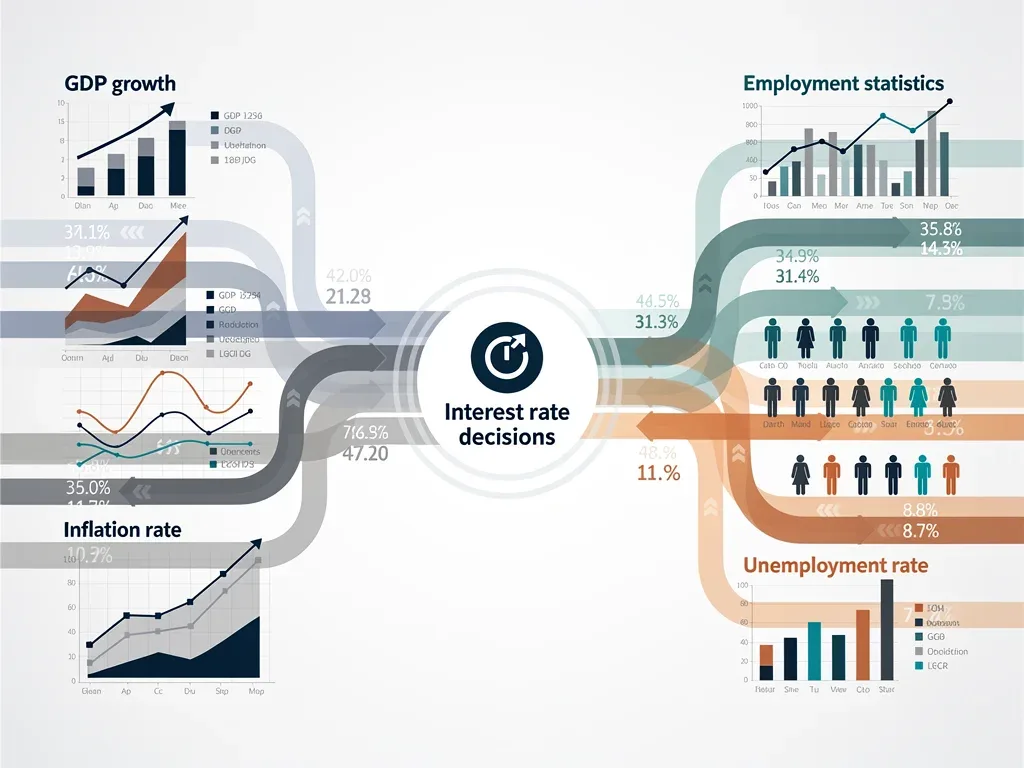
Beyond inflation and monetary policy, a range of broader economic indicators significantly influences the persistence and future direction of the 4.5% Treasury yield plateau. These signals provide a comprehensive picture of economic health and market sentiment, guiding allocators in their strategic decisions.
Analyzing these indicators allows for a more nuanced understanding of the forces at play. It's not just about what the Fed says or what inflation is doing today, but also about the underlying strength of the economy, consumer behavior, and global capital flows. Each data point contributes to the overall narrative influencing bond markets.
GDP growth and economic output
The rate of Gross Domestic Product (GDP) growth is a fundamental measure of economic activity. Strong, sustainable GDP growth generally correlates with higher demand for capital, which can push interest rates, including Treasury yields, higher. A slowing economy, on the other hand, often leads to lower rates as demand for safe-haven assets like Treasuries increases.
The current yield plateau suggests a perception of moderate, rather than booming or collapsing, economic growth. Intermediate capital allocators should closely watch initial GDP estimates, revisions, and the components of GDP (consumer spending, business investment, government spending, net exports) to assess the underlying momentum of the U.S. economy. Sustained strong growth could challenge the plateau, while a significant slowdown could cement it or even drive yields lower.
Labor market strength
A robust labor market, characterized by low unemployment rates and consistent job creation, is a strong indicator of economic health. A tight labor market can lead to wage inflation, which in turn can push overall inflation higher, influencing the Fed's policy and Treasury yields. Conversely, a weakening labor market often signals economic distress and can lead to lower yields.
- Non-farm payrolls: This monthly report is a critical gauge of job creation and labor market momentum.
- Unemployment rate: A low unemployment rate often indicates a tight labor market, potentially fueling wage inflation.
- Average hourly earnings: Growth in wages is a direct measure of labor cost pressures, impacting inflation expectations.
The stability of the 4.5% yield suggests a labor market that is neither overheating nor collapsing, maintaining a balance that contributes to the current equilibrium. Allocators should monitor these labor market statistics for any signs of significant acceleration or deceleration, as they are powerful indicators of future inflation and economic policy.
Global economic conditions
The U.S. Treasury market does not operate in isolation. Global economic conditions, including growth in major economies, geopolitical events, and international capital flows, can all impact domestic yields. For instance, a flight to safety during global uncertainty can increase demand for U.S. Treasuries, pushing yields down.
Conversely, strong global growth could pull capital away from safe-haven assets, potentially pushing yields higher. Intermediate capital allocators must consider the broader international landscape, including policies of other major central banks, trade tensions, and commodity prices, as these factors can indirectly influence the supply and demand dynamics for U.S. government debt. The current plateau reflects a global environment that, while presenting challenges, has not yet triggered a dramatic shift in demand for U.S. Treasuries.
In summary, GDP growth, labor market strength, and global economic conditions are crucial indicators for understanding the 4.5% Treasury yield plateau. These factors, when analyzed in conjunction with inflation expectations and central bank policy, provide intermediate capital allocators with a comprehensive framework for anticipating market movements and making informed investment decisions. A holistic view is essential in navigating this complex financial landscape.
Implications for Intermediate Capital Allocators
The persistence of the 4.5% Treasury yield plateau carries significant implications for intermediate capital allocators. It shapes the risk-reward profile of fixed income, influences asset allocation decisions, and demands a re-evaluation of traditional portfolio strategies. Understanding these implications is key to optimizing returns and managing risk effectively.
This environment, while offering attractive yields for new investments, also presents duration risk for existing holdings if yields were to rise further. Allocators must balance the pursuit of yield with the imperative of capital preservation, navigating a landscape where the 'safe' haven of Treasuries still carries nuanced risks.
Fixed income strategy adjustments
In a plateaued yield environment, fixed income strategies require careful consideration. While higher yields offer better income generation, the potential for capital appreciation from falling yields is diminished. This shifts the focus towards managing duration and credit risk more actively.
- Shorter duration focus: Allocators might prefer shorter-duration bonds to reduce interest rate sensitivity, offering flexibility if yields were to move significantly.
- Credit quality emphasis: With government yields providing a solid baseline, the incremental return from lower-rated credit needs to be carefully evaluated against default risk.
- Yield curve positioning: Analyzing the shape of the yield curve (e.g., flat, inverted, or normal) can inform decisions on where to allocate capital along the maturity spectrum.
The current yield level also makes cash and short-term instruments more attractive, providing a competitive alternative to longer-dated bonds while offering liquidity. Allocators should assess whether the incremental yield from extending duration justifies the added interest rate risk.
Impact on equity valuations
The 4.5% Treasury yield plateau has a direct bearing on equity valuations, particularly through its influence on discount rates. Higher risk-free rates, such as Treasury yields, generally lead to higher discount rates in valuation models, which can depress the present value of future earnings and thus lower equity valuations.
This dynamic means that companies with strong current cash flows and less reliance on future growth might be relatively more attractive. Conversely, growth stocks, whose valuations are heavily dependent on distant future earnings, can be more vulnerable to higher discount rates. Intermediate capital allocators must evaluate their equity portfolios through this lens, potentially adjusting sector exposures or favoring value-oriented investments.
In conclusion, the 4.5% Treasury yield plateau necessitates a proactive approach to fixed income and a re-evaluation of equity valuations. Allocators must be agile in adjusting their strategies, focusing on duration management, credit quality, and the interplay between bond yields and equity markets. This environment demands a sophisticated and holistic view of portfolio construction.
Risk Management in a Plateaued Yield Environment
Effective risk management is paramount for intermediate capital allocators operating within the 4.5% Treasury yield plateau. While the stability might appear comforting, underlying economic uncertainties and potential shifts in market dynamics mean that risks, particularly interest rate and inflation risks, remain significant. A robust framework is essential to protect capital and ensure portfolio resilience.
The goal is not to eliminate risk entirely, which is impossible, but to identify, measure, and mitigate it strategically. This involves stress testing portfolios, diversifying across asset classes, and maintaining a clear understanding of liquidity requirements. The plateau offers an opportunity to refine risk management practices.
Interest rate risk mitigation
Even with a plateaued yield, the risk of future interest rate movements remains. If yields were to suddenly break out of the plateau and rise significantly, bond portfolios could suffer capital losses. Therefore, managing interest rate risk (duration risk) is a critical component of portfolio protection.
- Duration matching: Aligning the duration of assets with liabilities to minimize the impact of interest rate changes.
- Laddering strategies: Staggering bond maturities to ensure regular cash flow and reduce exposure to interest rate fluctuations at any single point in time.
- Floating-rate instruments: Allocating a portion of the portfolio to bonds with variable interest rates that adjust to market conditions, offering protection against rising rates.
These strategies help to insulate portfolios from abrupt shifts in the yield curve. Allocators should regularly review their portfolio's duration profile and adjust it based on their outlook for interest rates and their risk tolerance.
Inflation risk hedging
Despite the current inflation expectations embedded in the 4.5% yield, the risk of an inflation surprise cannot be ignored. Unexpectedly higher inflation would erode the real value of fixed income investments. Hedging against this risk is a prudent measure for long-term capital preservation.
Treasury Inflation-Protected Securities (TIPS) are a direct way to hedge inflation risk, as their principal value adjusts with the Consumer Price Index. Other strategies include allocations to real assets like real estate, commodities, and certain infrastructure investments, which historically have performed well during inflationary periods. Diversification into these assets can provide a buffer against unexpected price increases.
Liquidity management
Maintaining adequate liquidity is always important, but it becomes particularly critical when navigating a potentially volatile interest rate environment. Intermediate capital allocators need to ensure they have sufficient liquid assets to meet short-term obligations without being forced to sell longer-term holdings at unfavorable prices.
Cash and short-term Treasury bills offer immediate liquidity and can be reinvested quickly if market conditions change. A well-structured liquidity buffer provides flexibility and allows allocators to capitalize on new opportunities that may arise from market dislocations. This balance between yield generation and liquidity is a constant challenge in portfolio management.
In conclusion, robust risk management, encompassing interest rate risk mitigation, inflation hedging, and liquidity management, is indispensable for intermediate capital allocators facing the 4.5% Treasury yield plateau. Proactive measures and a comprehensive understanding of potential vulnerabilities will enable portfolios to withstand market shocks and maintain long-term stability.
Identifying Key Economic Signals for Future Shifts
Successfully navigating the 4.5% Treasury yield plateau requires not just understanding the current landscape but also foresight into potential future shifts. This involves diligently monitoring specific economic signals that could indicate a departure from the current equilibrium. For intermediate capital allocators, anticipating these changes is crucial for proactive portfolio adjustments.
The market is a dynamic entity, and while plateaus can persist, they rarely last indefinitely. Identifying the catalysts for change—whether towards higher or lower yields—is an ongoing analytical challenge that demands continuous vigilance and a deep understanding of macroeconomic fundamentals.
Federal Reserve communication and actions
The Federal Reserve remains the primary driver of U.S. interest rate policy. Any subtle shifts in their communication, known as 'forward guidance,' or actual policy actions can have an immediate and profound impact on Treasury yields. Allocators must pay close attention to the nuances of Fed speeches, press conferences, and the Summary of Economic Projections (SEP).
Changes in the 'dot plot' (individual Fed members' projections for future interest rates), alterations in the Fed's balance sheet policy (quantitative tightening or easing), or unexpected shifts in their economic outlook can all signal an impending move from the plateau. A sustained hawkish tone could push yields higher, while a dovish pivot might signal a decline. The market often reacts to perceived future actions as much as to current ones.
Inflation data surprises
While current inflation expectations are priced into the 4.5% yield, significant upside or downside surprises in inflation data could quickly alter this equilibrium. Unexpectedly persistent high inflation, or a sudden and sustained drop, would force the market and the Fed to reassess their outlook.
- Core CPI and PCE: These measures, which exclude volatile food and energy components, are closely watched by the Fed for underlying inflation trends.
- Services inflation: Often stickier than goods inflation, strong services inflation can signal more entrenched price pressures.
- Inflation expectations surveys: Beyond market-implied rates, surveys of consumers and businesses provide insights into psychological factors influencing inflation.
Intermediate capital allocators should analyze not just the headline inflation numbers but also the components and trends to discern whether a surprise is likely to be transitory or indicative of a more fundamental shift in the inflation regime.
Fiscal policy developments
Government fiscal policy, encompassing spending, taxation, and debt issuance, can also significantly influence Treasury yields. Large government deficits and increased borrowing can put upward pressure on yields by increasing the supply of government bonds. Conversely, fiscal austerity could alleviate some of this pressure.
Changes in tax policy or significant new spending initiatives can alter economic growth prospects and inflation expectations, indirectly impacting yields. Allocators should monitor legislative developments and the Treasury's borrowing plans, as these can create supply-demand imbalances in the bond market that could disrupt the current yield plateau.
In conclusion, identifying key economic signals—particularly from the Federal Reserve, inflation data, and fiscal policy—is essential for anticipating future shifts from the 4.5% Treasury yield plateau. Proactive monitoring and analysis of these indicators empower intermediate capital allocators to make timely adjustments to their portfolios, positioning them advantageously for whatever the future holds.
Strategies for Optimizing Capital Allocation
In a period defined by the 4.5% Treasury yield plateau, intermediate capital allocators must employ strategic approaches to optimize their portfolios. This involves not only managing risks but also actively seeking opportunities that align with the current economic landscape while preparing for potential future changes. The goal is to maximize risk-adjusted returns and preserve capital.
Optimization in this environment means being adaptable and pragmatic, recognizing that while the yield offers attractive income, the market's direction is always subject to evolving economic signals. It's about finding the right balance between stability and growth, income and appreciation.
Diversification beyond traditional fixed income
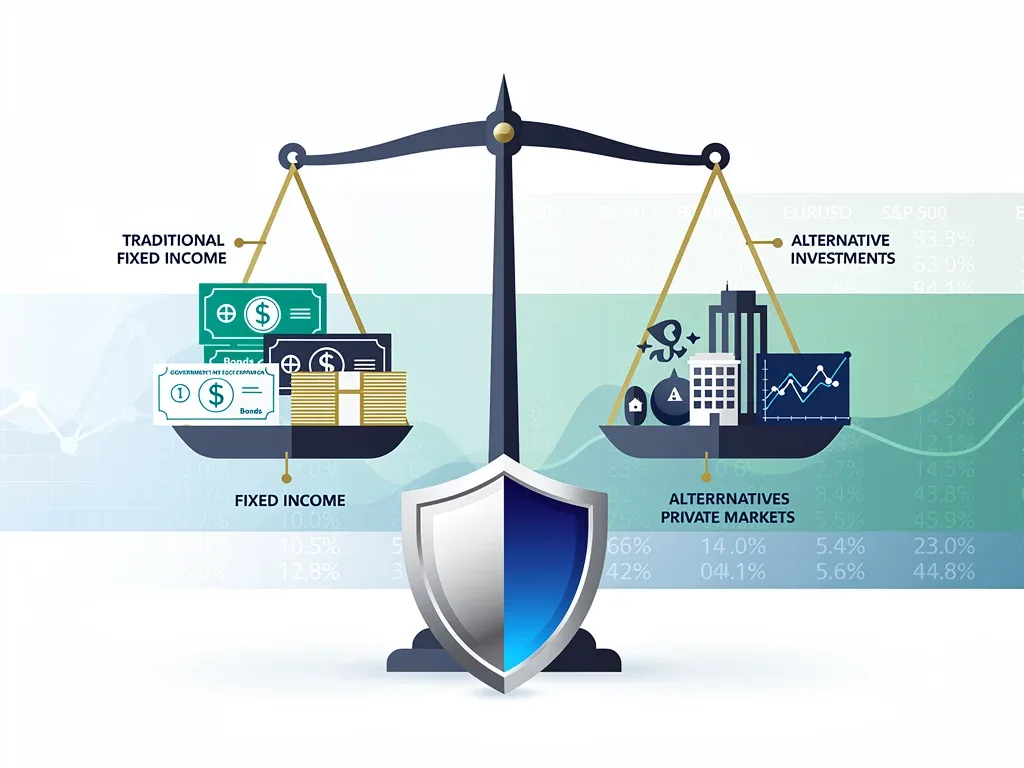
While Treasuries offer safety and now a respectable yield, relying solely on them may not be optimal for long-term growth. Diversification into other asset classes can enhance returns and reduce correlation risk. This is particularly true when traditional fixed income might offer limited capital appreciation potential.
- Alternative investments: Private credit, infrastructure, and real estate can offer uncorrelated returns and inflation protection.
- Global fixed income: Exploring bond markets in other developed or emerging economies can provide diversification benefits, though currency risk must be managed.
- High-quality corporate bonds: For those willing to take on some credit risk, investment-grade corporate bonds can offer a yield pick-up over Treasuries.
The key is to select assets that offer a different risk-reward profile than plain vanilla Treasuries, providing both income and potential for capital growth in varying market conditions. A diversified approach helps smooth out portfolio returns.
Dynamic asset allocation
Given the potential for shifts from the 4.5% Treasury yield plateau, a dynamic approach to asset allocation is more effective than a static one. This involves regularly reviewing and adjusting portfolio weights based on evolving economic signals, market valuations, and the allocator's risk appetite.
Dynamic allocation allows allocators to be tactical, increasing exposure to certain asset classes when they are undervalued or reducing it when risks become elevated. For instance, if economic signals suggest an impending decline in yields, increasing duration or allocating to growth-oriented equities might be prudent. Conversely, if yields are expected to rise, a more defensive posture with shorter duration and value stocks could be appropriate.
Focus on total return
While the 4.5% yield provides attractive income, intermediate capital allocators should maintain a focus on total return, which includes both income and capital appreciation. In a plateaued yield environment, achieving capital appreciation from fixed income might be challenging, making other sources of return more critical.
This means considering the full spectrum of investment opportunities and not just chasing the highest yield. It also involves being mindful of costs, taxes, and liquidity, all of which impact the net total return. A holistic approach that integrates all these elements will lead to more robust and sustainable portfolio performance.
In conclusion, optimizing capital allocation in the 4.5% Treasury yield plateau demands a multi-faceted approach. Diversification beyond traditional fixed income, dynamic asset allocation, and a steadfast focus on total return are crucial strategies. By adopting these methods, intermediate capital allocators can enhance their portfolios' resilience and growth potential in a complex market environment.
Case Studies: Lessons from Past Yield Plateaus
History often rhymes, and while no two economic cycles are identical, examining past periods of sustained Treasury yield plateaus can offer valuable lessons for intermediate capital allocators. These historical parallels can provide context, highlight potential pitfalls, and inform strategic decisions in the current 4.5% yield environment.
Understanding how markets reacted, what economic signals proved most decisive, and which strategies succeeded or failed in previous plateaus can offer a practical framework for navigating today's challenges. It's about learning from the past to better prepare for the future.
The mid-2000s yield curve conundrum
One notable period was the mid-2000s, often referred to as the 'yield curve conundrum.' During this time, despite the Federal Reserve raising the federal funds rate, long-term Treasury yields remained stubbornly low or even plateaued, defying traditional economic models. This was largely attributed to global savings gluts, strong demand for safe assets, and subdued inflation expectations.
Lessons from this period include the power of global capital flows to influence domestic yields and the potential for a disconnect between short-term policy rates and long-term bond yields. Allocators who understood these dynamics were better positioned to manage duration risk and explore alternative income sources, rather than simply assuming a rising yield environment across the board.
Post-financial crisis low yield plateau
Following the 2008 financial crisis, the U.S. experienced a prolonged period of historically low Treasury yields, effectively a plateau at a much lower level. This was driven by aggressive quantitative easing, low inflation, and a flight to safety. While the 4.5% plateau is significantly higher, the lessons regarding the impact of central bank intervention and global risk aversion are still relevant.
- Central bank dominance: The Fed's actions can powerfully anchor yields for extended periods.
- Search for yield: Low yields often push investors into riskier assets in search of higher returns.
- Disinflationary pressures: Global economic slowdowns or technological advancements can create sustained disinflationary forces.
Allocators during this era learned the importance of looking beyond nominal yields to real (inflation-adjusted) returns and the necessity of diversifying into assets that could generate income or capital appreciation in a low-rate world. The challenge was finding yield without taking on excessive risk.
Applying historical insights to today
While the specifics of each historical plateau differ, the overarching lesson for intermediate capital allocators is the need for adaptability and a deep understanding of the underlying economic and policy drivers. The current 4.5% yield plateau is influenced by a new set of factors, including the aftermath of significant fiscal stimulus, evolving inflation dynamics, and a more complex geopolitical landscape.
By studying these historical precedents, allocators can refine their analytical frameworks, identify common patterns, and avoid past mistakes. The current plateau might be sustained by different forces, but the principles of careful risk management, diversified allocation, and vigilant monitoring of key economic signals remain timeless. It underscores that even in periods of apparent stability, the market is constantly evolving.
In conclusion, historical case studies offer invaluable insights for navigating the present 4.5% Treasury yield plateau. From the yield curve conundrum to the post-crisis low-yield environment, lessons on central bank influence, global capital flows, and the imperative for diversification provide a robust foundation for intermediate capital allocators to make informed and resilient investment decisions today.
The Future Outlook: Breaking the Plateau
Predicting the exact timing and direction of a break from the 4.5% Treasury yield plateau is inherently challenging, yet intermediate capital allocators must consider the potential scenarios. Understanding what factors could push yields higher or lower is crucial for positioning portfolios effectively and anticipating future market dynamics. The current stability is likely temporary, and preparing for the next phase is key.
The future outlook hinges on a complex interplay of macroeconomic forces, central bank responses, and geopolitical developments. While a sustained plateau offers a degree of certainty, allocators must remain agile and ready to adapt to significant shifts that could emerge from these interconnected drivers.
Potential catalysts for higher yields
Several factors could lead to an upward break from the 4.5% yield plateau. A primary catalyst would be a resurgence of inflation, perhaps driven by persistent supply-side issues, strong wage growth, or an unexpected increase in consumer demand. If inflation proves to be more entrenched than currently anticipated, the Federal Reserve would likely adopt a more aggressive tightening stance, pushing yields higher.
Another factor could be stronger-than-expected economic growth. A sustained period of robust GDP expansion, coupled with a tight labor market, could increase demand for capital, naturally leading to higher interest rates. Additionally, a significant increase in government borrowing, particularly if not matched by sufficient demand for Treasuries, could also push yields upwards. A loss of confidence in fiscal sustainability, though less likely for the U.S., would also have a dramatic upward impact on yields.
Potential catalysts for lower yields
Conversely, the plateau could break downwards, leading to lower Treasury yields. A significant economic slowdown or recession would be a primary driver. In such a scenario, investors would flock to safe-haven assets like Treasuries, increasing demand and pushing yields lower. The Federal Reserve would also likely respond by cutting interest rates, further contributing to a decline in yields.
- Global economic downturn: A severe recession in major economies could spill over, increasing demand for U.S. safe assets.
- Deflationary pressures: A sustained period of falling prices, though rare, would lead to lower nominal yields.
- Central bank dovish pivot: An unexpected shift towards more accommodative monetary policy due to economic weakness or financial instability.
Geopolitical instability or a major financial crisis could also trigger a flight to safety, driving down yields. Any scenario that significantly dampens growth prospects or increases risk aversion globally would likely push U.S. Treasury yields lower, challenging the current plateau.
Navigating uncertainty with scenario planning
Given these divergent possibilities, intermediate capital allocators should engage in robust scenario planning. This involves modeling portfolio performance under various yield environments—including higher, lower, and sustained plateau scenarios—to identify vulnerabilities and opportunities. Such planning allows for proactive adjustments rather than reactive ones.
Maintaining flexibility in portfolio construction, with diversified exposures and a tactical approach to duration, is essential. The ability to pivot quickly in response to emerging economic signals will be a key determinant of success. The future outlook, while uncertain, is not unknowable in terms of its potential directions, and preparation is the best defense.
In conclusion, the 4.5% Treasury yield plateau will eventually break, driven by catalysts for either higher or lower yields. Intermediate capital allocators must prepare for these shifts through scenario planning and by maintaining flexible, diversified portfolios. Proactive anticipation of these changes is paramount for sustaining robust returns and managing risk in the evolving financial landscape.
| Key Point | Brief Description |
|---|---|
| Yield Plateau Drivers | Inflation expectations and central bank policy are primary forces maintaining the 4.5% Treasury yield plateau. |
| Key Economic Signals | GDP growth, labor market strength, and global conditions are crucial for anticipating yield shifts. |
| Allocator Strategies | Diversification, dynamic asset allocation, and total return focus are vital for optimizing portfolios. |
| Risk Management | Mitigating interest rate and inflation risks, alongside liquidity management, is paramount. |
Frequently Asked Questions
What does the 4.5% Treasury yield plateau signify for investors?▼It indicates a period of stable, relatively high returns on long-term government bonds, reflecting a balance of inflation expectations and central bank policy. For investors, it offers attractive income but also highlights potential duration risk if yields were to rise further.
How do inflation expectations affect the Treasury yield plateau?▼Inflation expectations are a key driver. If investors anticipate higher future inflation, they demand greater yields to preserve purchasing power, potentially pushing yields above the plateau. Conversely, lower expectations can keep yields anchored.
What role does the Federal Reserve play in maintaining this yield level?▼The Fed's monetary policy, including interest rate decisions and balance sheet operations, significantly influences Treasury yields. Their forward guidance and actions directly impact market expectations and the cost of borrowing, contributing to the plateau's stability.
What strategies can capital allocators use to manage risk in this environment?▼Key strategies include duration matching to mitigate interest rate risk, hedging against inflation with TIPS or real assets, and maintaining robust liquidity. Diversification beyond traditional fixed income is also crucial for portfolio resilience.
What could cause the 4.5% Treasury yield plateau to break?▼A break could occur due to significant inflation surprises, a major shift in Federal Reserve policy, stronger-than-expected economic growth, or a severe economic downturn leading to a flight to safety. Geopolitical events also hold potential influence.
Conclusion
The 4.5% Treasury yield plateau represents a critical juncture for intermediate capital allocators, demanding a sophisticated and proactive approach to portfolio management. While offering attractive income, this stable yield environment is underpinned by a complex interplay of economic signals, central bank policies, and global market dynamics. Successfully navigating this landscape requires a deep understanding of inflation expectations, GDP growth, labor market strength, and the Federal Reserve's communication. Strategic adjustments to fixed income portfolios, including active duration management and diversification into alternative assets, are essential. Moreover, robust risk management, encompassing interest rate and inflation hedging, alongside vigilant liquidity management, will safeguard capital. By continuously monitoring key economic indicators and engaging in comprehensive scenario planning, allocators can anticipate future shifts from the plateau, positioning their portfolios not just to withstand uncertainty but to thrive in an evolving financial future. The current stability is a call to action for informed and adaptable investment strategies.
