Cloud Gaming Milestones: Why 48% of US Gamers Transition Away from Consoles by 2026
Advertisements
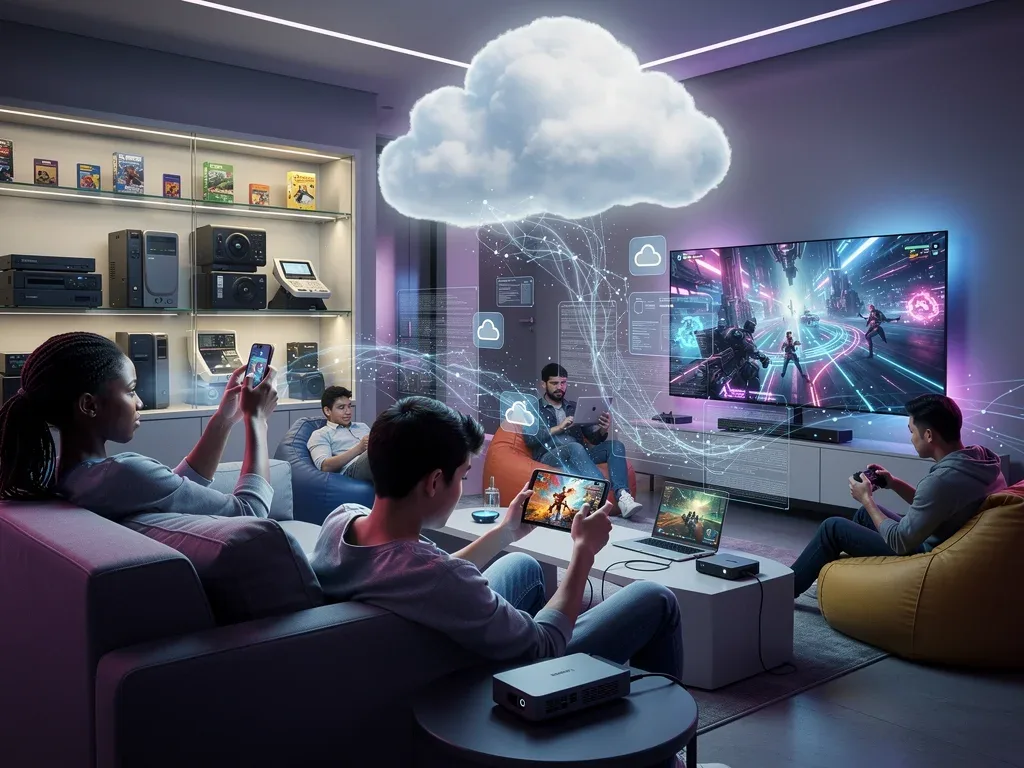
Significant advancements in cloud gaming technology and infrastructure are poised to lead to a major shift in the US gaming market, with projections indicating that 48% of gamers will transition away from dedicated consoles by 2026.
The gaming world is on the cusp of a monumental transformation, with a seismic shift projected to redefine how Americans play. By 2026, it's estimated that a staggering 48% of US gamers will be making a significant move, transitioning away from dedicated consoles. This profound change is largely propelled by pivotal cloud gaming transition milestones, promising unparalleled accessibility and flexibility in how we interact with our favorite digital worlds.
The Rise of Cloud Gaming: A New Era Unfolds
Cloud gaming, once a futuristic concept, has rapidly evolved into a tangible reality, fundamentally altering the landscape of interactive entertainment. This paradigm shift allows gamers to stream high-fidelity titles directly to various devices, bypassing the need for expensive, dedicated hardware. The convenience of playing AAA games on a smartphone, smart TV, or a low-spec laptop is a compelling proposition for a generation accustomed to on-demand services.
This technological leap isn't merely about convenience; it's about democratizing access to gaming. As internet infrastructure improves and streaming technology becomes more sophisticated, the barriers to entry for high-quality gaming are significantly lowered. The economic implications for consumers are substantial, eliminating the need for costly console upgrades every few years.
Technological Underpinnings Driving Adoption
Several key technological advancements have underpinned the accelerated adoption of cloud gaming. These innovations address critical issues like latency, visual fidelity, and server capacity, which were once major hurdles for the technology.
- Reduced Latency: Improvements in network infrastructure, including 5G deployment and edge computing, minimize the delay between user input and on-screen action, making the experience feel more responsive.
- Advanced Compression Algorithms: More efficient video compression techniques allow for high-quality game streams with lower bandwidth requirements, making cloud gaming viable for a broader audience.
- Scalable Server Architecture: Cloud providers have developed robust, scalable server farms capable of handling millions of concurrent users, ensuring a smooth gaming experience even during peak times.
The continuous refinement of these technologies ensures that cloud gaming platforms can deliver an experience that rivals, and in some cases surpasses, that of traditional consoles. This relentless pursuit of performance and accessibility is a primary driver behind the anticipated mass transition.
Economic Factors and Consumer Behavior Shifts
The economic landscape plays a crucial role in the increasing appeal of cloud gaming. In an era where household budgets are scrutinized, the cost-effectiveness of cloud gaming presents a significant advantage over traditional console ownership. The upfront investment in a new console can be substantial, often running into several hundred dollars, followed by the recurring cost of games, accessories, and online subscriptions.
Cloud gaming, conversely, often operates on a subscription model, providing access to a vast library of games for a predictable monthly fee. This 'Netflix for games' approach resonates strongly with consumers who prefer subscription-based services for entertainment. It removes the pressure of making large, one-time purchases and allows for greater flexibility in gaming choices.
Furthermore, the ability to play across multiple devices without purchasing the same game multiple times adds to the economic efficiency. A gamer can start a session on their PC, continue on their tablet during a commute, and finish on their smart TV at home, all without additional purchases or hardware.
Changing Preferences for Content Ownership vs. Access
Consumer behavior has been steadily shifting from content ownership to content access, a trend clearly visible in music and video streaming. Gamers are increasingly valuing the breadth of choice and convenience offered by subscription models over the traditional model of owning individual game copies. This preference aligns perfectly with the cloud gaming model.
- Subscription Value: A single monthly fee grants access to hundreds of titles, including new releases and classics, offering significantly more value than purchasing individual games.
- Reduced Clutter: Digital libraries eliminate the need for physical game cases and discs, appealing to minimalist lifestyles and digital-first consumers.
- Instant Gratification: Games are instantly available to stream, removing download times and installation processes, allowing gamers to jump straight into the action.
These evolving consumer preferences act as a powerful catalyst for the cloud gaming transition, making it an increasingly attractive option for a broad demographic of US gamers.
Key Milestones and Market Adoption Trends
The journey of cloud gaming has been marked by several significant milestones that have collectively paved the way for its current growth trajectory. Early attempts faced technical limitations and skepticism, but persistent innovation by tech giants and dedicated gaming companies has steadily overcome these challenges. The introduction of robust services from major players has been particularly influential.
The initial market entry of services like Google Stadia, while ultimately discontinued, served as a crucial learning experience, highlighting both the potential and the pitfalls of the technology. Its subsequent iterations and the emergence of competing platforms from Microsoft (Xbox Cloud Gaming), NVIDIA (GeForce NOW), and Amazon (Luna) have demonstrated a clear commitment to the sector. These companies have invested heavily in infrastructure, game libraries, and user experience, building confidence among early adopters.
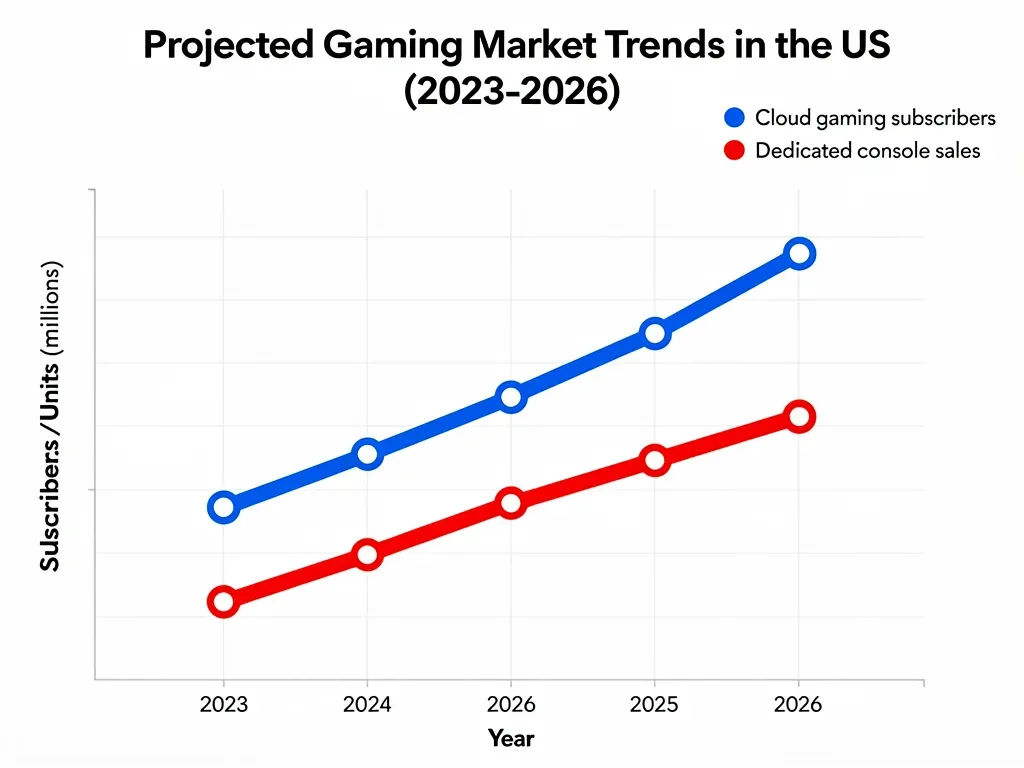
The continuous improvement in streaming quality, coupled with aggressive marketing and bundling strategies, has significantly accelerated mainstream adoption. Partnerships with internet service providers and device manufacturers have also expanded reach, making cloud gaming more accessible to a wider audience than ever before. These strategic alliances are critical in breaking down barriers to entry and integrating cloud gaming into everyday digital life.
Projected Growth and Console Decline
Industry analysts and market researchers are projecting substantial growth for cloud gaming in the US over the next few years. The forecast of 48% of US gamers transitioning away from dedicated consoles by 2026 underscores the magnitude of this shift. This doesn't necessarily mean consoles will disappear entirely, but their role will likely diminish for a significant portion of the gaming population.
- Expanding Subscriber Base: Cloud gaming platforms are expected to see a significant increase in subscriber numbers, driven by new game releases and enhanced service offerings.
- Decreased Console Sales: While high-end enthusiasts may still opt for consoles, the broader market will likely see a decline in sales of new dedicated gaming hardware.
- Hybrid Models: Some gamers may adopt a hybrid approach, using cloud gaming for casual play and consoles for exclusive titles or competitive experiences, though the balance will shift.
This projected shift highlights a fundamental change in how gamers perceive value and convenience, moving towards a service-oriented model that cloud gaming inherently provides.
The Role of Infrastructure and Connectivity
The backbone of the cloud gaming transition is robust and ubiquitous internet infrastructure. Without high-speed, low-latency connectivity, the promise of seamless cloud gaming remains unfulfilled. The United States, with its diverse geographical landscape and varying levels of internet access, faces unique challenges and opportunities in this regard. Significant investments in fiber optic networks and the ongoing rollout of 5G wireless technology are critical enablers.
Edge computing, where servers are placed closer to end-users, is also playing an increasingly vital role. By processing data closer to the source, edge computing drastically reduces latency, which is paramount for a responsive gaming experience. This distributed computing model ensures that even gamers in less densely populated areas can enjoy high-quality cloud gaming without experiencing noticeable delays.
Furthermore, competition among internet service providers (ISPs) is driving improvements in network performance and affordability. As more households gain access to gigabit internet speeds, the technical hurdles for cloud gaming rapidly diminish. This widespread improvement in connectivity is not just beneficial for gaming but for the entire digital ecosystem, facilitating a broader range of online services.
Challenges and Opportunities in Network Expansion
Despite significant progress, challenges remain in ensuring equitable access to the necessary infrastructure. Rural areas, in particular, often lag behind urban centers in broadband availability and speed. Bridging this digital divide is essential for cloud gaming to reach its full potential and for the 48% transition forecast to materialize comprehensively across the US.
- Rural Broadband Initiatives: Government programs and private investments aimed at expanding broadband access to underserved communities are crucial for broader cloud gaming adoption.
- 5G Development: Continued expansion of 5G networks offers a promising alternative for high-speed, low-latency mobile cloud gaming, especially in areas where fixed-line broadband is less prevalent.
- Optimized Network Protocols: Ongoing research and development into network protocols specifically designed for real-time interactive streaming will further enhance the quality and reliability of cloud gaming services.
The continuous evolution and expansion of internet infrastructure are not just about facilitating cloud gaming; they represent a fundamental upgrade to the nation's digital capabilities, with gaming being a major beneficiary.
Impact on Game Development and Publishing
The shift towards cloud gaming has profound implications for game developers and publishers. The traditional development cycle, often focused on optimizing games for specific console hardware, is beginning to evolve. Cloud platforms offer new opportunities for innovation, but also present unique challenges in terms of optimization and monetization strategies. Developers can now reach a much wider audience, including those who previously couldn't afford dedicated gaming hardware.
With cloud gaming, the emphasis shifts from local hardware specifications to server-side processing and network efficiency. This means developers can potentially create more graphically intensive and complex worlds without being constrained by the processing power of an individual consumer device. The focus moves to ensuring a stable, high-quality stream that delivers the intended experience across various screen sizes and input methods.
Publishers are also adapting their business models. The rise of subscription services means a greater emphasis on recurring revenue and retaining subscribers through continuous content updates and a diverse game library. This encourages a different approach to game releases, potentially favoring a steady stream of new content over infrequent, large-scale launches.
New Opportunities and Creative Freedom
The cloud gaming paradigm unlocks new avenues for game design and creative expression. Developers are no longer bound by the limitations of local hardware, paving the way for truly massive multiplayer experiences, persistent worlds, and advanced AI that would be impossible to run on a single console.
- Massive Scale: Cloud computing power can enable games with unprecedented player counts and dynamic, evolving environments.
- Cross-Platform Compatibility: Developing for the cloud inherently means games are more easily accessible across a multitude of devices, broadening the potential player base.
- Innovative Monetization: Beyond traditional game sales and subscriptions, cloud gaming opens doors for new models, such as in-game advertising tailored to user behavior or micro-transactions for cosmetic items and enhancements.
This evolving ecosystem promises a fertile ground for innovation, pushing the boundaries of what's possible in interactive entertainment and attracting a new generation of creative talent.
The Future Landscape: Beyond 2026
As we look beyond 2026, the trajectory of cloud gaming suggests an even deeper integration into the fabric of digital entertainment. The current trend of 48% of US gamers transitioning away from dedicated consoles is likely just the beginning of a more comprehensive shift. We can anticipate further technological refinements that will make cloud gaming virtually indistinguishable from local play, even for the most discerning gamers.
The convergence of cloud gaming with other emerging technologies, such as virtual reality (VR) and augmented reality (AR), holds immense potential. Imagine untethered VR experiences powered entirely by the cloud, allowing for photorealistic graphics and expansive virtual worlds without the need for high-end local processing units. This synergy could unlock entirely new forms of immersive entertainment.
Moreover, the competitive landscape among cloud gaming providers will likely intensify, driving innovation and potentially leading to more affordable and feature-rich services. This competition is beneficial for consumers, ensuring that platforms continue to evolve and meet the demands of a growing user base. The focus will remain on seamless user experience, expansive content libraries, and robust network performance.
Integration with Everyday Life and New User Experiences
Cloud gaming's future isn't just about playing games; it's about how gaming integrates into our daily lives and how we interact with digital content.
- Embedded Gaming: Cloud gaming capabilities could become standard features in smart TVs, automobiles, and even smart home devices, making gaming an ever-present option.
- Social Gaming Evolution: Enhanced connectivity and cloud processing will enable more sophisticated and immersive social gaming experiences, breaking down geographical barriers.
- Personalized Experiences: AI-driven cloud platforms will likely offer highly personalized game recommendations and dynamic content adjustments based on individual player preferences and skills.
The future of gaming, heavily influenced by cloud technology, promises a more accessible, flexible, and integrated experience for everyone, reshaping not just how we play, but how we live digitally.
Challenges and Considerations for the Transition
While the prospect of a widespread cloud gaming transition is exciting, it's crucial to acknowledge the challenges and considerations that accompany such a significant shift. The ideal vision of cloud gaming relies heavily on perfect conditions: ubiquitous high-speed internet, minimal latency, and robust server infrastructure. Real-world scenarios can often fall short of this ideal, leading to potential frustrations for users.
One primary concern is internet reliability and data caps. Even with improving infrastructure, not all gamers have access to consistently fast and stable internet connections. Furthermore, extensive cloud gaming can consume significant amounts of data, which could be a concern for users with limited data plans, potentially leading to unexpected costs or throttled speeds. These factors can create a disparity in the quality of experience for different users, hindering universal adoption.
Another consideration involves game ownership and preservation. In a subscription-based, streaming-only model, gamers might lose access to their purchased games if a service is discontinued or if their subscription lapses. This contrasts with traditional console gaming, where physical media or digital licenses often provide a greater sense of permanent ownership. Addressing these concerns through clear policies and consumer-friendly practices will be vital for long-term trust and adoption.
Addressing User Concerns and Ensuring a Smooth Shift
To ensure a smooth transition for the projected 48% of US gamers, cloud gaming providers and the industry as a whole must proactively address these potential roadblocks.
- Infrastructure Investment: Continued investment in expanding and upgrading broadband infrastructure, particularly in underserved areas, is paramount.
- Flexible Pricing Models: Offering a variety of subscription tiers and even pay-per-play options could cater to diverse user needs and budgets, including those with data limitations.
- Backward Compatibility and Ownership: Exploring solutions that allow for continued access to games even if a subscription ends, or offering hybrid models that combine streaming with local play options, could alleviate concerns about ownership.
By focusing on these challenges, the cloud gaming industry can build a more inclusive and resilient ecosystem, ensuring that the transition is beneficial for all gamers.
| Key Point | Brief Description |
|---|---|
| 48% Gamer Transition | By 2026, nearly half of US gamers are projected to shift away from dedicated consoles to cloud gaming. |
| Technological Advancements | Reduced latency, advanced compression, and scalable servers are driving cloud gaming's viability and growth. |
| Economic Benefits | Subscription models and multi-device access offer cost savings compared to traditional console ownership. |
| Infrastructure Criticality | High-speed internet, 5G, and edge computing are essential for a seamless and widespread cloud gaming experience. |
Frequently Asked Questions About Cloud Gaming's Impact
What is driving the shift from consoles to cloud gaming in the US?▼The shift is primarily driven by enhanced accessibility, economic advantages of subscription models, and continuous technological advancements. Gamers appreciate the flexibility to play high-quality games on various devices without significant upfront hardware costs, aligning with modern consumption patterns for digital content.
Will dedicated gaming consoles become obsolete by 2026?▼While 48% of US gamers are projected to transition away, dedicated consoles are unlikely to become completely obsolete. They will likely cater to a niche market of enthusiasts who prioritize local processing power, exclusive titles, and specific hardware experiences. Their market share, however, is expected to decrease significantly.
What are the main benefits of cloud gaming for consumers?▼Consumers benefit from lower upfront costs, access to vast game libraries via subscription, and the ability to play across multiple devices (phones, tablets, smart TVs) without purchasing dedicated hardware. This offers unparalleled flexibility, convenience, and economic value compared to traditional gaming.
What role does internet infrastructure play in cloud gaming adoption?▼Internet infrastructure is critical. High-speed, low-latency broadband and 5G connectivity are essential for a smooth cloud gaming experience, minimizing input lag and ensuring high-fidelity streaming. Improvements in these areas are directly correlated with increased cloud gaming adoption and user satisfaction across the US.
How will cloud gaming impact game developers and publishers?▼Developers will gain more creative freedom, able to build larger, more complex games without local hardware constraints. Publishers will shift towards subscription-based models and focus on continuous content delivery. This transition also opens new monetization avenues and expands the potential audience for games across various platforms.
Conclusion
The projected transition of 48% of US gamers away from dedicated consoles by 2026 marks a pivotal moment in the evolution of the gaming industry. Driven by relentless technological innovation, shifting consumer preferences towards access over ownership, and compelling economic advantages, cloud gaming is rapidly redefining how interactive entertainment is consumed. While challenges remain, particularly concerning infrastructure equity and digital ownership, the trajectory is clear: cloud gaming is poised to become the dominant force, offering unprecedented accessibility and flexibility. This shift promises a more inclusive and dynamic future for gamers and creators alike, fundamentally altering the landscape of play for generations to come.
