Next-Gen EV Standards: 15-Minute Ultra-Fast Charging Networks
Advertisements
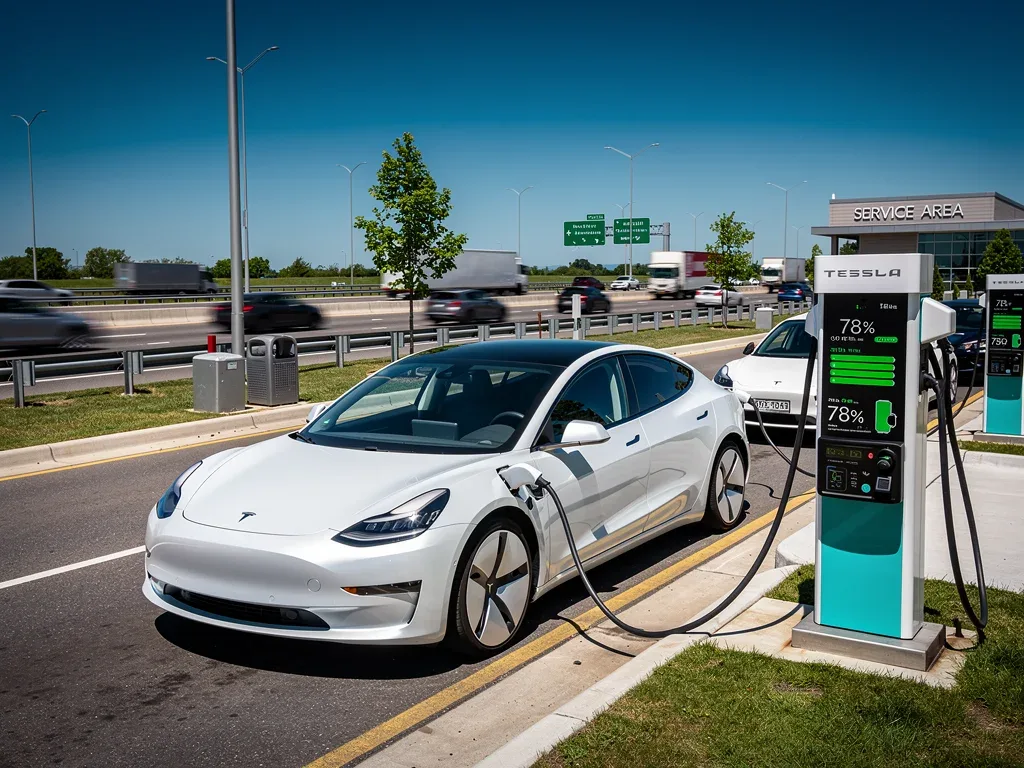
The rapid expansion of 15-minute ultra-fast charging networks across 60% of U.S. interstate corridors is fundamentally reshaping the electric vehicle landscape, alleviating range anxiety and accelerating the mainstream adoption of EVs by establishing new benchmarks for charging speed and accessibility.
Imagine driving your electric vehicle (EV) across states, confident that a quick coffee break is all it takes to fully recharge your battery. This vision is rapidly becoming a reality as EV ultra-fast charging networks expand across 60% of U.S. interstate corridors, setting new standards for convenience and efficiency in electric mobility. The promise of 15-minute ultra-fast charging is not just a technological marvel; it's a game-changer for the entire EV ecosystem.
The Dawn of 15-Minute Ultra-Fast Charging
The concept of ultra-fast charging has long been a holy grail for electric vehicle proponents, aiming to bridge the convenience gap with traditional gasoline refueling. Achieving an 80% charge in just 15 minutes fundamentally alters the calculus for long-distance EV travel, moving it from a niche pursuit to a viable, everyday option for millions of Americans.
This leap in charging speed is not merely incremental; it represents a paradigm shift. It means that the time commitment for recharging an EV during a road trip becomes comparable to or even less than a typical rest stop for drivers of internal combustion engine (ICE) vehicles. This reduction in downtime directly addresses one of the most significant barriers to EV adoption: range anxiety and charging inconvenience.
Technological Innovations Driving Speed
Several key technological advancements underpin the new era of 15-minute charging. These innovations span battery chemistry, charging station infrastructure, and vehicle communication protocols, all working in concert to deliver unprecedented speeds.
- Higher Voltage Architectures: Many new EVs and charging stations are adopting 800-volt (or higher) electrical architectures, which allow for faster charging by increasing the power throughput without excessive current, thus reducing heat generation.
- Advanced Battery Management Systems (BMS): Sophisticated BMS actively monitor and control battery temperature and cell voltage during charging, optimizing the process for speed and longevity.
- Improved Cooling Systems: Both the vehicle's battery pack and the charging cables themselves incorporate advanced liquid cooling systems to manage the intense heat generated by high-power charging.
The synergy of these technologies ensures that batteries can accept higher power inputs safely and efficiently, paving the way for the 15-minute charge. This rapid evolution is crucial for meeting the demands of a growing EV market.
Furthermore, the development of robust and reliable charging hardware, capable of delivering hundreds of kilowatts consistently, is equally vital. Charging stations must be built to withstand continuous high-power output while maintaining user-friendliness and reliability. The focus is not just on speed, but on a holistic charging experience that is seamless and dependable for every EV owner.
Expanding Across Interstate Corridors: A Strategic Imperative
The strategic deployment of ultra-fast charging stations along major interstate corridors is not coincidental; it is a meticulously planned effort to unlock the full potential of electric vehicles for long-distance travel. The goal is to create a seamless network that allows EV drivers to traverse the country with the same ease as gasoline vehicle owners.
Currently, the expansion aims to cover 60% of U.S. interstate corridors, a significant milestone that signifies a maturing EV infrastructure. This targeted approach ensures that the most frequently traveled routes are prioritized, maximizing the impact of new charging installations.
Federal and State Initiatives
The push for widespread interstate charging infrastructure is heavily supported by both federal and state governments, recognizing its importance for national decarbonization goals. Programs like the National Electric Vehicle Infrastructure (NEVI) Formula Program are allocating billions of dollars to states to build out a reliable and convenient EV charging network.
- NEVI Program Funding: This program provides funds to states to deploy EV charging infrastructure along designated alternative fuel corridors, including interstates, ensuring chargers are installed every 50 miles and within 1 mile of the highway.
- State-Level Incentives: Many states are offering additional incentives, grants, and regulatory frameworks to accelerate the deployment of charging stations, often focusing on underserved areas or critical transportation routes.
- Public-Private Partnerships: Collaboration between government entities and private charging network operators is essential for efficient deployment, leveraging public funds with private sector expertise and investment.
These initiatives are designed to create a backbone of high-speed charging infrastructure, making intercity and interstate travel by EV not only feasible but also highly convenient. The coordinated effort ensures consistency in charging standards and accessibility across different regions.
The expansion is also driven by a deep understanding of driver behavior and needs. By placing ultra-fast chargers at strategic points along interstates, such as rest stops, travel plazas, and commercial centers, the aim is to integrate charging seamlessly into existing travel patterns, minimizing disruption and maximizing convenience for EV owners on the go.
Impact on EV Adoption and Range Anxiety
The widespread availability of 15-minute ultra-fast charging has a profound impact on consumer perceptions and, consequently, on EV adoption rates. One of the primary psychological barriers to purchasing an EV has always been "range anxiety" – the fear of running out of charge before reaching a charging station or finding a slow charger.
With a robust network of ultra-fast chargers along major highways, this anxiety is significantly diminished. Knowing that a rapid recharge is always within reach empowers drivers to undertake longer journeys with confidence, treating EV travel much like conventional gasoline travel.
Shifting Consumer Behavior
The ease and speed of charging are powerful motivators that are already beginning to shift consumer behavior. As charging becomes faster and more accessible, the decision to opt for an EV becomes less about compromise and more about embracing a superior driving experience.
- Increased Long-Distance Travel: EV owners are more likely to embark on road trips and cross-country journeys, knowing that charging stops will be brief and efficient.
- Reduced Second-Car Dependency: For many households, an ICE vehicle is kept for longer trips. Ultra-fast charging can eliminate this need, making a single EV a more practical primary vehicle.
- Greater Market Appeal: The enhanced convenience broadens the appeal of EVs to a wider demographic, including those who previously felt electric cars didn't fit their lifestyle or travel habits.
This shift is critical for accelerating the mass market adoption of EVs. As more consumers experience the benefits of ultra-fast charging, the perception of EVs as niche products will continue to erode, paving the way for them to become the dominant form of personal transportation.

Moreover, the increased visibility of these advanced charging stations along major routes serves as a constant reminder of the evolving EV landscape. This continuous exposure helps normalize electric vehicle ownership and charging processes, further encouraging public acceptance and enthusiasm for the technology. The psychological reassurance provided by a visible and reliable charging infrastructure cannot be overstated in its role in driving adoption.
Standardization and Interoperability Challenges
While the rapid expansion of ultra-fast charging networks is exciting, it also brings to the forefront the critical issues of standardization and interoperability. For a truly seamless charging experience, all EVs should ideally be able to charge at any station, regardless of brand or network operator.
Historically, different charging standards (CCS, NACS, CHAdeMO) have created fragmentation. However, there's a strong movement towards consolidation, with the North American Charging Standard (NACS) gaining significant traction, alongside continued support for CCS.
Towards Universal Charging Experience
The industry is moving towards a more unified approach, which will greatly benefit consumers. The adoption of NACS by major automakers, including those who previously exclusively used CCS, signals a potential future where a single connector type dominates the North American market.
- NACS Adoption: Tesla's NACS connector has been opened up to other automakers, leading many to announce plans to integrate NACS ports into their future EV models, and provide adapters for existing vehicles.
- CCS Continued Role: The Combined Charging System (CCS) remains a widely supported standard, particularly in Europe and for many existing EV models. Interoperability between NACS and CCS via adapters will be crucial during the transition period.
- Plug-and-Charge Technology: Advancements in 'Plug-and-Charge' protocols, which allow vehicles to automatically communicate with charging stations for authentication and payment, are enhancing the user experience by eliminating the need for apps or RFID cards.
Achieving true interoperability means not just physical compatibility but also seamless communication between vehicles and chargers, standardized payment systems, and reliable network performance across all operators. This will remove friction points and make EV charging as simple as possible for all users.
The drive for standardization extends beyond the physical connector to the underlying communication protocols and software interfaces. A common language for charging infrastructure ensures that vehicles can efficiently and safely receive power, regardless of the brand of the charging station or the vehicle itself. This harmonization is key to building a truly robust and user-friendly national charging network.
Economic and Environmental Benefits
The expansion of 15-minute ultra-fast charging networks yields significant economic and environmental benefits, contributing to a more sustainable and prosperous future. These benefits extend beyond individual EV owners to the broader economy and the planet.
Economically, the investment in charging infrastructure creates jobs, stimulates innovation in battery and charging technology, and reduces reliance on volatile fossil fuel markets. Environmentally, it directly supports the reduction of greenhouse gas emissions and improves air quality.
Driving Green Economy Growth
The transition to electric vehicles, supported by robust charging infrastructure, is a cornerstone of the burgeoning green economy. It fosters new industries, research, and development, creating a positive feedback loop for sustainable growth.
- Job Creation: The construction, maintenance, and operation of charging stations, along with EV manufacturing, generate numerous jobs across various sectors.
- Reduced Fuel Costs: EV owners benefit from lower operating costs compared to gasoline vehicles, especially when charging at home or utilizing off-peak electricity rates, putting more money back into consumer pockets.
- Energy Independence: Shifting away from fossil fuels reduces national dependence on foreign oil, enhancing energy security and stability.
Environmentally, the impact is profound. EVs produce zero tailpipe emissions, directly contributing to cleaner air in urban areas and reducing the overall carbon footprint. When powered by renewable energy sources, the environmental benefits are amplified, moving towards a truly sustainable transportation system.
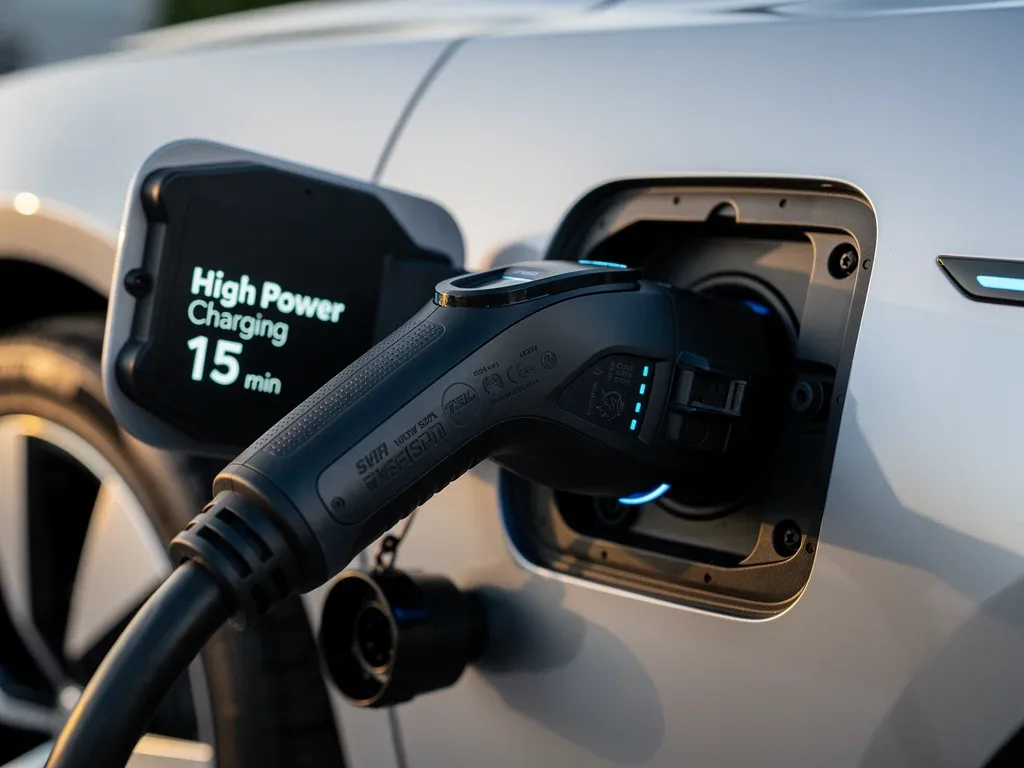
Furthermore, the increased demand for electricity to power these vehicles acts as a catalyst for investment in renewable energy generation. As the grid becomes greener, the environmental advantages of EVs become even more pronounced, showcasing a synergistic relationship between clean transportation and sustainable energy production. This holistic approach is vital for long-term environmental stewardship.
Future Outlook and Remaining Challenges
The trajectory for 15-minute ultra-fast charging networks is overwhelmingly positive, with continued growth and technological refinement expected. However, the path forward is not without its challenges, requiring ongoing innovation, strategic investment, and collaborative efforts.
The future promises even faster charging speeds, greater network density, and enhanced integration with smart grid technologies. Yet, addressing grid capacity, battery degradation concerns, and equitable access remain critical hurdles to overcome for a truly ubiquitous and sustainable EV charging ecosystem.
Overcoming Hurdles for Mass Adoption
To fully realize the potential of ultra-fast charging, several key challenges must be systematically addressed. These range from technical considerations to policy and social equity issues.
- Grid Infrastructure Upgrades: The existing electrical grid will require significant upgrades to handle the massive power demands of widespread ultra-fast charging, particularly in concentrated areas.
- Battery Longevity: While modern batteries are designed to withstand fast charging, long-term effects on battery degradation are a continuous area of research and improvement.
- Equitable Access: Ensuring that charging infrastructure is accessible and affordable for all communities, including rural and low-income areas, is crucial to prevent a digital divide in EV adoption.
Moreover, user experience and reliability must remain at the forefront of development. Chargers need to be consistently operational, easy to use, and offer transparent pricing. The 'five nines' (99.999%) reliability standard, common in other critical infrastructure, should be the aspiration for EV charging networks.
The integration of ultra-fast charging with renewable energy sources, such as solar and wind power, will be a key area of focus. Developing smart charging solutions that can dynamically adjust charging rates based on grid demand and renewable energy availability will optimize efficiency and minimize environmental impact, representing the next frontier in sustainable EV charging.
| Key Point | Brief Description |
|---|---|
| 15-Minute Charging | Achieving 80% battery charge in about 15 minutes, revolutionizing EV travel convenience. |
| Interstate Expansion | Networks covering 60% of US interstate corridors, enabling seamless long-distance EV trips. |
| Reduced Range Anxiety | Ubiquitous fast charging alleviates concerns about battery range and charging availability. |
| Standardization Efforts | Movement towards universal charging standards (e.g., NACS) for enhanced interoperability. |
Frequently Asked Questions About EV Ultra-Fast Charging
What exactly is 15-minute ultra-fast charging?▼15-minute ultra-fast charging refers to the capability of an electric vehicle to replenish approximately 80% of its battery capacity in about 15 minutes. This speed is comparable to a quick fuel stop for gasoline cars, significantly enhancing convenience for EV drivers on long journeys and daily commutes.
How does this expansion impact interstate travel for EVs?▼The expansion of ultra-fast charging networks across 60% of U.S. interstate corridors dramatically improves the feasibility and convenience of long-distance EV travel. It reduces range anxiety by ensuring accessible, rapid charging stops, making road trips as practical for EVs as they are for gasoline vehicles.
Are all EVs compatible with these new ultra-fast chargers?▼Most newer EVs are designed to be compatible with ultra-fast DC fast chargers, primarily utilizing CCS or NACS connectors. While the industry is moving towards greater standardization, some older models or those with different port types may require adapters or might not achieve the fastest charging speeds.
What are the main technologies enabling 15-minute charging?▼Key technologies include higher voltage vehicle architectures (e.g., 800V), advanced battery management systems that optimize charging, and sophisticated liquid cooling systems for both batteries and charging cables. These innovations allow for higher power delivery without compromising battery health or safety during rapid charging.
What challenges remain for widespread ultra-fast charging?▼Significant challenges include upgrading existing electrical grid infrastructure to handle increased demand, ongoing research into battery longevity with frequent fast charging, and ensuring equitable access to charging in all communities. Reliability and user experience also remain critical areas for continuous improvement and standardization.
Conclusion
The rapid expansion of 15-minute ultra-fast charging networks across 60% of U.S. interstate corridors marks a pivotal moment in the evolution of electric vehicles. This infrastructure revolution is systematically dismantling the barriers of range anxiety and charging inconvenience, making EVs a more compelling and practical choice for a broader segment of the population. By combining advanced technology with strategic deployment and supportive policies, the nation is steadily building a robust, interconnected charging ecosystem that will accelerate the transition to sustainable transportation. The future of travel is electric, and it's arriving faster than ever before, promising a cleaner, more efficient, and more convenient journey for all.
