SEC requires 24-hour AI incident disclosure
Advertisements

The Securities and Exchange Commission (SEC) has mandated that public companies must disclose major artificial intelligence incidents within 24 hours, a move designed to bolster transparency and safeguard investors against emerging AI-related risks.
The landscape of corporate governance is rapidly evolving, particularly with the pervasive integration of artificial intelligence into business operations. A landmark decision by the Securities and Exchange Commission (SEC) now mandates that public companies must provide SEC AI incident disclosure within 24 hours of identifying a major artificial intelligence incident. This groundbreaking rule ushers in a new era of transparency, forcing companies to swiftly address and report AI failures that could significantly impact their operations, financial stability, or investor confidence. As AI systems become more sophisticated and integral, understanding the implications of this new regulatory requirement is paramount for businesses and investors alike.
Understanding the new SEC AI disclosure mandate
The SEC's recent ruling on AI incident disclosure marks a significant shift in how public companies must manage and communicate risks associated with their artificial intelligence systems. This mandate is not merely about reporting; it's about establishing a framework for rapid response and accountability in an increasingly AI-driven world. The core of the rule revolves around the concept of 'materiality,' requiring disclosure only for incidents deemed significant enough to influence investment decisions.
This new regulation stems from growing concerns about the potential for AI systems to cause substantial harm, ranging from financial losses and operational disruptions to data breaches and reputational damage. The SEC aims to ensure that investors have timely access to critical information, allowing them to make informed decisions when companies encounter significant AI-related setbacks. The 24-hour window for disclosure underscores the urgency and potential impact of such incidents.
Defining a 'major' AI incident
One of the critical aspects of this new rule is the definition of a 'major' AI incident. The SEC has provided guidelines, but the interpretation will largely depend on the specific context of each company and its AI applications. Generally, a major incident would include:
- Significant operational disruption caused by an AI system failure.
- Financial losses exceeding a predetermined threshold due to AI errors.
- Material data breaches or privacy violations attributable to AI.
- Reputational damage that could significantly impact stock price or market standing.
Companies are tasked with developing robust internal protocols to identify, assess, and classify AI incidents promptly. This requires a clear understanding of their AI systems' potential risks and a well-defined escalation process to meet the stringent 24-hour reporting deadline. The goal is to prevent situations where investors are left in the dark about critical vulnerabilities that could affect their holdings.
In essence, the SEC's new mandate pushes companies to proactively manage their AI risks, not just react to them. It demands a higher level of transparency and diligence, fundamentally altering the corporate governance landscape for businesses heavily reliant on artificial intelligence. This proactive stance is crucial for maintaining market integrity and investor trust in an era defined by rapid technological advancement.
The rationale behind rapid disclosure
The Securities and Exchange Commission's decision to enforce a 24-hour disclosure window for major AI incidents is rooted in several compelling rationales, primarily centered on investor protection and market efficiency. In today's fast-paced digital economy, information asymmetry can lead to significant market distortions and disadvantage individual investors. AI, while offering immense benefits, also introduces novel and complex risks that warrant immediate attention.
One primary reason for this rapid disclosure requirement is to mitigate the potential for insider trading. Without prompt public notification of a major AI incident, those with internal knowledge could potentially trade on that non-public information, gaining an unfair advantage over other market participants. Timely disclosure helps level the playing field, ensuring that all investors have access to the same material information simultaneously.
Protecting investors from AI-related risks
AI systems, especially those deployed in critical business functions, can fail in unpredictable ways, leading to significant financial and operational consequences. These failures can manifest as:
- Algorithmic biases leading to discriminatory outcomes.
- Systemic errors causing financial miscalculations or trading anomalies.
- Security vulnerabilities exploited by malicious actors.
Each of these scenarios can have a material impact on a company's stock price, financial performance, and long-term viability. By requiring rapid disclosure, the SEC aims to empower investors to react swiftly to new information, adjust their portfolios, and make informed decisions about their investments before the full extent of an incident's impact becomes apparent to the broader market. This protective measure is designed to shield investors from unforeseen and potentially devastating losses.
Furthermore, rapid disclosure fosters greater accountability within corporations. Knowing that a major AI incident must be publicly reported within a tight timeframe incentivizes companies to invest more heavily in robust AI governance, risk management frameworks, and incident response plans. This proactive approach not only benefits investors but also strengthens the overall resilience and trustworthiness of companies deploying AI technologies. The SEC's stance is clear: the benefits of AI must be accompanied by proportionate responsibilities regarding transparency and risk management.
Operational challenges for companies
Complying with the SEC's new 24-hour disclosure rule for major AI incidents presents a myriad of operational challenges for public companies. The speed and precision required for reporting such events demand a fundamental re-evaluation of existing incident response protocols and internal communication structures. Companies must establish clear lines of responsibility and develop robust mechanisms for identifying, assessing, and escalating AI-related issues in real-time.
One of the foremost challenges is the technical complexity of AI systems themselves. Diagnosing the root cause of an AI incident, especially in complex machine learning models, can be time-consuming and require specialized expertise. Pinpointing whether an AI system has 'failed' in a material way, as opposed to simply performing sub-optimally, requires sophisticated monitoring and analytical capabilities. This diagnostic process must now be condensed into a significantly shorter timeframe.
Building a robust AI incident response framework
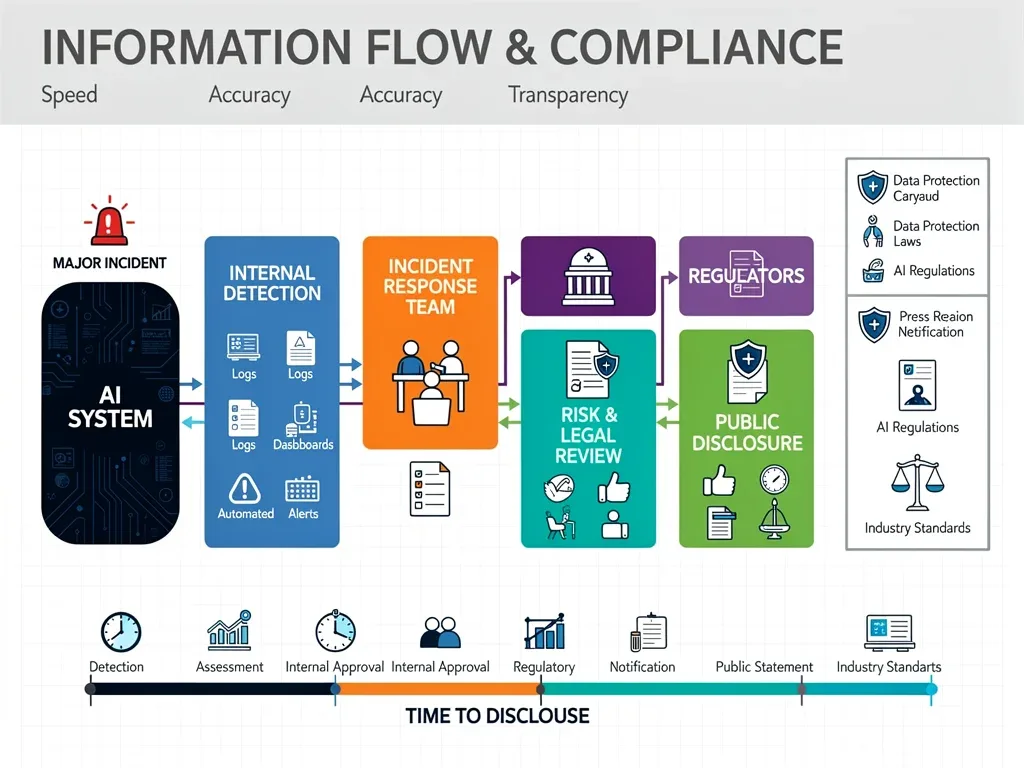
To meet the SEC's demands, companies will need to invest in and develop comprehensive AI incident response frameworks. These frameworks should include:
- Dedicated AI monitoring and detection tools capable of identifying anomalies.
- Cross-functional incident response teams involving AI engineers, legal counsel, and public relations.
- Pre-defined materiality thresholds specific to their AI applications and business model.
- Clear communication protocols for internal stakeholders and external regulatory bodies.
Moreover, the legal and compliance teams within companies will face increased pressure. They must be prepared to quickly assess the legal implications of an AI incident and ensure that the public disclosure meets all regulatory requirements, including accuracy and completeness. This often involves navigating complex legal interpretations of 'materiality' in the context of emerging AI technologies, which may lack clear precedents.
The public relations aspect also becomes critical. Crafting a transparent yet reassuring disclosure within a 24-hour window requires careful planning and crisis communication expertise. Companies must balance the need for immediate transparency with the potential for misinterpretation or panic in the market. The operational burden extends across multiple departments, necessitating a highly coordinated and efficient response mechanism to navigate these new regulatory waters successfully.
Defining 'materiality' in the age of AI
The concept of 'materiality' is central to SEC disclosure requirements, including the new mandate for AI incidents. However, applying this well-established legal principle to the nascent and rapidly evolving field of artificial intelligence presents unique interpretive challenges. Traditionally, information is considered material if there is a substantial likelihood that a reasonable investor would consider it important in making an investment decision.
For AI incidents, determining materiality involves evaluating not only direct financial impacts but also potential reputational damage, regulatory scrutiny, and the long-term implications for a company's competitive advantage. An AI system failure might not immediately result in a direct financial loss, but if it undermines public trust, compromises data integrity, or leads to significant operational downtime, its materiality could be substantial.
Contextualizing AI incident materiality
The materiality of an AI incident will largely depend on the specific context of the company and the role its AI systems play. Key factors to consider include:
- The criticality of the AI system to core business operations.
- The scope and scale of the incident's impact (e.g., number of affected customers, volume of transactions).
- The potential for regulatory fines or legal liabilities stemming from the incident.
- The degree to which the incident reveals systemic weaknesses in AI governance or security.
For instance, an AI error in a non-critical internal tool might not be material, whereas a similar error in an AI-powered trading algorithm or a diagnostic medical AI could be highly material. Companies must develop internal guidelines and thresholds that align with the SEC's broad definition of materiality, tailored to their specific AI deployments and risk profiles. This requires ongoing dialogue between legal, technical, and executive teams to ensure consistent and defensible decision-making.
Ultimately, the SEC expects companies to exercise sound judgment in assessing materiality, erring on the side of transparency when in doubt. The evolving nature of AI means that what constitutes a 'material' incident today may change tomorrow, necessitating continuous review and adaptation of internal policies. This dynamic environment places a premium on robust internal controls and a culture of proactive risk assessment to navigate the complexities of AI materiality.
Broader implications for corporate governance and innovation
The SEC's 24-hour disclosure requirement for major AI incidents extends far beyond mere compliance; it fundamentally reshapes corporate governance and influences the trajectory of AI innovation. This new rule forces boards of directors and executive leadership to integrate AI risk management directly into their strategic oversight functions, rather than delegating it solely to IT or engineering departments. It elevates AI risks to the same level of scrutiny as financial, cybersecurity, and operational risks.
Companies will need to establish clear accountability structures for AI development, deployment, and monitoring. This includes ensuring that executives are well-versed in the potential risks and ethical considerations of their AI systems. Boards may need to include members with specialized AI expertise or provide enhanced training to existing directors to effectively oversee AI governance and incident response capabilities.
Balancing innovation with accountability
While the regulation aims to enhance accountability, there are concerns about its potential impact on AI innovation. Some argue that stringent disclosure requirements might:
- Discourage aggressive AI development due to fear of increased regulatory burden.
- Lead to a more conservative approach to AI deployment, slowing down adoption of cutting-edge technologies.
- Create competitive disadvantages for public companies compared to private entities less subject to such strict oversight.
However, proponents argue that robust governance and transparency are essential for sustainable innovation. By fostering a culture of responsible AI development, the SEC's rule could ultimately build greater public trust in AI technologies, leading to broader adoption and long-term growth. Companies that can demonstrate strong AI governance and transparent incident response may gain a competitive edge by projecting reliability and trustworthiness to customers and investors.
Moreover, the mandate encourages companies to invest in 'explainable AI' (XAI) and robust testing methodologies to better understand and mitigate risks before deployment. This proactive approach to AI safety and reliability is crucial for both regulatory compliance and fostering responsible innovation. The balance between pushing technological boundaries and ensuring public and investor protection will be a defining challenge for corporate leaders in the coming years.

Preparing for the new regulatory environment
The implementation of the SEC's 24-hour disclosure rule for major AI incidents necessitates immediate and comprehensive preparation by public companies. Procrastination is not an option, as the consequences of non-compliance can be severe, including significant fines, reputational damage, and legal action. Preparing for this new regulatory environment requires a multi-faceted approach, integrating legal, technical, operational, and communication strategies.
Firstly, companies must conduct a thorough audit of all their existing AI systems to identify potential risks and vulnerabilities. This inventory should assess the criticality of each AI application, its potential for causing a 'major incident,' and the current monitoring and incident response capabilities in place. Identifying gaps in these areas is the first step towards building a compliant framework.
Key steps for compliance readiness
To effectively prepare, companies should focus on several key areas:
- Develop clear policies and procedures: Establish internal policies for identifying, categorizing, and reporting AI incidents, aligned with SEC definitions of materiality.
- Invest in AI risk management tools: Implement advanced monitoring and logging solutions that can detect anomalies and potential failures in AI systems in real-time.
- Train cross-functional teams: Ensure that legal, compliance, IT, engineering, and public relations teams understand their roles and responsibilities in the incident response process.
- Conduct regular simulations: Practice AI incident response drills to test the effectiveness of policies and procedures under pressure, simulating the 24-hour disclosure window.
Furthermore, engaging with legal counsel specializing in securities law and AI is critical. These experts can help interpret the nuances of the SEC's guidance and ensure that disclosure statements are accurate, complete, and legally sound. Companies should also consider reviewing their D&O (Directors and Officers) insurance policies to ensure adequate coverage for potential liabilities arising from AI incidents.
Ultimately, preparation is about building resilience. By proactively addressing the challenges posed by this new regulation, companies can not only ensure compliance but also strengthen their overall AI governance, enhance investor confidence, and position themselves for responsible innovation in the rapidly evolving digital landscape. The goal is to transform a regulatory burden into an opportunity for strategic improvement and competitive advantage.
| Key Aspect | Brief Description |
|---|---|
| 24-Hour Mandate | Public companies must disclose major AI incidents within 24 hours of discovery. |
| Defining Materiality | Incidents must be 'material' enough to influence a reasonable investor's decision. |
| Investor Protection | Aims to prevent insider trading and protect investors from AI-related financial risks. |
| Operational Challenges | Requires robust AI incident response frameworks and cross-functional team readiness. |
Frequently asked questions about SEC AI disclosure
What exactly does the SEC's new 24-hour rule entail for AI incidents?▼The rule mandates that public companies must disclose any major artificial intelligence incident that is deemed 'material' to investors within 24 hours of its discovery. This includes failures, breaches, or other significant disruptions caused by AI systems that could impact financial performance or investor decisions.
How is a 'major' AI incident defined for disclosure purposes?▼A 'major' AI incident is generally defined by its materiality, meaning it's significant enough that a reasonable investor would consider it important when making investment decisions. This can include substantial financial losses, operational disruptions, or reputational damage attributable to AI.
Why did the SEC implement this rapid disclosure requirement for AI?▼The SEC implemented this rule to enhance investor protection and market transparency. Rapid disclosure aims to prevent insider trading, ensure fair access to material information, and enable investors to make timely, informed decisions regarding AI-related risks.
What are the biggest challenges companies face in complying with this new rule?▼Key challenges include the technical complexity of diagnosing AI failures, establishing clear materiality thresholds, building robust cross-functional incident response teams, and crafting accurate public disclosures within the tight 24-hour timeframe. These demand significant operational adjustments.
How might this regulation affect AI innovation and development?▼While some fear it might stifle innovation due to increased burden, others argue it fosters responsible AI development. By encouraging robust governance and risk management, the rule could ultimately build greater public trust, leading to more sustainable and ethical AI advancements.
Conclusion
The SEC's mandate for 24-hour public disclosures of major corporate artificial intelligence incidents represents a pivotal moment in the intersection of technology, finance, and regulation. This rule underscores the growing recognition of AI's transformative power, alongside its inherent risks. By demanding rapid transparency, the SEC aims to fortify investor protection, maintain market integrity, and foster a more accountable corporate environment. While presenting significant operational and interpretive challenges for companies, this regulation also serves as a catalyst for developing more robust AI governance frameworks and promoting responsible innovation. Ultimately, the effectiveness of this rule will depend on companies' commitment to proactive risk management and their ability to adapt swiftly to an evolving regulatory landscape, ensuring that the benefits of AI are realized without compromising trust or stability.
