Spatial Interfaces & Micro-LED: 10,000-Nit Displays in Workplaces
Advertisements
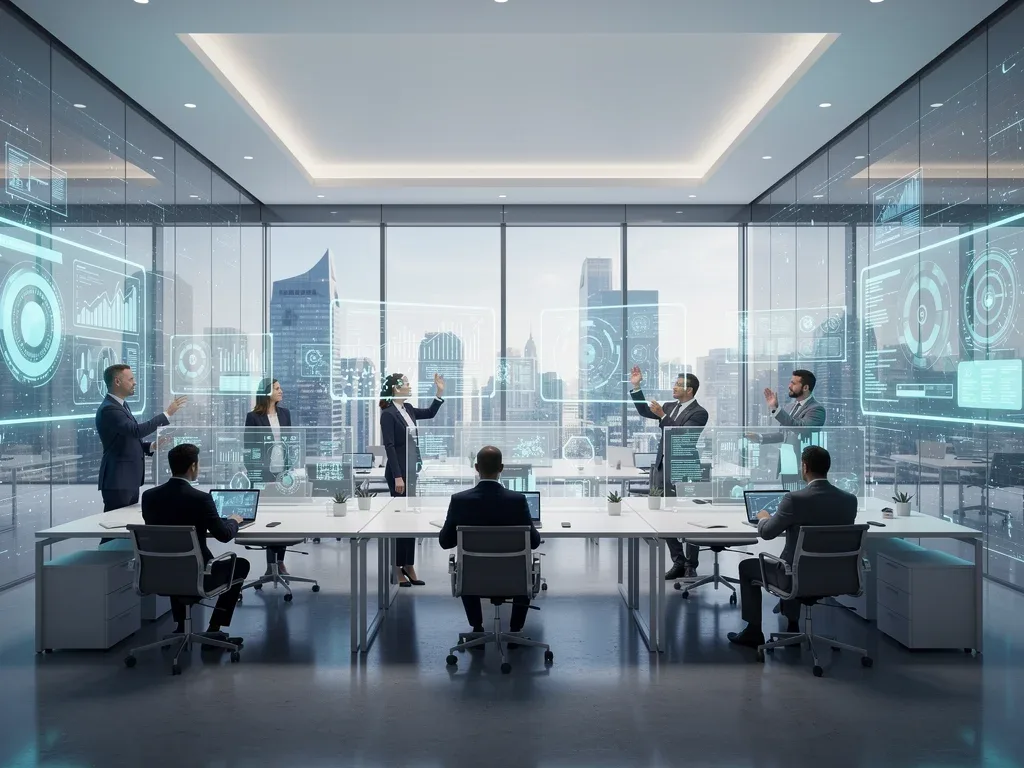
The convergence of spatial interfaces and micro-LED innovation is ushering in a new era where 10,000-nit optical displays are fundamentally transforming workplaces by replacing physical screens with dynamic, immersive digital environments.
Imagine a workspace where information isn't confined to a flat screen but floats dynamically around you, interacting with your physical environment. This isn't science fiction; it's the imminent reality driven by the synergy of spatial interfaces micro-LED innovation. The rise of 10,000-nit optical displays is poised to fundamentally redefine how we engage with digital content, moving beyond mere screens to truly immersive, integrated experiences within our daily work lives.
The Dawn of Spatial Computing in the Workplace
Spatial computing, often described as the next evolution of human-computer interaction, is rapidly moving from theoretical concept to practical application. It involves systems that understand and interact with the physical world, allowing digital information to be seamlessly integrated into our three-dimensional reality. In the workplace, this paradigm shift promises to unlock unprecedented levels of productivity, collaboration, and creativity.
Traditional flat screens, while ubiquitous, present inherent limitations. They fragment our attention, create digital silos, and often fail to provide the contextual richness necessary for complex tasks. Spatial interfaces, however, break down these barriers by allowing digital content to exist and be manipulated within our physical environment, fostering a more intuitive and natural interaction.
Beyond the Desktop: Immersive Workflows
The implications of this shift for various industries are profound. Designers can sculpt 3D models in real-time, engineers can walk through virtual prototypes, and medical professionals can visualize complex anatomical data with unprecedented clarity. The workspace itself becomes an interactive canvas, blurring the lines between the digital and the physical.
- Enhanced Collaboration: Teams can share and interact with digital objects in a shared physical space.
- Intuitive Data Visualization: Complex datasets can be rendered in 3D, making insights more accessible.
- Reduced Cognitive Load: Information is presented contextually, minimizing mental fatigue.
- Dynamic Training Environments: Employees can learn hands-on with virtual simulations.
As spatial computing technologies mature, their integration into everyday work processes will become increasingly seamless. This will require not only sophisticated software but also display technologies capable of rendering these digital overlays with unparalleled realism and brightness, leading us directly to the innovations in micro-LEDs.
Micro-LED Technology: Powering the Future of Optical Displays
At the heart of this revolution in spatial interfaces lies micro-LED technology. Unlike traditional LCDs that rely on backlights or OLEDs that use organic compounds, micro-LEDs are composed of microscopic, self-emissive LED pixels. Each pixel generates its own light and color, offering a host of advantages that are critical for the demanding requirements of spatial computing.
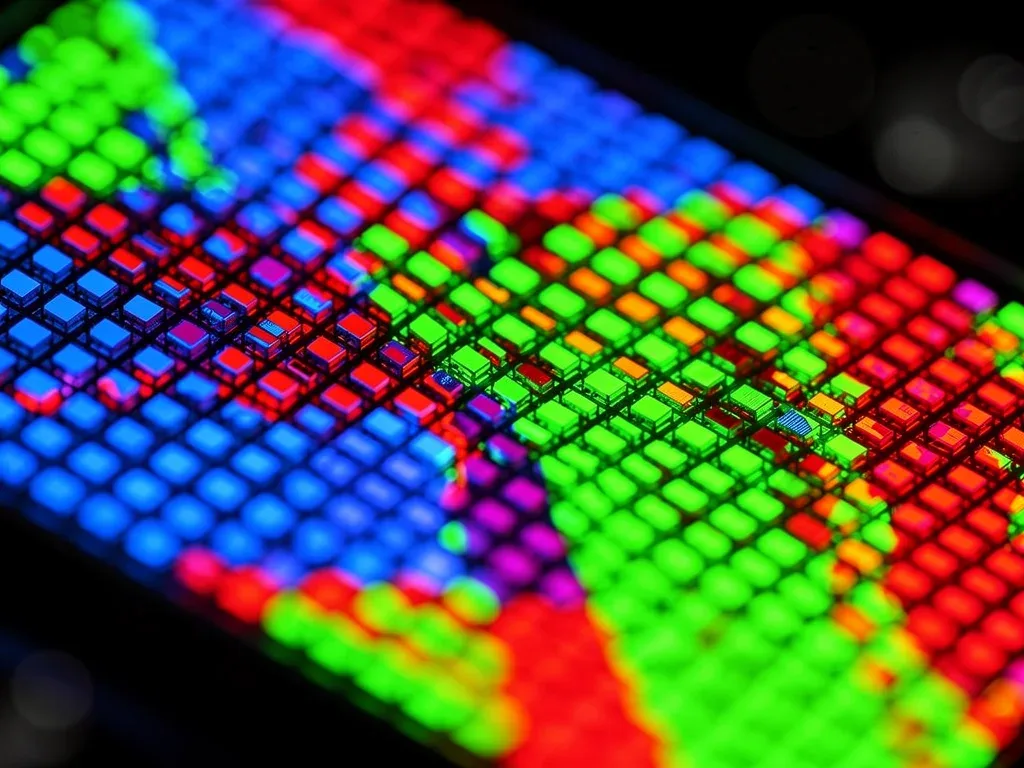
The ability of micro-LEDs to achieve extreme brightness levels, particularly the 10,000-nit optical displays we are now seeing, is a game-changer. This intensity is crucial for projecting digital content convincingly into well-lit physical environments, ensuring that virtual objects appear as solid and vibrant as their real-world counterparts. Without such brightness, spatial interfaces would struggle to compete with ambient light, diminishing their immersive quality.
Advantages of Micro-LED for Spatial Applications
The benefits extend beyond mere brightness. Micro-LEDs offer superior contrast ratios, true blacks (as individual pixels can be turned off completely), faster response times, and exceptional color accuracy. These characteristics are vital for creating digital overlays that seamlessly blend with reality, reducing eye strain and enhancing the overall user experience.
- Unmatched Brightness: Essential for visibility in various lighting conditions.
- Infinite Contrast: True blacks for realistic digital integration.
- Extended Lifespan: Inorganic materials ensure greater durability compared to OLED.
- Energy Efficiency: Potential for lower power consumption over time.
Furthermore, the modular nature of micro-LEDs allows for the creation of displays of virtually any size and shape, from transparent surfaces to flexible screens and even direct projection systems. This adaptability is key for integrating spatial interfaces into diverse workplace architectures, moving away from standardized screen sizes and towards dynamic, context-aware displays. The combination of high brightness, superb image quality, and form factor flexibility positions micro-LEDs as the foundational display technology for the next generation of computing.
10,000-Nit Optical Displays: Bridging the Digital-Physical Divide
The advent of 10,000-nit optical displays represents a significant leap forward in display technology, specifically engineered to overcome the challenges of integrating digital content into real-world environments. This extreme luminosity is not merely about making things brighter; it's about enabling digital objects to possess the same visual presence and clarity as physical objects, even under direct sunlight or intense indoor lighting.
For spatial interfaces, this level of brightness is transformative. It means that augmented reality (AR) projections can appear solid and opaque, rather than faint and translucent. Virtual dashboards can be overlaid onto physical machinery without being washed out, and interactive 3D models can be viewed with perfect fidelity, regardless of the ambient light conditions in an office or factory floor.
Real-World Applications and Impact
Consider the implications for fields like manufacturing, architecture, and design. Engineers on a factory floor could see digital instructions and schematics projected directly onto the equipment they are working on, with the digital information maintaining perfect visibility and alignment. Architects could review building plans as if they were physically present in the structure, making real-time adjustments that are immediately visible and impactful.
The ability of these displays to generate such intense light output also opens doors for new forms of interaction. Light-field displays, which project 3D images that can be viewed without special glasses, can achieve a level of realism previously unattainable. When combined with spatial computing, these displays create truly holographic experiences, allowing users to manipulate virtual objects as if they were tangible.
Ultimately, 10,000-nit optical displays are not just about visual spectacle; they are about functional superiority. They are the enabling technology that allows spatial interfaces to transition from niche applications to mainstream adoption in demanding professional environments, ensuring that digital information is always present, clear, and actionable.
Replacing Physical Screens: A Paradigm Shift in Workplace Design
The gradual replacement of physical screens by spatial interfaces powered by micro-LED technology signifies a profound paradigm shift in workplace design and functionality. No longer will our desks be cluttered with multiple monitors, nor will meeting rooms be dominated by large, static displays. Instead, the entire environment becomes dynamic and interactive.
Imagine a meeting where a 3D model of a product is projected onto the center of a table, allowing team members to walk around it, point to specific components, and make annotations that appear as digital overlays. Or a design studio where an entire wall transforms into an interactive canvas, displaying multiple projects simultaneously, each accessible and manipulable through intuitive gestures.
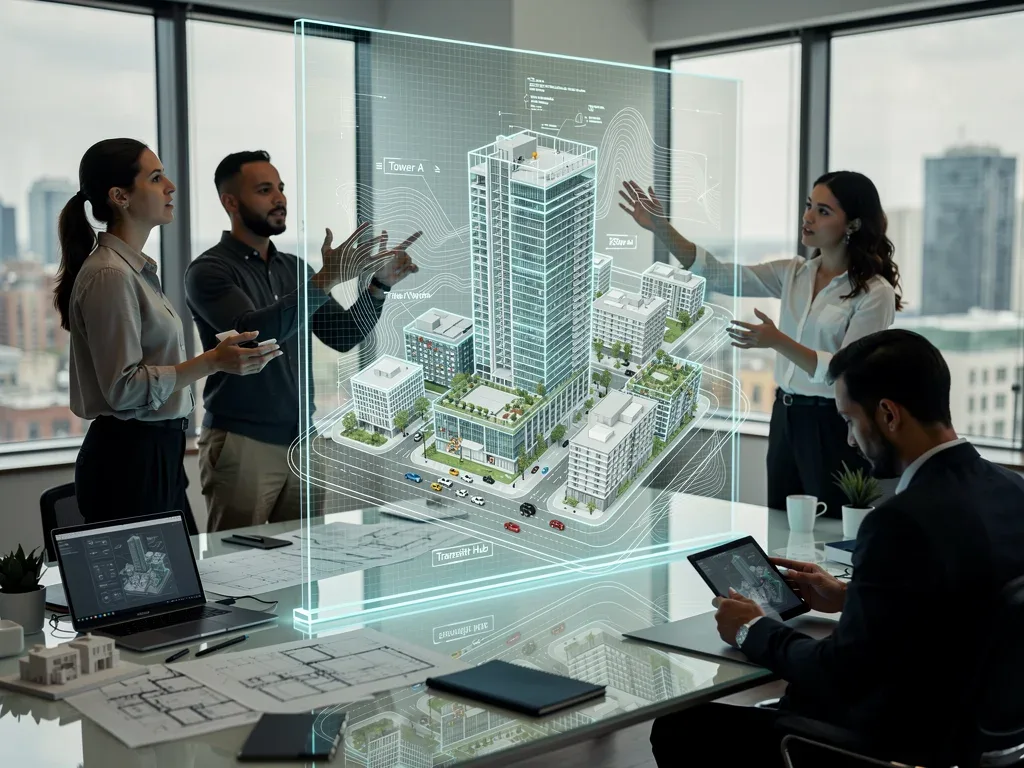
From Static Displays to Dynamic Environments
This transition moves us from a world of fixed screens to one of fluid, context-aware digital surfaces. Desks could become interactive workspaces, windows could display real-time data feeds, and even floors could project dynamic pathways or alerts. The physical boundaries of information are dissolved, leading to a more integrated and less constrained working experience.
- Clutter Reduction: Fewer physical screens mean cleaner, more organized workspaces.
- Enhanced Flexibility: Digital content can appear anywhere, adapting to tasks.
- Seamless Integration: Digital information blends with the physical world.
- Improved Ergonomics: Reduced need for fixed postures associated with traditional screens.
The implications for office real estate are also significant. Workspaces can become more versatile, easily reconfigured to suit different tasks and team sizes. The spatial environment itself becomes a tool, enhancing collaboration and individual productivity in ways that traditional screens simply cannot. This evolution promises not just a technological upgrade, but a complete reimagining of the workplace experience.
Challenges and the Road Ahead for Spatial Interfaces
While the promise of spatial interfaces and micro-LED innovation is immense, several challenges remain before widespread adoption becomes a reality. These hurdles encompass technological, economic, and human factors that need careful consideration and continuous development.
Technologically, miniaturization of micro-LEDs to achieve even higher pixel densities for truly seamless integration remains an active area of research. Power efficiency, though improving, is still a consideration for untethered spatial devices. Furthermore, the development of robust and intuitive input methods – beyond hand gestures – will be crucial for complex interactions within spatial environments.
Overcoming Adoption Barriers
Economically, the manufacturing costs of micro-LED displays, particularly those achieving 10,000 nits, are currently high. Scaling production to bring down prices will be essential for mass market penetration. Investment in research and development, coupled with economies of scale, will be key to making these advanced displays accessible to a broader range of businesses.
- Cost Reduction: Mass production efficiencies are vital for affordability.
- Standardization: Industry-wide protocols for spatial data and interaction models.
- User Experience Design: Developing intuitive interfaces that minimize cognitive load.
- Privacy and Security: Ensuring data integrity in pervasive digital environments.
From a human perspective, user acceptance and training are paramount. Transitioning from decades of 2D screen interaction to 3D spatial computing requires a learning curve. Designing user interfaces that are not only powerful but also intuitive and comfortable for prolonged use will determine the success of this new computing paradigm. Addressing these challenges systematically will pave the way for a truly integrated and efficient future workplace.
The Economic and Productivity Impact on Workplaces
The economic and productivity impacts of adopting spatial interfaces and micro-LED optical displays in workplaces are poised to be substantial, driving efficiency gains, fostering innovation, and potentially reshaping competitive landscapes. Businesses that embrace these technologies early could gain a significant edge.
Increased productivity stems from several factors. By presenting information contextually and allowing for more natural interaction with data, employees can process information faster and make quicker, more informed decisions. For tasks requiring detailed visualization, such as product design or medical diagnostics, the enhanced clarity and immersion offered by 10,000-nit displays can drastically reduce errors and accelerate development cycles.
Quantifiable Benefits and Strategic Advantages
Beyond individual productivity, collaboration stands to improve dramatically. Shared spatial environments allow teams to work together on projects with a level of engagement and understanding that traditional video conferencing or screen sharing cannot match. This can lead to faster problem-solving and more innovative outcomes.
- Accelerated Decision-Making: Real-time, contextual data visualization.
- Reduced Training Time: Immersive simulations for hands-on learning.
- Lower Operational Costs: Potential for remote expert assistance and virtual prototyping.
- Competitive Differentiation: Early adoption can attract talent and market leadership.
Furthermore, the ability to create highly adaptable and reconfigurable workspaces can optimize real estate utilization, potentially leading to cost savings. The long-term durability and energy efficiency of micro-LED technology also contribute to a lower total cost of ownership. Ultimately, the investment in spatial interfaces and advanced optical displays is not just about technological upgrade, but a strategic move towards a more agile, intelligent, and productive future for businesses across all sectors.
Future Outlook: Seamless Integration and Ubiquitous Spatial Computing
Looking ahead, the future of spatial interfaces and micro-LED innovation points towards an era of seamless integration and ubiquitous spatial computing. The current trajectory suggests that these technologies will not remain confined to specialized applications but will permeate every aspect of our professional and personal lives, becoming as fundamental as the internet itself.
We can anticipate a future where optical displays are not just screens but integrated elements of our environment – transparent surfaces, smart furniture, and even dynamic walls that adapt to our needs. The 10,000-nit brightness will ensure these projections are indistinguishable from reality, making the digital world a natural extension of our physical surroundings.
Evolution of Interaction and Ecosystems
Interaction methods will evolve beyond current gestures to include advanced brain-computer interfaces (BCIs) and highly sophisticated voice commands, making the act of computing almost invisible. AI will play a crucial role in anticipating user needs, proactively presenting relevant information in the spatial environment, and managing complex digital ecosystems.
- Pervasive Computing: Digital information integrated into all aspects of life.
- AI-Powered Context: Intelligent systems anticipating user needs and preferences.
- Ethical Considerations: Development of guidelines for privacy and digital well-being.
- Global Connectivity: Spatial interfaces enabling truly global, immersive collaboration.
The development of open standards and interoperable platforms will be critical to fostering a rich ecosystem of applications and services built on spatial computing. As these technologies mature, they will not just replace physical screens but will enable entirely new forms of work, learning, and entertainment, ushering in an era where the digital and physical worlds merge into a single, intuitive reality. The journey is just beginning, but the destination promises a world transformed by light and space.
| Key Aspect | Brief Description |
|---|---|
| Spatial Computing | Integration of digital information into the physical world for intuitive interaction. |
| Micro-LED Technology | Self-emissive microscopic LEDs offering superior brightness, contrast, and lifespan. |
| 10,000-Nit Displays | Extreme brightness for seamless digital content visibility in any lighting condition. |
| Workplace Transformation | Replacing physical screens with dynamic, interactive environments for enhanced productivity. |
Frequently Asked Questions About Spatial Interfaces and Micro-LED
What exactly are spatial interfaces?▼Spatial interfaces allow users to interact with digital content that is integrated into their physical environment. Unlike traditional screens, this technology enables digital objects to appear and be manipulated in three-dimensional space, offering a more immersive and intuitive user experience for various applications.
How do 10,000-nit optical displays enhance spatial computing?▼The extreme brightness of 10,000-nit optical displays ensures that digital content projected by spatial interfaces remains vibrant and visible even in brightly lit physical environments. This high luminosity is crucial for making augmented reality objects appear solid and realistic, bridging the gap between digital and physical perception.
What are the main advantages of micro-LED technology?▼Micro-LED technology offers superior brightness, infinite contrast ratios, faster response times, and exceptional color accuracy compared to other display technologies. Its inorganic nature also contributes to a longer lifespan and greater energy efficiency, making it ideal for demanding spatial computing applications.
Will spatial interfaces completely replace physical screens?▼While spatial interfaces are expected to significantly reduce reliance on traditional physical screens, a complete replacement may not occur immediately. Instead, there will likely be a hybrid period where both coexist, with spatial interfaces gradually taking over more functions as technology matures and becomes more accessible and cost-effective across various workplace settings.
What industries will benefit most from this innovation?▼Industries such as architecture, engineering, manufacturing, healthcare, design, and education are poised to benefit significantly. These fields often rely on complex data visualization, 3D modeling, and collaborative problem-solving, all of which are greatly enhanced by the immersive and interactive capabilities of spatial interfaces and high-nit micro-LED displays.
Conclusion
The convergence of spatial interfaces and micro-LED innovation, particularly the emergence of 10,000-nit optical displays, is not merely an incremental upgrade but a foundational shift in how we interact with information and our work environments. This powerful combination promises to dismantle the limitations of traditional physical screens, ushering in an era of immersive, intuitive, and highly productive workspaces. While challenges in cost and widespread adoption remain, the trajectory is clear: the future of work is spatial, vibrant, and seamlessly integrated, promising an unprecedented fusion of the digital and physical realms.
