Why 4-Day Workweek Adoption Rose 28% in US Employers This Year
Advertisements

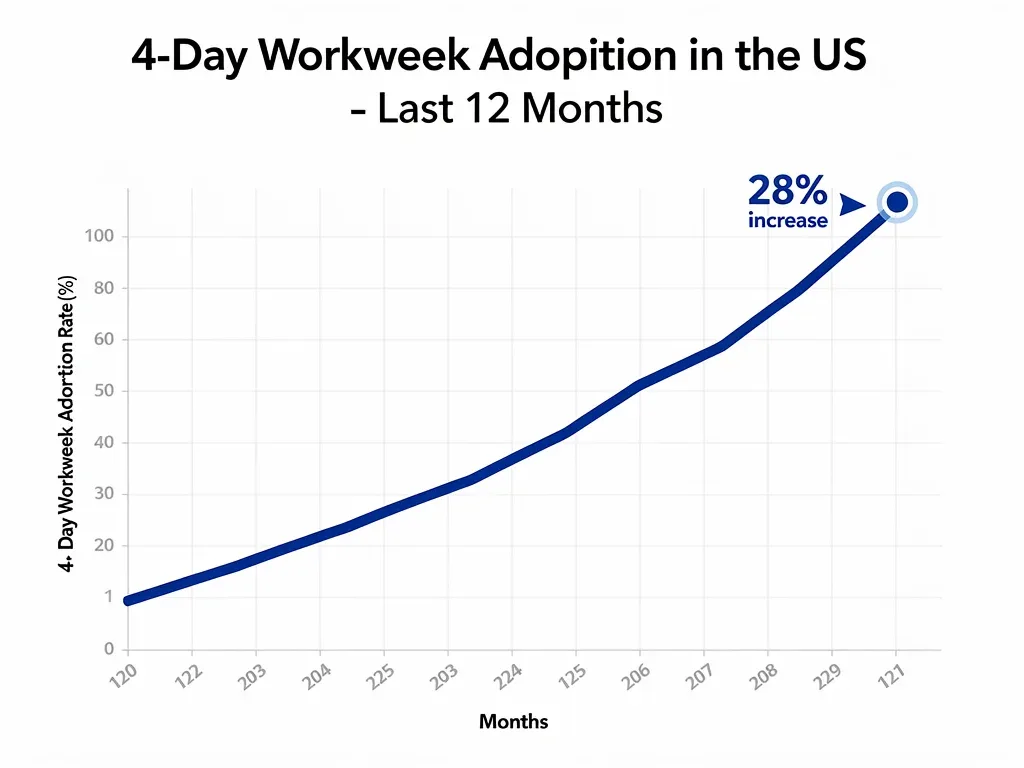
The 4-day workweek adoption has surged by 28% among major US employers this year, driven by compelling evidence of enhanced productivity, improved employee well-being, and a strategic advantage in attracting and retaining top talent.
In an evolving professional landscape, a remarkable shift is underway: the 4-day workweek adoption has seen a staggering 28% increase among major US employers this year. This significant rise isn't merely a fleeting trend but a fundamental re-evaluation of how work is structured, promising profound impacts on productivity, employee satisfaction, and the very fabric of corporate culture.
The evolving landscape of work and its drivers
The concept of a traditional five-day, 40-hour workweek, a cornerstone of industrial-era employment, is facing unprecedented scrutiny. As technology reshapes how and where we work, companies are increasingly exploring alternatives that better align with modern demands and employee expectations. This year's substantial increase in the 4-day workweek adoption signifies a pivotal moment in this ongoing transformation.
Several factors are converging to accelerate this shift. The post-pandemic era has instilled a greater appreciation for flexibility and work-life balance. Employees, having experienced remote work and its inherent autonomy, are now demanding more control over their schedules. Employers, in turn, are recognizing that traditional models may no longer be optimal for fostering innovation or retaining skilled talent.
Technological advancements enabling flexibility
Digital tools and communication platforms have made it easier than ever for teams to collaborate effectively regardless of their physical presence or working hours. This technological backbone is crucial for the successful implementation of a 4-day workweek.
- Enhanced communication tools: Platforms like Slack, Microsoft Teams, and Zoom facilitate seamless interaction.
- Project management software: Tools such as Asana, Trello, and Monday.com ensure tasks are tracked and deadlines met.
- Cloud computing: Provides ubiquitous access to necessary files and applications.
- Automation: Reduces time spent on repetitive tasks, freeing up valuable employee time.
The confluence of these technological capabilities with a growing desire for improved work-life integration is fundamentally altering how organizations approach scheduling and productivity, paving the way for wider 4-day workweek adoption.
Key benefits driving the surge in adoption
The 28% surge in 4-day workweek adoption isn't arbitrary; it's a direct response to a compelling array of benefits that address some of the most pressing challenges faced by contemporary businesses. These advantages span from enhanced employee well-being to tangible improvements in operational efficiency and financial performance.
One of the most frequently cited benefits is the significant boost in employee morale and reduced burnout. A shorter workweek provides employees with more personal time, allowing for better engagement in hobbies, family life, and self-care. This improved balance translates directly into a more refreshed, motivated, and productive workforce.
Increased productivity and focus
Counter-intuitively, working fewer hours often leads to higher productivity. When employees know they have less time to complete their tasks, they tend to prioritize more effectively and work with greater intensity. This phenomenon, often referred to as Parkinson's Law (work expands to fill the time available for its completion), suggests that constraints can foster efficiency.
- Reduced distractions: Employees are more focused during their working hours.
- Improved time management: A compressed schedule encourages better planning and prioritization.
- Higher quality output: Less fatigue leads to fewer errors and better work.
Furthermore, companies implementing a 4-day workweek often report a decrease in absenteeism and presenteeism (being at work but not productive), as employees are less likely to call in sick or struggle with concentration due to exhaustion. This directly contributes to a more consistent and high-performing team.
Employee well-being and mental health improvements
Beyond productivity metrics, the 4-day workweek adoption has proven to be a powerful tool for enhancing employee well-being and addressing the growing crisis of mental health in the workplace. The extended weekend provides a crucial opportunity for genuine rest and rejuvenation, which is often lacking in a standard five-day schedule.
Employees report feeling less stressed, more energized, and generally happier with their work-life balance. This psychological benefit extends beyond the individual, fostering a more positive and supportive company culture. When employees feel valued and supported, their loyalty and commitment to the organization naturally increase.
Reduced stress and burnout
The constant pressure of a demanding work schedule can take a severe toll on mental and physical health. A 4-day week offers a much-needed reprieve, allowing individuals to disconnect and recharge fully. This preventative measure can significantly reduce the incidence of burnout, a pervasive issue in many industries.
- More personal time: Allows for hobbies, family, and personal appointments without sacrificing work.
- Better sleep patterns: Reduced stress often leads to improved sleep quality.
- Increased physical activity: More free time can encourage healthier lifestyle choices.
The focus on employee well-being is no longer just a 'nice-to-have' but a strategic imperative. Companies that prioritize the mental and physical health of their workforce are better positioned to attract and retain top talent, especially in a competitive labor market where such benefits are highly sought after.
Attracting and retaining top talent in a competitive market
In today's fiercely competitive talent landscape, companies are constantly searching for unique differentiators to attract and retain the best employees. The 4-day workweek adoption has emerged as a significant competitive advantage, signaling to potential hires that an organization values work-life balance and employee well-being.
For many job seekers, the prospect of an extra day off each week is a powerful incentive, often outweighing marginal differences in salary or other benefits. This makes companies offering a 4-day workweek highly attractive, particularly to younger generations entering the workforce who prioritize flexibility and quality of life.
Lower attrition rates
Beyond attraction, the 4-day workweek also plays a crucial role in retention. Employees who are satisfied with their work-life balance are less likely to seek opportunities elsewhere. This reduces turnover costs, which include recruitment, onboarding, and training expenses, representing substantial savings for employers.
- Enhanced employee loyalty: Employees feel more appreciated and committed.
- Reduced recruitment costs: Fewer vacancies mean less spending on hiring.
- Stronger employer brand: Companies become known as desirable places to work.
The ability to offer such a compelling benefit can transform an organization's employer brand, making it a magnet for individuals who are not only skilled but also deeply invested in their personal well-being and professional growth. This long-term investment in human capital pays dividends in stability and sustained performance.
Challenges and considerations for implementation
While the benefits of the 4-day workweek adoption are compelling, its successful implementation is not without challenges. Companies considering this model must carefully plan and address potential hurdles to ensure a smooth transition and sustainable success. These challenges often revolve around operational logistics, client expectations, and internal communication.
One of the primary concerns is maintaining service levels and client satisfaction. For businesses that require continuous coverage or operate within strict service agreements, adjusting to a compressed workweek demands innovative scheduling and robust communication strategies. It's not simply about reducing hours, but redesigning how work gets done.
Operational adjustments and client expectations
Adapting workflow processes and managing client perceptions are critical. This might involve staggered shifts, cross-training employees, or clearly communicating new operating hours to external stakeholders. Transparency and proactive planning are key to mitigating potential disruptions.
- Rethinking scheduling: Designing rotas that ensure adequate coverage.
- Client communication: Setting clear expectations about availability.
- Cross-training staff: Ensuring multiple employees can handle critical tasks.
Furthermore, not all roles or industries are equally suited to a 4-day workweek without significant restructuring. Manufacturing, healthcare, and retail sectors, for instance, face unique challenges due to their operational demands. Careful pilot programs and a phased approach can help identify and resolve these issues before a full-scale rollout.

Future outlook and sustainability of the trend
The 28% increase in 4-day workweek adoption is likely just the beginning of a larger, more fundamental shift in global work practices. As more companies successfully implement and demonstrate the benefits of this model, its appeal and perceived viability will only grow. The future of work appears to be increasingly flexible, outcome-oriented, and employee-centric.
Experts predict that the trend will continue to gain momentum, especially as younger generations, who prioritize work-life integration, rise through the ranks. The long-term sustainability of the 4-day workweek will depend on ongoing research, technological advancements, and the willingness of organizations to adapt and innovate their operational structures.
Policy and societal implications
- Environmental benefits: Less commuting can reduce greenhouse gas emissions.
- Economic impact: Increased leisure time may boost spending in certain sectors.
- Government support: Potential for policy changes to support flexible work arrangements.
The ongoing success stories of companies embracing this model provide compelling evidence that a shorter workweek can be a win-win for both employers and employees, fostering a more productive, healthier, and ultimately more sustainable way of working in the 21st century.
The significant rise in 4-day workweek adoption among major US employers reflects a profound and positive transformation in workplace philosophy. This shift, driven by a confluence of technological advancements, a greater emphasis on employee well-being, and the strategic imperative to attract and retain top talent, signals a promising future for how we approach professional life. While challenges remain, the demonstrated benefits in productivity, morale, and overall organizational health make a compelling case for its continued expansion.
| Key Aspect | Description |
|---|---|
| Adoption Surge | Major US employers saw a 28% increase in 4-day workweek adoption this year, indicating a significant trend. |
| Core Benefits | Key drivers include enhanced productivity, improved employee well-being, and stronger talent retention. |
| Implementation Challenges | Operational adjustments, client expectations, and industry-specific hurdles require careful planning. |
| Future Outlook | The trend is expected to continue growing, reshaping work culture and potentially influencing public policy. |
Frequently Asked Questions About the 4-Day Workweek
What is the primary reason for the 28% increase in 4-day workweek adoption?▼The main reason for the surge is the compelling evidence of increased employee productivity, improved work-life balance, and enhanced ability to attract and retain top talent in a competitive labor market. Companies are seeing tangible benefits.
Does a 4-day workweek negatively impact productivity?▼Contrary to initial concerns, many studies and pilot programs indicate that productivity often increases or remains stable. Employees tend to be more focused and efficient during their compressed work hours, leading to higher quality output.
How does the 4-day workweek affect employee well-being?▼It significantly boosts employee well-being by reducing stress and burnout. The extra day off allows for more personal time, rest, and engagement in non-work activities, leading to improved mental and physical health and higher job satisfaction.
What are the biggest challenges in implementing a 4-day workweek?▼Key challenges include adapting operational logistics, managing client expectations regarding availability, and ensuring continuous service coverage. It requires careful planning, workflow adjustments, and clear communication with all stakeholders.
Is the 4-day workweek a sustainable trend for the future?▼Experts believe it is. Driven by technological advancements, evolving employee expectations, and proven benefits, the 4-day workweek is poised to become a more widespread and sustainable model, reshaping traditional work structures for the long term.
Conclusion
The remarkable 28% increase in 4-day workweek adoption among major US employers this year is a clear indicator of a transformative shift in the professional world. This trend is not merely a passing fad but a strategic response to the evolving demands of both employees and the modern economy. By prioritizing flexibility, well-being, and efficiency, businesses are discovering that a shorter workweek can lead to a more productive, engaged, and loyal workforce. As more companies embrace and refine this model, the 4-day workweek is set to become a defining characteristic of future employment landscapes, offering a sustainable path towards a healthier balance between professional achievement and personal fulfillment.
