AI Agents Surge: Reshaping American Workplaces 2026
Advertisements
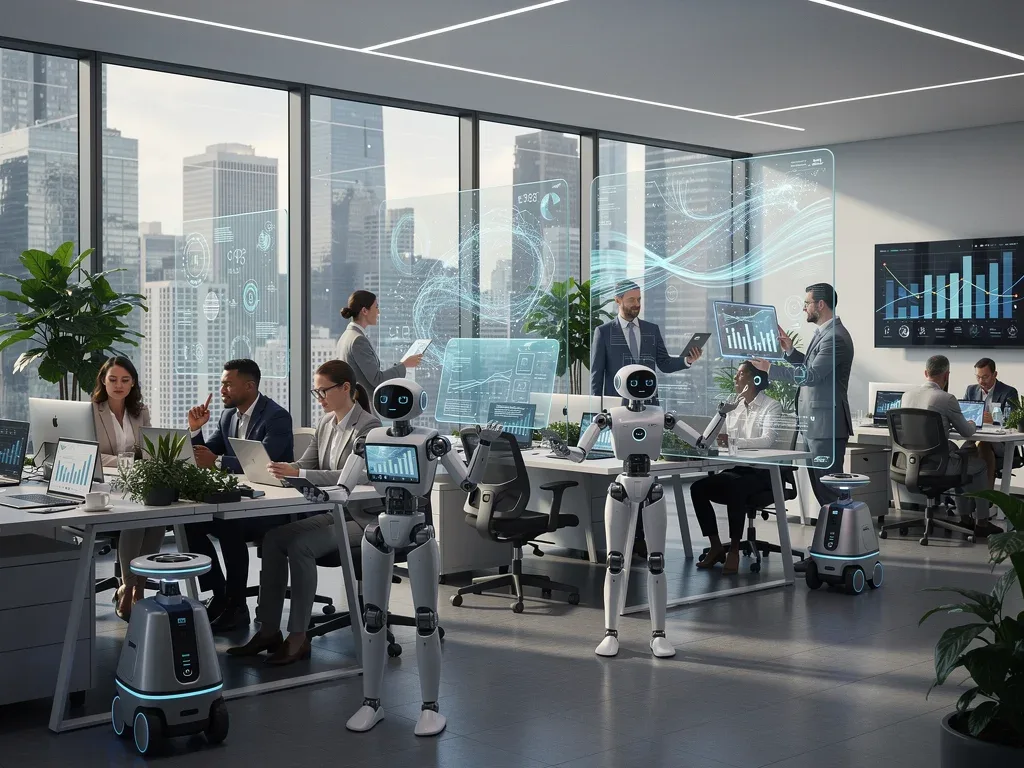
The 32% surge in autonomous AI agents is poised to significantly reshape American workplaces by 2026, revolutionizing operational efficiency and creating new paradigms for human-AI collaboration across diverse industries.
Imagine a workplace where mundane tasks are a relic of the past, and innovation thrives with unprecedented speed. This future is rapidly becoming our present, as autonomous AI agents are projected to surge by 32% in American workplaces by 2026. This isn't just a technological shift; it's a fundamental redefinition of how work gets done, promising both immense opportunities and significant challenges for businesses and employees alike.
Understanding the Autonomous AI Agent Phenomenon
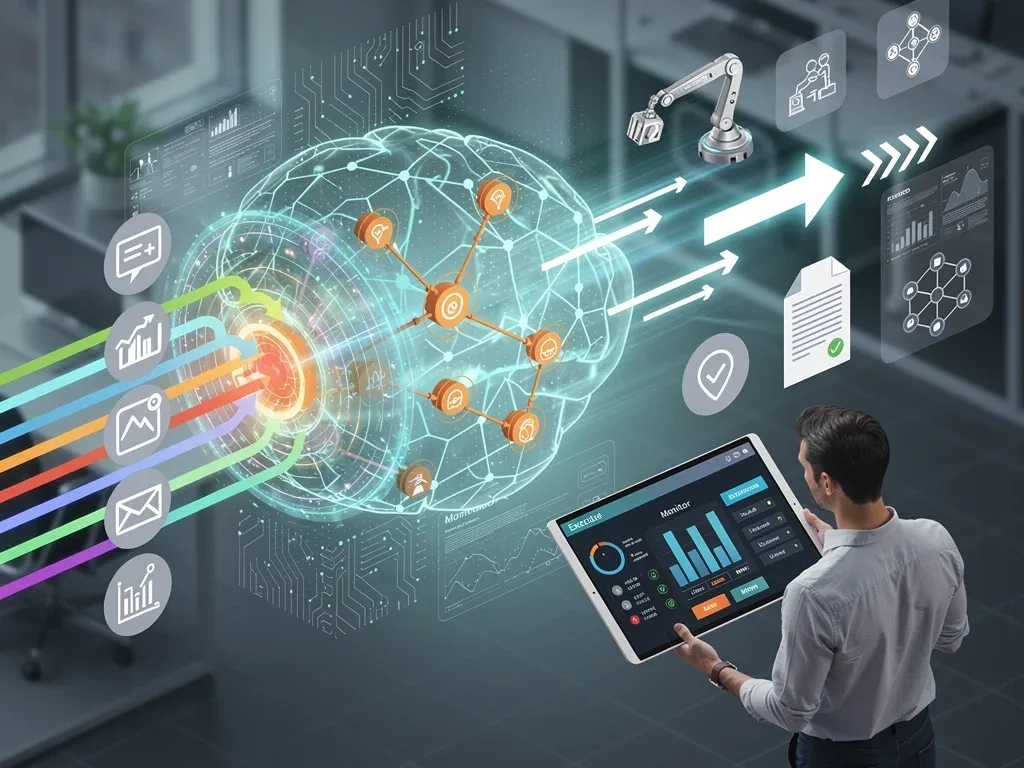
The concept of autonomous AI agents might sound like science fiction, but these sophisticated software programs are already making waves. Unlike traditional automation, which follows predefined rules, autonomous AI agents can perceive their environment, make decisions, and take actions to achieve specific goals without constant human intervention. Their rapid adoption stems from their ability to handle complex, dynamic tasks that previously required human cognitive input.
This isn't merely about replacing human labor; it's about augmenting human capabilities and creating entirely new efficiencies. From managing supply chains to personalizing customer experiences, these agents are proving their value across various sectors, demonstrating a level of adaptability and continuous learning that static software cannot match.
What Defines an Autonomous AI Agent?
Autonomous AI agents are characterized by several core attributes that set them apart. These aren't just advanced algorithms; they are systems designed for self-sufficiency within defined parameters. Understanding these characteristics is key to grasping their transformative potential and how they differ from simpler AI tools we've encountered before.
- Goal-Oriented: They are programmed to achieve specific objectives, often breaking down complex goals into smaller, manageable sub-tasks.
- Perceptive: Agents can interpret data from their environment, whether it's digital information or sensor input, to inform their decisions.
- Adaptive: They learn from interactions and data, continually refining their strategies and improving performance over time without explicit reprogramming.
- Proactive: Unlike reactive systems, autonomous agents can initiate actions based on their understanding of goals and environmental changes.
The distinction between an autonomous agent and a simple script lies in its capacity for independent decision-making and continuous improvement. This allows them to tackle ambiguous problems and optimize processes in ways that were previously unimaginable, making them invaluable assets in a rapidly evolving business landscape. The ability to adapt and learn is what truly underpins the projected 32% surge in their deployment.
Drivers Behind the 32% Surge in Adoption
The anticipated 32% surge in autonomous AI agents isn't a random occurrence; it's the result of several converging technological and economic factors. Businesses are under constant pressure to increase efficiency, reduce costs, and innovate faster, and AI agents offer compelling solutions to these challenges. Advancements in machine learning, cloud computing, and data analytics have created fertile ground for these sophisticated systems to flourish.
Furthermore, the increasing availability of robust AI platforms and developer tools has lowered the barrier to entry for many organizations, enabling them to experiment with and deploy AI agents more readily. This democratization of AI technology is accelerating its integration into everyday business operations.
Technological Advancements Fueling Growth
The rapid evolution of AI technologies forms the bedrock of this surge. Breakthroughs in areas such as natural language processing (NLP), computer vision, and reinforcement learning have endowed AI agents with capabilities that were once confined to research labs. These advancements allow agents to understand complex commands, interpret visual information, and learn from trial and error, making them capable of handling a wider array of tasks.
- Enhanced Machine Learning: More powerful algorithms and increased computational power enable agents to process vast datasets and identify intricate patterns, leading to more intelligent decision-making.
- Cloud Infrastructure: Scalable cloud resources provide the necessary computing power and storage for deploying and managing complex AI agent systems without significant upfront hardware investment.
- Improved Data Analytics: The ability to collect, process, and analyze real-time data efficiently allows agents to make informed decisions and adapt quickly to changing conditions.
Beyond these technical enablers, the growing understanding of AI's potential within executive leadership also plays a crucial role. As more success stories emerge, companies are becoming more confident in investing in and integrating autonomous AI solutions, seeing them not just as cost-cutting tools but as strategic assets for competitive advantage. This confluence of factors is creating an irresistible momentum for the adoption of autonomous AI agents.
Impact on American Workplaces and Job Roles
The 32% surge in autonomous AI agents will inevitably have a profound impact on American workplaces, transforming existing job roles and giving rise to entirely new ones. While some fear job displacement, the more nuanced reality suggests a shift towards human-AI collaboration, where humans focus on higher-level strategic and creative tasks, while agents handle repetitive or data-intensive operations.
This transformation demands a proactive approach to workforce development, emphasizing reskilling and upskilling programs to prepare employees for the new demands of an AI-augmented environment. The goal is not to replace humans but to empower them with tools that amplify their productivity and allow them to contribute in more meaningful ways.
Emerging Job Categories and Skill Requirements
As autonomous AI agents become more prevalent, new job categories are emerging to manage, maintain, and optimize these systems. These roles require a blend of technical expertise, critical thinking, and an understanding of human-AI interaction. Companies will increasingly seek individuals who can bridge the gap between advanced technology and business objectives.
- AI Ethicists and Governance Specialists: Ensuring AI systems operate fairly, transparently, and in compliance with regulations will be paramount.
- AI Trainers and Data Curators: Professionals needed to refine AI models, label data, and guide agents' learning processes.
- Human-AI Collaboration Managers: Roles focused on optimizing workflows where humans and AI agents work together, identifying synergies and resolving conflicts.
- Prompt Engineers: Experts in crafting effective queries and instructions to maximize the utility and output of generative AI agents.
The shift also necessitates a focus on soft skills such as creativity, emotional intelligence, and critical thinking, which are inherently human and difficult for AI to replicate. These skills will become even more valuable in an environment where routine tasks are automated, allowing humans to focus on innovation and complex problem-solving. This evolution underscores a future where human ingenuity is amplified, not diminished, by AI.
Challenges and Ethical Considerations
While the rise of autonomous AI agents promises significant benefits, it also introduces a host of challenges and ethical considerations that must be carefully navigated. The speed of the 32% surge means that these issues need to be addressed proactively, rather than reactively, to ensure a smooth and equitable transition for American workplaces. Ignoring these concerns could lead to unintended consequences that undermine the positive potential of AI.
These challenges span from ensuring data privacy and security to addressing potential biases embedded within AI algorithms. Organizations must develop robust frameworks and policies to manage these risks effectively, fostering trust and responsible AI deployment. This requires a multi-stakeholder approach, involving technologists, policymakers, ethicists, and the workforce itself.
Addressing Bias and Transparency in AI
One of the most critical ethical concerns revolves around bias in AI systems. If the data used to train autonomous AI agents reflects existing societal biases, the agents themselves can perpetuate and even amplify these biases in their decision-making. This can lead to unfair or discriminatory outcomes in areas such as hiring, lending, or customer service. Ensuring transparency in how AI agents arrive at their decisions is equally important, allowing for accountability and debugging.
- Data Diversity: Actively seeking diverse and representative datasets to train AI models, reducing the risk of embedded biases.
- Algorithmic Audits: Regularly auditing AI algorithms to identify and mitigate biases, and ensuring fairness in their operations.
- Explainable AI (XAI): Developing methods to make AI decision-making processes understandable to humans, fostering trust and allowing for intervention when necessary.
- Regulatory Frameworks: Establishing clear guidelines and regulations for the ethical development and deployment of AI agents, with enforcement mechanisms.
Beyond bias, issues of data privacy, cybersecurity, and the potential for autonomous systems to make critical decisions without human oversight also demand serious attention. Striking the right balance between automation and human control, and ensuring ethical guardrails are in place, will be crucial for harnessing the full potential of autonomous AI agents responsibly.
Strategic Implementation for Businesses
For businesses to effectively leverage the 32% surge in autonomous AI agents, strategic implementation is paramount. This isn't a plug-and-play technology; it requires careful planning, integration, and a clear understanding of an organization's specific needs and goals. A phased approach, starting with pilot programs and gradually scaling up, often proves most successful, allowing for learning and adaptation along the way.
Successful implementation also hinges on fostering a culture of innovation and continuous learning within the organization. Employees need to be educated about AI's benefits and how to effectively collaborate with these new tools, transforming potential resistance into enthusiastic adoption. This involves clear communication, comprehensive training, and demonstrating tangible benefits.
Best Practices for Integrating AI Agents
Integrating autonomous AI agents into existing business processes requires more than just technical deployment; it demands a holistic strategy that considers people, processes, and technology. Adopting best practices can significantly enhance the chances of a successful and impactful integration.
- Define Clear Objectives: Identify specific business problems or processes that AI agents can effectively address, with measurable outcomes.
- Start Small, Scale Smart: Begin with pilot projects to test the waters, gather insights, and refine the approach before broader deployment.
- Invest in Training and Upskilling: Equip employees with the necessary skills to work alongside AI agents, focusing on new roles and collaborative workflows.
- Ensure Data Quality and Governance: High-quality, well-governed data is crucial for the effective functioning and learning of autonomous AI agents.
- Establish Ethical Guidelines: Implement internal policies and oversight mechanisms to ensure AI agents operate ethically and responsibly.
By following these best practices, businesses can not only mitigate risks but also maximize the return on investment from their AI initiatives. The key is to view autonomous AI agents as strategic partners that can unlock new levels of productivity and innovation, rather than simply as tools for cost reduction. This forward-thinking approach will be critical for thriving in the AI-driven economy of 2026 and beyond.
The Future Outlook: Beyond 2026
The projected 32% surge in autonomous AI agents by 2026 is just the beginning of a much larger transformation. Looking beyond this immediate horizon, we can anticipate even more sophisticated and integrated AI systems that will continue to redefine the landscape of American workplaces. The evolution will likely involve AI agents becoming more specialized, more collaborative, and increasingly capable of handling complex, unstructured problems.
The future will also see a greater emphasis on human-AI teaming, where the strengths of both humans and machines are synergistically combined to achieve outcomes far beyond what either could accomplish alone. This ongoing evolution will necessitate continuous adaptation from individuals and organizations, making lifelong learning an even more critical component of career success.

Hyper-Personalization and Predictive Intelligence
As autonomous AI agents mature, their ability to deliver hyper-personalized experiences and predictive intelligence will become even more pronounced. In customer service, for instance, agents will move beyond simple query resolution to anticipate customer needs and proactively offer tailored solutions, creating a seamless and highly satisfying experience.
- Proactive Problem Solving: AI agents will increasingly identify potential issues before they arise, offering solutions or flagging them for human intervention.
- Customized Workflows: Agents will adapt their processes to individual user preferences and work styles, enhancing personal productivity and efficiency.
- Real-time Market Adaptation: Businesses will leverage AI agents to analyze market trends and customer behavior in real-time, allowing for immediate strategic adjustments.
The integration of AI agents with other emerging technologies, such as the Internet of Things (IoT) and blockchain, will further amplify their capabilities, creating interconnected intelligent ecosystems. This will lead to unprecedented levels of automation and insight across industries, fundamentally altering how products are designed, manufactured, and delivered. The journey of autonomous AI agents is one of continuous innovation, promising a future where intelligence is deeply embedded in every facet of work.
| Key Aspect | Description |
|---|---|
| 32% Surge | Projected growth of autonomous AI agent adoption in American workplaces by 2026. |
| Workplace Reshaping | AI agents driving efficiency, creating new roles, and redefining human-AI collaboration. |
| Key Drivers | Technological advancements, increased efficiency demands, and accessible AI platforms. |
| Challenges | Ethical concerns, bias in AI, data privacy, and the need for workforce upskilling. |
Frequently Asked Questions About AI Agents in Workplaces
What exactly are autonomous AI agents?▼Autonomous AI agents are advanced software programs capable of perceiving their environment, making decisions, and executing tasks independently to achieve specific goals without constant human oversight. They learn and adapt over time.
How will AI agents impact job security in the US?▼While some routine tasks may be automated, the primary impact will be a shift in job roles, requiring new skills for human-AI collaboration, management, and ethical oversight. New job categories are expected to emerge.
What industries will see the most significant impact?▼Industries like manufacturing, customer service, finance, healthcare, and logistics are likely to experience substantial transformation due to AI agent adoption, driven by efficiency gains and complex task automation.
How can businesses prepare for this AI surge?▼Businesses should focus on strategic planning, pilot programs, employee upskilling, establishing clear ethical guidelines, and ensuring robust data governance to integrate AI agents effectively and responsibly.
What are the main ethical concerns with autonomous AI?▼Key concerns include algorithmic bias, data privacy, transparency in decision-making, and the need for strong regulatory frameworks to ensure fair, secure, and accountable AI agent operations.
Conclusion
The projected 32% surge in autonomous AI agents by 2026 marks a pivotal moment for American workplaces. This isn't just another technological trend; it represents a fundamental paradigm shift in how work is conceived, executed, and managed. While the promise of enhanced efficiency, innovation, and new job creation is immense, organizations must also proactively address the associated challenges, including job adaptation, ethical considerations, and the imperative for continuous learning. By embracing strategic implementation, fostering human-AI collaboration, and prioritizing ethical development, businesses can successfully navigate this transformative era, ensuring that the integration of autonomous AI agents leads to a more productive, innovative, and equitable future for all.
