Automated Hospitality Trends: Robotic Prep Stations in Fast-Casual Chains
Advertisements
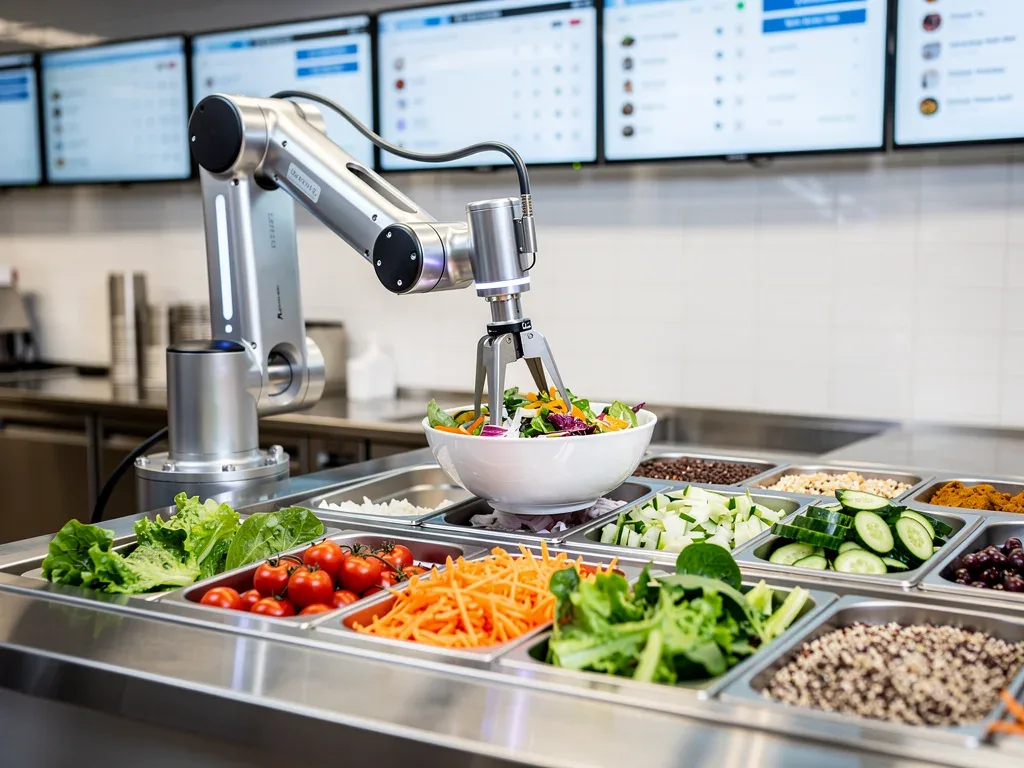
By 2026, 35% of fast-casual chains are expected to adopt robotic prep stations, driven by demands for increased efficiency, consistent quality, and a streamlined customer experience in the rapidly evolving hospitality sector.
The landscape of the fast-casual dining industry is undergoing a significant transformation, with automated hospitality trends leading the charge. Projections indicate that an impressive 35% of fast-casual chains are set to implement robotic prep stations by 2026, fundamentally reshaping how our food is prepared and served. This shift isn't merely a fleeting fad; it represents a strategic investment in efficiency, consistency, and an enhanced customer experience that promises to redefine the future of quick-service dining.
The rise of automation in fast-casual dining
The fast-casual sector, known for its blend of quick service and higher-quality ingredients than traditional fast food, faces unique challenges. Labor shortages, rising operational costs, and the constant demand for speed and customization have pushed chains to seek innovative solutions. Automation, particularly robotic prep stations, has emerged as a powerful answer to these pressures.
These robotic systems are not about replacing human creativity but rather augmenting it, handling repetitive and precise tasks that can be prone to human error or inconsistency. From chopping vegetables to assembling complex orders, robots are proving their worth by delivering speed and accuracy unmatched by traditional methods. This allows human staff to focus on more complex tasks, customer interaction, and ensuring overall quality control, creating a more efficient and satisfying environment for both employees and patrons.
Driving forces behind robotic adoption
- Labor efficiency: Robots can operate continuously, reducing the need for extensive human labor in repetitive tasks.
- Consistency and quality: Automated systems ensure precise measurements and consistent preparation every time.
- Speed of service: Robots can significantly cut down preparation times, leading to faster order fulfillment.
- Hygiene and safety: Automated environments can minimize human contact with food, enhancing safety protocols.
The integration of robotic prep stations is a strategic move that addresses multiple pain points within the fast-casual industry. It's about optimizing every aspect of the kitchen, from ingredient management to final plate assembly, ensuring that customers receive their orders quickly and exactly as they expect them. This technological leap is not just about cost-cutting; it's about building a more resilient and responsive business model for the future.
Understanding robotic prep stations: how they work
Robotic prep stations are sophisticated systems designed to automate various stages of food preparation. These systems typically consist of robotic arms equipped with specialized grippers and tools, integrated with advanced software that manages recipes, inventory, and order fulfillment. The core principle is to execute tasks with extreme precision and speed, often exceeding human capabilities in repetitive actions.
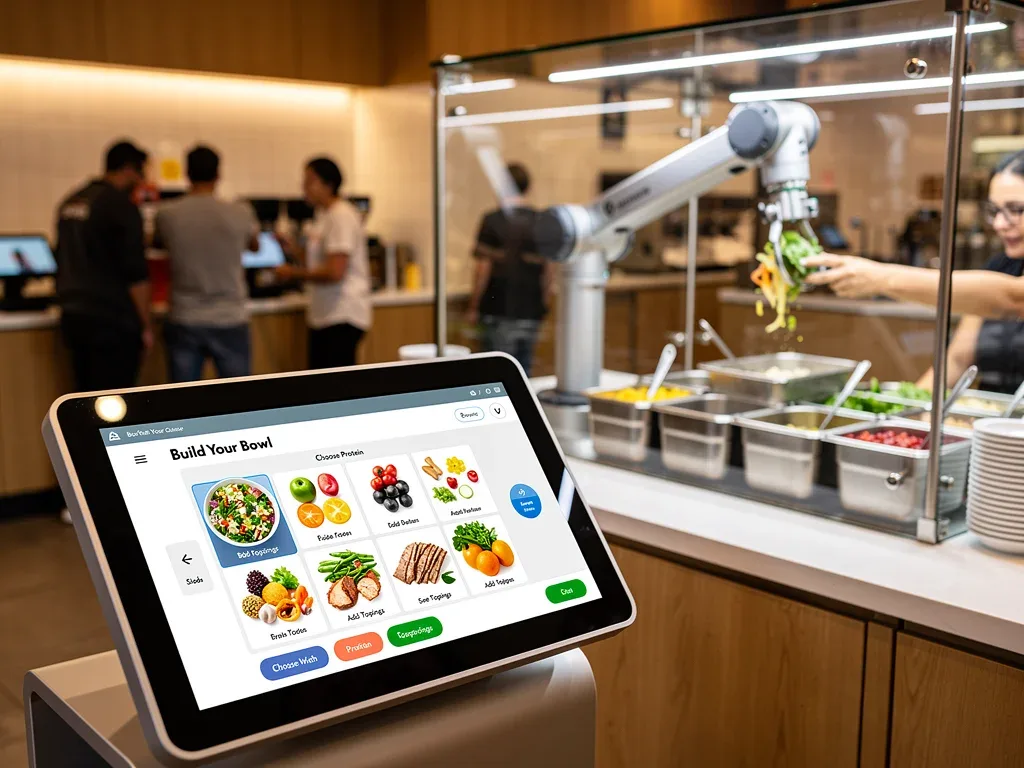
When an order is placed, either through a digital kiosk, mobile app, or a human cashier, the information is sent to the robotic system. The robots then retrieve ingredients from designated dispensers, measure them accurately, and assemble the dish according to the precise recipe specifications. This process is highly customizable, allowing for individual ingredient preferences and dietary restrictions to be met without manual intervention.
Key components of a robotic prep system
- Robotic arms: Multi-axis arms capable of precise movements and handling various tools.
- Ingredient dispensers: Automated systems that accurately portion and deliver ingredients.
- Sensors and cameras: For monitoring ingredient levels, ensuring quality, and detecting anomalies.
- Software integration: Connects with POS systems, inventory management, and customer order platforms.
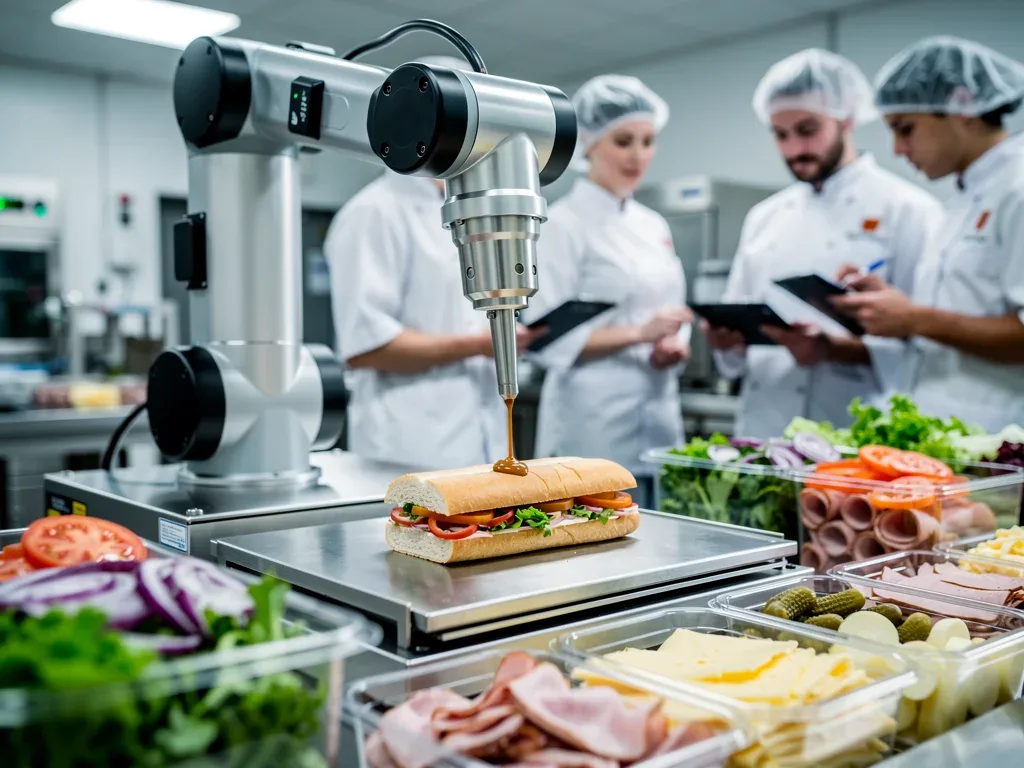
These stations are often modular, meaning they can be adapted to different kitchen layouts and specific menu items. For example, one station might specialize in salad assembly, while another focuses on sandwich preparation or even hot food cooking. The flexibility of these systems allows fast-casual chains to scale their automation efforts according to their needs and investment capacity. The technology ensures that every dish prepared adheres to the highest standards of consistency, a critical factor for brand reputation and customer satisfaction in a competitive market.
Benefits for fast-casual chains and customers
The implementation of robotic prep stations offers a multitude of benefits that extend across the entire fast-casual ecosystem, from the operational efficiency of the chains to the dining experience of the customers. For businesses, the advantages are clear: reduced labor costs, minimized food waste, and a significant boost in throughput during peak hours. Robots don't call in sick, don't require breaks, and can work tirelessly, ensuring consistent productivity.
From a customer perspective, the benefits are equally compelling. Faster service means less waiting, a critical factor in the fast-casual segment where convenience is paramount. The promise of consistent quality means that a customer's favorite dish will taste the same every time, regardless of who is working in the kitchen. Moreover, the ability to precisely customize orders without fear of human error enhances the overall personalization of the dining experience.
Enhanced operational advantages
- Reduced waste: Precise portioning minimizes ingredient waste, contributing to cost savings and sustainability.
- Improved hygiene: Automated processes reduce human contact with food, leading to a cleaner and safer food preparation environment.
- Scalability: Robotic systems can be easily scaled up or down to meet fluctuating demand, offering operational flexibility.
Beyond these direct benefits, the transparency offered by some robotic systems can also build greater trust with customers. Seeing a robotic arm precisely assemble their meal can provide reassurance regarding the quality and care taken in its preparation. This blend of efficiency, consistency, and enhanced customer trust is a powerful driver for the widespread adoption of these advanced automated solutions in the fast-casual industry.
Challenges and considerations for implementation
While the benefits of robotic prep stations are substantial, their implementation is not without challenges. The initial capital investment can be significant, requiring careful financial planning and a clear return on investment strategy. Fast-casual chains must weigh the upfront costs against long-term savings in labor, waste reduction, and increased revenue from improved service.
Another critical consideration is the integration of these complex systems into existing kitchen layouts and workflows. This often requires extensive planning, potential redesign of kitchen spaces, and thorough training for human staff who will work alongside these robots. Ensuring seamless data flow between point-of-sale systems, inventory management, and the robotic platforms is also crucial for optimal performance.
Overcoming adoption hurdles
- High initial investment: Requires thorough financial modeling and phased implementation strategies.
- Technical expertise: Need for skilled technicians for installation, maintenance, and troubleshooting.
- Staff training: Employees must be trained to operate, monitor, and troubleshoot robotic systems.
- Menu adaptability: Menus may need to be optimized for robotic preparation, balancing automation with culinary creativity.
Furthermore, the maintenance and servicing of robotic systems require specialized knowledge, and chains must either invest in in-house expertise or rely on third-party service providers. Addressing these challenges effectively will be key to successful adoption and realizing the full potential of automated prep stations within the fast-casual dining sector. It's a journey that requires foresight, investment, and a commitment to embracing technological evolution.
The impact on employment and human roles
One of the most frequently discussed aspects of automation in any industry is its impact on human employment. In the fast-casual sector, the introduction of robotic prep stations is expected to shift, rather than entirely eliminate, human roles. While robots will take over repetitive and physically demanding tasks, new opportunities will emerge in areas such as robot maintenance, programming, and quality control.
Human staff will increasingly be re-skilled to oversee the automated systems, manage customer relations, and handle tasks that require critical thinking, empathy, and adaptability—qualities that robots currently lack. This transition presents an opportunity for employees to move into higher-skilled, more engaging roles, potentially leading to improved job satisfaction and career growth within the hospitality industry.
Evolving job functions in automated kitchens
- Robot operators and supervisors: Monitoring robot performance and intervening when necessary.
- Customer experience specialists: Focusing on personalized service and problem-solving.
- Culinary innovation: Developing new recipes and optimizing existing ones for robotic preparation.
- Maintenance technicians: Ensuring the smooth operation and repair of robotic systems.
This evolution means that fast-casual chains implementing automation will need to invest in training and development programs for their existing workforce. The goal is not to create a fully automated, human-free environment, but rather a hybrid model where humans and robots collaborate to deliver superior service and operational efficiency. This symbiotic relationship will define the future of work in the automated fast-casual kitchen, creating a more dynamic and technologically advanced workspace.
Future outlook: beyond 2026 for automated hospitality
Looking beyond 2026, the trajectory for automated hospitality trends, especially within the fast-casual segment, points towards even greater sophistication and integration. We can anticipate robotic systems becoming more versatile, capable of handling a wider range of ingredients and complex cooking techniques. Artificial intelligence will play an increasingly significant role, enabling robots to learn from past orders, predict demand, and even suggest personalized menu items to customers.
The concept of 'dark kitchens' or 'ghost kitchens'—facilities optimized for delivery-only services—will likely see even more extensive automation, with robots handling the bulk of the preparation and assembly. This will further reduce overhead costs and allow for rapid scaling of food delivery operations. We might also see smaller, more specialized robotic units that can be easily deployed in various locations, from food trucks to office cafeterias.
Innovations on the horizon
- AI-driven personalization: Robots learning customer preferences to offer tailored meals.
- Advanced culinary techniques: Robots mastering more complex cooking methods like grilling and frying.
- Modular and mobile units: Automated prep stations designed for flexibility and portability.
- Sustainable automation: Robots optimized for energy efficiency and minimal environmental impact.
Ultimately, the future of automated hospitality is one where technology and human ingenuity converge to create dining experiences that are faster, more consistent, more personalized, and more sustainable. The 35% adoption rate by 2026 is just the beginning of a profound revolution that will continue to shape how we eat out for decades to come, making fast-casual dining an exciting frontier for technological innovation.
| Key Aspect | Description |
|---|---|
| Adoption Rate | 35% of fast-casual chains expected to implement robotic prep stations by 2026. |
| Primary Drivers | Efficiency, consistency, labor shortages, and enhanced customer experience. |
| Key Benefits | Reduced costs, improved hygiene, faster service, and customization accuracy. |
| Future Outlook | Increased AI integration, versatile robotics, and growth of automated dark kitchens. |
Frequently asked questions about robotic prep stations
What are robotic prep stations in fast-casual dining?▼Robotic prep stations are automated systems that use robotic arms and integrated software to perform various food preparation tasks, such as ingredient portioning, assembly, and cooking, with high precision and speed in fast-casual restaurants.
Why are fast-casual chains adopting these robots?▼Chains are adopting robots to address labor shortages, reduce operational costs, ensure consistent food quality, speed up service, and enhance overall hygiene. They provide an efficient solution to industry challenges.
Will robots replace human workers in fast-casual restaurants?▼While robots will handle repetitive tasks, they are more likely to shift human roles rather than eliminate them. Employees will focus on oversight, customer interaction, maintenance, and culinary innovation, leading to new job opportunities.
What are the main challenges in implementing robotic prep stations?▼Key challenges include significant initial capital investment, complex integration with existing kitchen systems, the need for specialized technical expertise, and training staff to work effectively alongside automated equipment.
How do robotic prep stations benefit customers?▼Customers benefit from faster service, consistent food quality, precise customization of orders, and potentially enhanced food safety due to reduced human contact during preparation. This leads to a more satisfying dining experience.
Conclusion
The rapid adoption of robotic prep stations by fast-casual chains, with 35% projected to implement them by 2026, marks a pivotal moment in the hospitality industry. This shift is driven by a compelling need for greater efficiency, consistency, and a superior customer experience in a challenging operational environment. While the path to full integration involves addressing significant investment and training considerations, the long-term benefits for businesses and consumers alike are undeniable. As technology continues to evolve, automated hospitality trends will not only streamline operations but also redefine human roles, fostering an innovative and dynamic future for fast-casual dining. This technological revolution is set to deliver more reliable, personalized, and rapid food service, ensuring that the fast-casual sector remains at the forefront of culinary innovation.
