Perovskite-Silicon Tandem Solar: Halving Energy Costs?
Advertisements
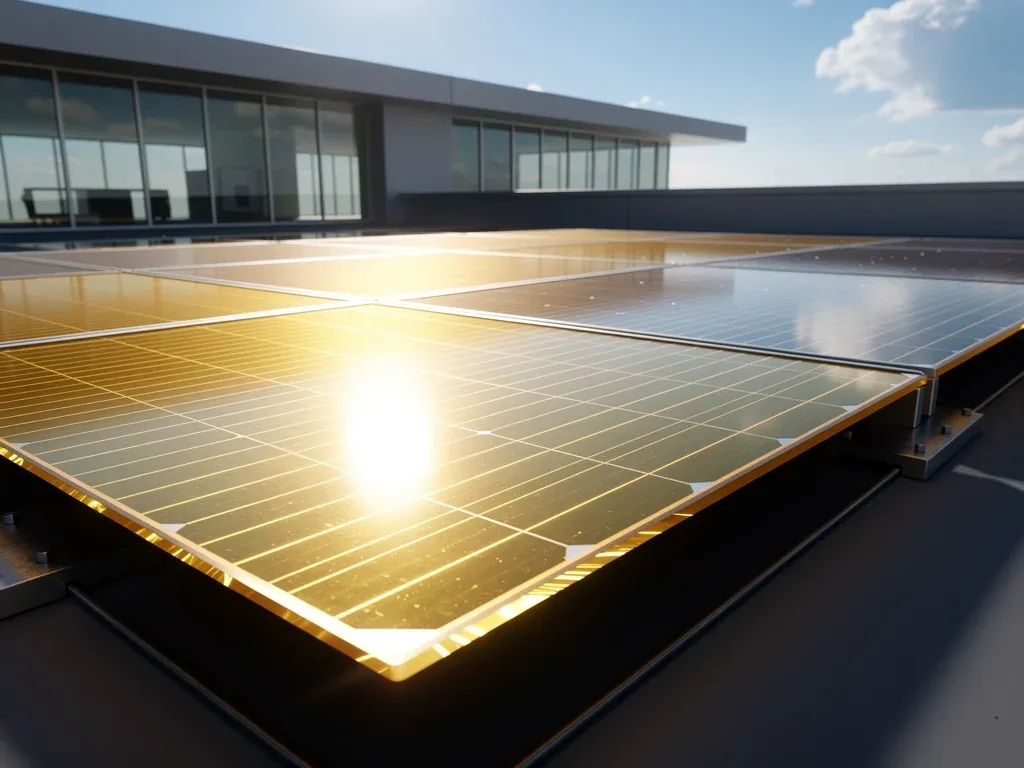
Perovskite-silicon tandem solar cells, achieving a groundbreaking 33% efficiency, hold the potential to significantly cut commercial energy costs by enhancing power output and reducing the overall footprint of solar installations.
Imagine a future where your energy bills are dramatically lower, perhaps even halved. This isn't a distant dream, but a tangible possibility with the latest advancements in solar technology. The emergence of perovskite-silicon tandem solar cells, boasting a remarkable 33% efficiency record, is poised to reshape our energy landscape. But what does this mean for commercial energy costs, and can it truly deliver on such an ambitious promise?
Understanding Perovskite-Silicon Tandem Technology
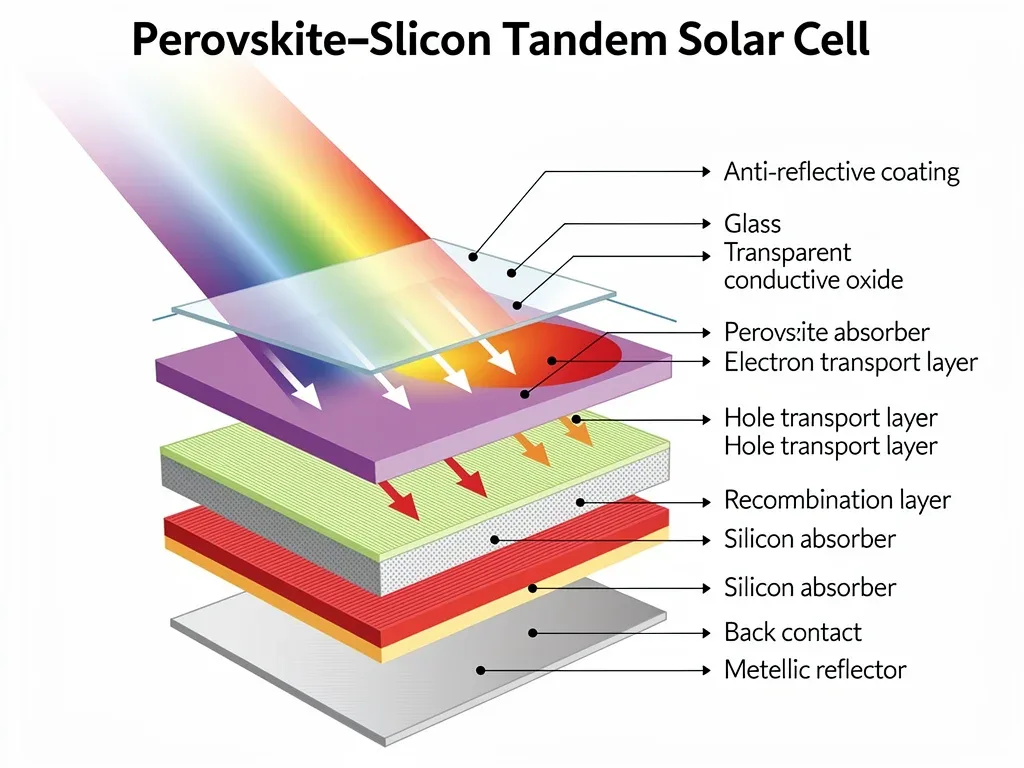
Perovskite-silicon tandem solar cells represent a significant leap forward from conventional single-junction solar panels. This innovative technology combines two different types of solar cells, each designed to capture distinct parts of the solar spectrum, thereby maximizing energy conversion efficiency. Traditional silicon cells are excellent at absorbing red and infrared light, but less efficient with blue and green light. Perovskite materials, on the other hand, excel at capturing the blue and green portions of the spectrum.
By stacking a perovskite layer on top of a silicon layer, these tandem cells create a synergistic effect. The perovskite layer acts as a 'top cell,' absorbing high-energy photons, while the silicon 'bottom cell' captures the lower-energy photons that pass through the perovskite. This layered approach allows for a much broader utilization of the solar spectrum, leading to higher overall efficiency. The recent achievement of 33% efficiency is a testament to the rapid progress in this field, pushing solar energy closer to its theoretical limits.
The Science Behind Enhanced Efficiency
The magic of tandem cells lies in their ability to overcome the Shockley-Queisser limit, which defines the maximum theoretical efficiency for single-junction solar cells. This limit is around 33.7% for silicon cells under ideal conditions, but tandem structures can exceed this by using multiple bandgaps. Each layer is optimized for a specific part of the light spectrum.
- Perovskite Layer: Absorbs high-energy photons (blue/green light).
- Silicon Layer: Absorbs lower-energy photons (red/infrared light).
- Broad Spectrum Absorption: Maximizes energy capture across the full solar spectrum.
- Reduced Energy Loss: Minimizes thermalization losses by converting more light into electricity.
This dual-layer architecture is not without its challenges, primarily related to materials stability and manufacturing complexity. However, ongoing research is steadily addressing these issues, paving the way for widespread commercialization. The potential benefits in terms of energy output and cost reduction are too significant to ignore, driving intense investment and innovation in this sector.
The 33% Efficiency Record: A Game Changer
The announcement of a 33% efficiency record for perovskite-silicon tandem solar cells sent ripples through the renewable energy industry. This isn't just an incremental improvement; it represents a substantial jump that redefines what's possible with solar power. For context, most commercial silicon solar panels currently operate in the 18-22% efficiency range. A 33% efficient panel means significantly more power can be generated from the same amount of sunlight and panel area.
This higher efficiency translates directly into several key advantages. First, it reduces the physical footprint required for a solar installation. Businesses with limited rooftop space or land can now generate more electricity, making solar a viable option for a wider range of commercial properties. Second, it can lower the balance of system (BOS) costs, which include inverters, wiring, mounting hardware, and labor. If fewer panels are needed to achieve the same power output, then fewer components and less installation time are required.
Implications for Commercial Energy Production
The commercial sector stands to gain immensely from this efficiency boost. Large industrial facilities, data centers, and commercial buildings typically have high energy demands. Meeting these demands with conventional solar often requires vast arrays, which might not always be feasible. With perovskite-silicon tandem solar, the equation changes.
- Reduced Footprint: Fewer panels needed for the same power output, ideal for urban areas.
- Higher Energy Yield: More electricity generated per square meter, improving ROI.
- Lower BOS Costs: Less hardware and labor due to optimized panel efficiency.
- Enhanced Grid Stability: Greater energy generation potential contributes to a more robust grid.
This efficiency breakthrough isn't just about generating more electricity; it's about doing so more economically and sustainably. The ability to produce more power from a smaller area can unlock new markets and applications for solar energy, particularly in regions where space is a premium. It makes solar power a more competitive and attractive option for commercial enterprises looking to reduce their operational costs and carbon footprint.
Potential to Halve Commercial Energy Costs
The bold claim of halving commercial energy costs with perovskite-silicon tandem solar is ambitious but grounded in sound economic principles. The primary driver for this potential reduction is the significant increase in energy yield per unit area. If a panel can generate nearly 50% more electricity than its conventional counterpart (e.g., jumping from 22% to 33% efficiency), the financial implications are profound.
For businesses, this means a faster return on investment (ROI) for solar installations. The initial capital expenditure for a solar system can be a barrier, but higher efficiency directly shortens the payback period. Furthermore, the reduced need for land or rooftop space can lower associated costs, such as property leases or structural reinforcements. The long-term operational savings from generating a larger portion, or even all, of a business's electricity needs can indeed lead to substantial cost reductions over the lifespan of the system.
Economic Factors and Cost Drivers
Several economic factors contribute to the potential for significant cost reduction. While the per-panel cost of tandem cells might initially be higher than silicon-only panels, the increased power output offsets this. The levelized cost of electricity (LCOE), which measures the total cost of building and operating a power plant over its lifetime divided by the total energy output, is a key metric. Higher efficiency directly lowers the LCOE.
- Increased Power Density: More watts per square foot means higher output.
- Reduced Installation Costs: Fewer panels, less wiring, and mounting hardware.
- Faster Payback Period: Quicker return on initial investment due to higher generation.
- Lower Maintenance: Potentially fewer units to inspect and maintain over time.
Beyond direct energy savings, businesses also benefit from enhanced energy independence and price stability. By generating their own power, they become less susceptible to fluctuating utility rates and grid outages. This predictability in energy costs is a significant advantage for long-term financial planning. The cascading effects of higher efficiency permeate every aspect of solar project economics, making the goal of halving energy costs a realistic aspiration for many commercial entities.
Challenges and Roadblocks to Mass Adoption
Despite the promising efficiency records, the journey of perovskite-silicon tandem solar from the lab to widespread commercial adoption is not without its hurdles. Several challenges need to be addressed before this technology can truly revolutionize the energy market and deliver on the promise of significantly reduced energy costs. These challenges primarily revolve around stability, scalability, and regulatory frameworks.
Perovskite materials, while highly efficient, have historically suffered from stability issues, particularly when exposed to moisture, oxygen, and high temperatures. While significant progress has been made, ensuring long-term durability comparable to silicon panels (which typically have 25-year warranties) is crucial for commercial trust and investment. Manufacturers need to demonstrate robust performance under real-world environmental conditions for extended periods.
Overcoming Technical and Market Obstacles
Scalability of manufacturing is another major concern. Producing high-quality perovskite layers uniformly over large areas, and integrating them seamlessly with silicon cells, requires advanced manufacturing techniques that are still being refined. The cost-effective mass production of these complex tandem structures is essential for competitive pricing. Additionally, the supply chain for some perovskite components needs to be robustly established.
- Material Stability: Ensuring long-term performance under diverse environmental conditions.
- Manufacturing Scalability: Developing cost-effective, high-volume production methods.
- Regulatory Frameworks: Adapting building codes and interconnection standards for new technology.
- Public and Investor Confidence: Building trust in a relatively new solar technology.
Furthermore, the regulatory landscape and existing infrastructure need to adapt. Grid operators and building codes may require updates to accommodate these new, higher-output panels. Investor confidence also plays a vital role; demonstrating consistent performance and reliability will be key to attracting the necessary capital for large-scale deployment. Addressing these challenges systematically will determine the pace and extent of perovskite-silicon tandem solar's impact on commercial energy costs.
Comparing Tandem with Traditional Silicon Solar
To truly appreciate the potential of perovskite-silicon tandem solar, it's helpful to compare it directly with the established leader: traditional silicon solar technology. Silicon panels have dominated the market for decades, offering proven reliability, decreasing costs, and a mature supply chain. However, they are approaching their practical efficiency limits, making significant future gains difficult.
Tandem cells, by contrast, offer a pathway to efficiencies well beyond what silicon alone can achieve. This difference isn't just academic; it translates into tangible benefits for commercial applications. For instance, a commercial building in a densely populated urban area might not have enough roof space to meet its energy demands with 20% efficient silicon panels. With 33% efficient tandem cells, meeting those demands becomes far more feasible, potentially eliminating the need for expensive grid electricity or off-site energy procurement.
Key Differentiators and Advantages
The core advantage of tandem cells lies in their spectral utilization. Silicon cells waste a portion of the solar spectrum, either because the photons are too energetic (leading to thermalization losses) or not energetic enough (passing through unabsorbed). Perovskite layers effectively 'tune' into these previously uncaptured parts of the spectrum.
- Efficiency Ceiling: Tandem cells significantly exceed silicon's practical efficiency limits.
- Space Optimization: Higher power density ideal for constrained commercial spaces.
- Spectral Harvesting: Broader absorption across the solar spectrum.
- Future Potential: Greater room for further efficiency improvements and cost reductions.
While silicon panels are a known quantity with established longevity, tandem technology promises a future of greater energy output from smaller footprints. The long-term cost benefits, especially for commercial entities looking to maximize self-consumption and reduce utility dependence, could be transformative. The initial investment might be slightly higher, but the accelerated energy generation and subsequent savings could quickly outweigh it, making tandem cells a superior option for maximizing solar asset performance.
The Future Outlook for Commercial Energy Savings
The future for commercial energy savings, propelled by advancements like perovskite-silicon tandem solar, looks increasingly bright. As efficiency records continue to be broken and manufacturing processes mature, the cost-effectiveness of solar power will only improve. This trajectory suggests a significant shift in how businesses procure and manage their energy, moving towards greater self-sufficiency and reduced reliance on traditional grids.
The potential for halving commercial energy costs is not just about the technology itself, but also about the broader economic and environmental landscape. As carbon taxes become more prevalent and corporate sustainability goals become more stringent, the economic incentive to adopt highly efficient renewable energy solutions will grow. Perovskite-silicon tandem cells offer a powerful tool in achieving both financial and environmental objectives, positioning businesses for a more sustainable and cost-efficient future.
Long-Term Impact and Market Trajectory
Looking ahead, we can anticipate several key trends. Research and development will likely focus on further enhancing stability, increasing module lifespan, and optimizing manufacturing for even lower costs. This iterative improvement will make tandem solar cells an increasingly compelling option for a wide array of commercial and industrial applications. The market share of these advanced solar technologies is expected to grow steadily, displacing less efficient options.
- Continued Efficiency Gains: Further breakthroughs expected beyond 33%.
- Cost Parity: Tandem cells becoming more cost-competitive with conventional solar.
- Wider Adoption: Increased deployment across diverse commercial sectors.
- Energy Independence: Businesses gaining greater control over their energy supply.
The integration of these high-efficiency panels with smart grid technologies, energy storage solutions, and demand-side management systems will further amplify their impact. The synergy between these innovations promises a future where commercial entities can not only halve their energy costs but also contribute significantly to a cleaner, more resilient energy infrastructure. The journey is ongoing, but the direction is clear: a more efficient, affordable, and sustainable energy future driven by cutting-edge solar technology.
| Key Aspect | Description |
|---|---|
| 33% Efficiency Record | Groundbreaking efficiency for perovskite-silicon tandem cells, significantly higher than traditional silicon. |
| Cost Reduction Potential | Higher efficiency leads to fewer panels, reduced installation costs, and faster ROI, potentially halving energy bills. |
| Technology Advantages | Combines perovskite and silicon to capture a broader solar spectrum, maximizing energy conversion. |
| Current Challenges | Stability, manufacturing scalability, and regulatory adaptation are key hurdles for widespread adoption. |
Frequently Asked Questions About Perovskite-Silicon Tandem Solar
What are perovskite-silicon tandem solar cells?▼These are advanced solar cells that combine a perovskite layer on top of a traditional silicon layer. This dual-layer structure allows them to capture a wider range of the solar spectrum, significantly boosting energy conversion efficiency compared to single-layer cells.
How does 33% efficiency impact commercial energy costs?▼A 33% efficiency means more electricity per panel. For businesses, this translates to needing fewer panels for the same power output, reducing installation costs, saving space, and accelerating the return on investment, thereby lowering overall energy expenses.
Are perovskite-silicon tandem cells commercially available now?▼While lab results are impressive, widespread commercial availability is still in its early stages. Research focuses on improving long-term stability and scaling up manufacturing processes to make them cost-effective and reliable for mass market deployment.
What are the main advantages over traditional silicon solar?▼The primary advantage is significantly higher efficiency by utilizing more of the solar spectrum. This leads to greater power generation from a smaller area, making them ideal for space-constrained commercial applications and offering enhanced energy yield.
What challenges must this technology overcome?▼Key challenges include ensuring long-term material stability under varied environmental conditions, developing scalable and cost-efficient manufacturing techniques, and adapting existing regulatory frameworks for this advanced solar technology.
Conclusion
The advent of perovskite-silicon tandem solar technology, with its groundbreaking 33% efficiency record, marks a pivotal moment in the quest for sustainable and affordable energy. While challenges remain in terms of stability and mass production, the sheer potential for dramatically reducing commercial energy costs cannot be overstated. This innovation promises to not only enhance energy independence for businesses but also to accelerate the global transition towards a cleaner, more efficient energy future. As research continues to advance, the vision of significantly lower, perhaps even halved, commercial energy bills powered by these advanced solar cells moves closer to reality, offering a compelling outlook for a more sustainable economic landscape.
