Optical Interconnect Architecture: Solving AI's Power Crisis
Advertisements

Optical interconnect architecture is paramount for overcoming the multi-gigawatt power and data bottleneck currently challenging the expansion and efficiency of nationwide AI superclusters, enabling faster, more sustainable computational growth.
The rapid evolution of artificial intelligence (AI) has brought unprecedented computational demands, pushing existing infrastructure to its limits. One of the most significant challenges facing the development of nationwide AI superclusters is the multi-gigawatt AI bottleneck, a critical issue that threatens to impede progress. This article delves into how advanced optical interconnect architecture is emerging as a pivotal solution, promising to revolutionize data transfer and energy efficiency within these colossal computing environments.
The Escalating AI Power Problem
The insatiable hunger of AI for computational power is well-documented. From training large language models to powering complex simulations, AI workloads demand immense energy resources. This demand isn't just about raw power consumption; it's also about the ability to efficiently distribute and manage that power across vast networks of processors.
Traditional electrical interconnects, while foundational to modern computing, are beginning to show their limitations in this context. As data rates increase, electrical signals suffer from greater attenuation, requiring more power to maintain signal integrity and generating significant heat. This leads to a vicious cycle: more power for data transfer means more heat, which in turn requires more power for cooling, contributing to the multi-gigawatt bottleneck.
Challenges of Electrical Interconnects
- Signal Attenuation: Electrical signals degrade over distance, necessitating re-amplification and consuming more energy.
- Heat Generation: Resistance in electrical wires produces heat, increasing cooling requirements and operational costs.
- Bandwidth Limitations: The physical properties of copper limit the achievable data rates and channel density.
- Electromagnetic Interference: Electrical signals can interfere with each other, complicating system design and requiring shielding.
These challenges are particularly acute in the context of nationwide superclusters, where thousands, even millions, of AI accelerators need to communicate seamlessly and at incredibly high speeds. The sheer scale of these deployments amplifies every inefficiency, turning minor issues into major bottlenecks that hinder performance and sustainability.
Understanding Optical Interconnect Architecture
Optical interconnect architecture refers to the use of light, typically carried through optical fibers or waveguides, to transmit data between components within a computing system. Unlike electrical signals, light signals can travel much further with minimal loss, are immune to electromagnetic interference, and can carry vastly more information simultaneously.
This technology is not entirely new; optical fibers have been the backbone of long-haul telecommunications for decades. However, integrating optical interconnects within the confines of a data center, and even directly onto processor chips, presents unique engineering challenges and opportunities. The goal is to replace energy-intensive electrical pathways with highly efficient optical ones, especially for high-bandwidth, long-distance communication.
Key Components of Optical Interconnects
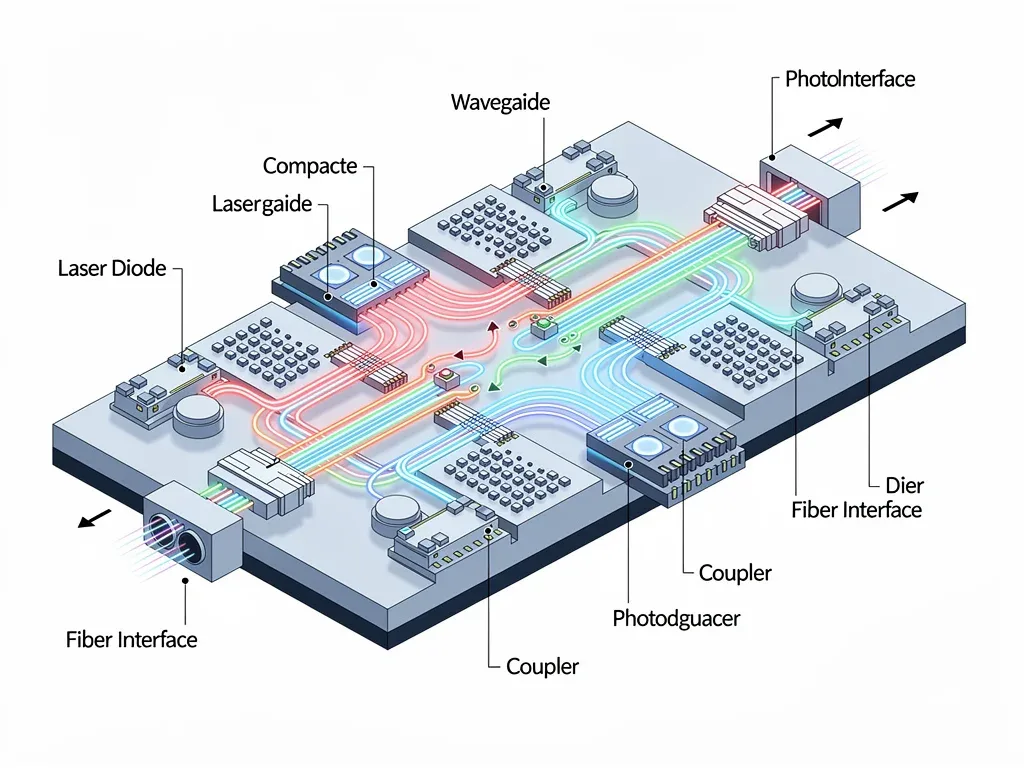
An optical interconnect system typically comprises several critical components working in concert to convert electrical signals into optical ones, transmit them, and then convert them back. This process is crucial for integrating optical technology into existing electrical computing environments.
- Lasers (Light Sources): Convert electrical signals into light pulses. Vertical-cavity surface-emitting lasers (VCSELs) are common for short-range links, while distributed feedback (DFB) lasers are used for longer distances.
- Waveguides/Optical Fibers: Guide the light signals with minimal loss. These can be traditional glass fibers or on-chip silicon waveguides.
- Photodetectors: Convert incoming light pulses back into electrical signals at the receiving end.
- Modulators: Encode data onto the light signal, allowing for high-speed information transfer.
These components, when integrated effectively, create a robust and efficient data pathway. The miniaturization and integration of these optical elements are key to their deployment within the constrained spaces of AI superclusters, offering a significant leap in performance over traditional methods.
Advantages of Optical Interconnects for AI Superclusters
The benefits of adopting optical interconnect architecture in AI superclusters are profound, directly addressing the multi-gigawatt bottleneck and enabling a new era of AI computation. These advantages span performance, energy efficiency, and scalability.
One of the most immediate benefits is the dramatic increase in bandwidth. Optical fibers can carry multiple channels of data simultaneously through wavelength-division multiplexing (WDM), effectively multiplying the data capacity of a single fiber. This allows for unparalleled data throughput between AI accelerators, which is crucial for complex model training and inference that involve massive datasets.
Enhanced Performance and Scalability
Optical interconnects provide significantly higher data rates and lower latency compared to electrical counterparts, which is critical for synchronous communication in large-scale AI models. This translates to faster training times and more responsive AI systems.
- Higher Bandwidth: Optical links can support terabits per second (Tbps) data rates, far exceeding what electrical cables can achieve over similar distances.
- Lower Latency: Light travels faster than electrons in a wire, reducing communication delays between processing units.
- Greater Reach: Optical signals maintain integrity over much longer distances without the need for frequent re-amplification.
- Scalability: The compact nature of optical fibers allows for higher density cabling, enabling more connections in a smaller footprint, which is vital for expanding supercluster capacity.
These performance enhancements directly contribute to the ability of AI superclusters to handle increasingly complex tasks. The ability to scale up without hitting immediate communication bottlenecks means that future AI models, even larger and more demanding than today's, can be developed and deployed effectively.
Addressing the Multi-Gigawatt Power Bottleneck
Perhaps the most compelling advantage of optical interconnect architecture is its potential to drastically reduce power consumption in AI superclusters, directly tackling the multi-gigawatt bottleneck. By replacing power-hungry electrical links with energy-efficient optical ones, significant energy savings can be realized.
The power consumption of electrical interconnects grows disproportionately with data rates and distances. Optical interconnects, on the other hand, consume far less power per bit transmitted. This reduction in power not only lowers operational costs but also lessens the environmental impact of these massive computing facilities, aligning with global sustainability goals.
Energy Efficiency and Sustainability
The energy savings from optical interconnects are multifaceted, impacting both direct power consumption and indirect costs like cooling.
- Reduced Transmission Loss: Optical signals experience minimal energy loss over distance, eliminating the need for power-intensive repeaters.
- Lower Cooling Demands: Less heat generated by interconnects means less energy required for cooling systems, a major power consumer in data centers.
- Smaller Footprint: Denser optical cabling can lead to more compact data centers, optimizing power distribution and cooling infrastructure.
- Sustainable Growth: By making AI computing more energy-efficient, optical interconnects enable more sustainable growth of AI superclusters, reducing their carbon footprint.
The transition to optical interconnects is not just an incremental improvement; it represents a fundamental shift in how large-scale AI infrastructure can operate sustainably. This shift is crucial for allowing AI to continue its rapid development without being constrained by energy limitations.
Integration Challenges and Future Directions
While the benefits of optical interconnect architecture are clear, its widespread adoption is not without challenges. Integrating optical components into existing electrical systems, especially at the chip level, requires significant innovation and standardization.
One of the primary hurdles is the cost of optical components and the complexity of manufacturing them at scale. The precision required for aligning optical fibers and integrating photonics with electronics can be expensive. However, ongoing research and development are continually driving down costs and improving manufacturing processes, making optical solutions more viable.
Overcoming Integration Hurdles
The industry is actively working on several fronts to accelerate the adoption of optical interconnects, from materials science to system-level design.
- Silicon Photonics: Integrating optical components directly onto silicon chips, leveraging existing semiconductor manufacturing processes.
- Standardization: Developing common interfaces and protocols to ensure interoperability between different optical components and systems.
- Hybrid Integration: Combining electrical and optical components in a way that maximizes the strengths of both technologies.
- Advanced Packaging: Innovations in packaging technologies to facilitate tighter integration and higher density of optical connections.
The future of AI superclusters heavily relies on overcoming these challenges. The convergence of silicon photonics, advanced packaging, and robust standardization efforts promises to make optical interconnects a ubiquitous technology in high-performance computing environments.
The Role of Nationwide Superclusters in AI Advancement
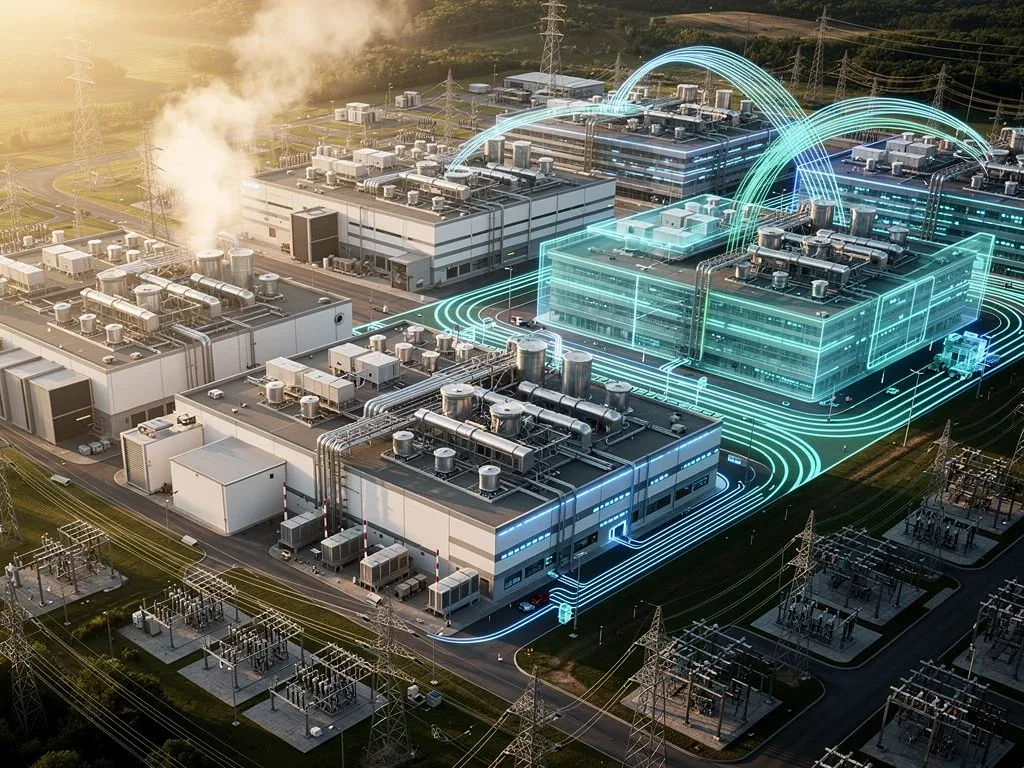
Nationwide superclusters are the backbone of advanced AI research and development. These massive computing infrastructures, often distributed across multiple geographical locations, enable the training of models that would be impossible on smaller scales. The efficiency and performance of these superclusters directly impact the pace of AI innovation.
The ability to solve the multi-gigawatt AI bottleneck through advanced optical interconnect architecture is not merely an engineering feat; it is a strategic imperative. It ensures that researchers and developers have access to the computational resources needed to push the boundaries of AI, from breakthroughs in medical diagnostics to the development of autonomous systems.
Impact on AI Research and Industry
- Accelerated Research: Faster model training and simulation cycles enable quicker iteration and discovery in AI research.
- Industrial Application: Industries from finance to manufacturing can leverage more powerful AI for optimization, prediction, and automation.
- Global Competitiveness: Nations with superior supercomputing infrastructure can lead in AI development and deployment.
- Sustainable Innovation: Energy-efficient superclusters reduce the environmental footprint of AI, making its growth more sustainable.
As AI continues to permeate every aspect of our lives, the infrastructure that supports it must evolve. Optical interconnect architecture is a cornerstone of this evolution, ensuring that the computational demands of future AI can be met efficiently and sustainably, fostering innovation across the United States and globally.
| Key Aspect | Brief Description |
|---|---|
| AI Power Bottleneck | Massive energy demands of AI superclusters creating significant operational and environmental challenges. |
| Optical Interconnects | Utilizing light for data transmission to overcome limitations of electrical interconnects. |
| Energy Efficiency | Significant reduction in power consumption and cooling needs due to optical technology. |
| Scalability & Performance | Enables higher bandwidth, lower latency, and greater density for future AI systems. |
Frequently Asked Questions About Optical Interconnects for AI
What is the primary challenge facing AI superclusters today?▼The main challenge is the multi-gigawatt AI bottleneck, driven by the immense power consumption and heat generation from traditional electrical interconnects. This limits data transfer speeds and increases operational costs, hindering the scalability and efficiency of large-scale AI computations.
How does optical interconnect architecture address the power bottleneck?▼Optical interconnects use light for data transmission, which consumes significantly less power and generates less heat than electrical signals. This reduces both direct energy consumption and the substantial power required for cooling systems in AI superclusters, leading to greater energy efficiency.
What are the key performance benefits of optical interconnects?▼Optical interconnects offer vastly higher bandwidth, lower latency, and greater data transmission distances compared to electrical alternatives. These benefits are crucial for the rapid and efficient communication between thousands of AI processors, accelerating model training and overall system responsiveness.
What is silicon photonics and why is it important for optical interconnects?▼Silicon photonics involves integrating optical components directly onto silicon chips. This is vital because it allows optical interconnects to be manufactured using existing semiconductor processes, reducing costs and enabling tighter integration with electronic circuits, paving the way for widespread adoption.
How will optical interconnects impact the future of AI superclusters?▼Optical interconnects will enable the sustainable growth and scalability of AI superclusters by providing the necessary bandwidth and energy efficiency. This will accelerate AI research, allow for the development of more complex models, and ensure that AI innovation is not limited by infrastructure constraints.
Conclusion
The journey to ever more powerful and intelligent AI systems is intrinsically linked to the underlying infrastructure that supports them. The multi-gigawatt AI bottleneck, primarily driven by the limitations of traditional electrical interconnects, presents a formidable challenge to the continued growth of nationwide AI superclusters. However, the advent and continuous refinement of optical interconnect architecture offer a compelling and sustainable pathway forward. By harnessing the power of light for data transmission, we can unlock unprecedented bandwidth, drastically reduce energy consumption, and significantly lower the operational costs associated with cooling massive data centers. This paradigm shift is not merely an upgrade; it is a fundamental re-imagining of how AI superclusters will operate, ensuring that the relentless pace of AI innovation can continue unabated, driving progress across industries and fostering a more sustainable technological future for the United States and beyond.
