National Trade Authority Enforces 15% Tariff Revision
Advertisements

The National Trade Authority has implemented a significant 15% tariff revision on strategic semiconductor imports, aiming to bolster domestic production and enhance national security while navigating complex global trade dynamics.
The recent announcement by the National Trade Authority (NTA) enforcing a semiconductor import tariff of 15% on strategic semiconductor imports has sent ripples through global markets and domestic industries. This pivotal decision aims to reshape the landscape of technological manufacturing and supply chain resilience within the United States.
understanding the new semiconductor import tariff
The National Trade Authority's decision to revise tariffs on strategic semiconductor imports marks a significant shift in national economic policy. This move is primarily driven by concerns over supply chain vulnerabilities and the desire to foster domestic semiconductor manufacturing capabilities. Understanding the nuances of this tariff is crucial for businesses and consumers alike.
The 15% tariff is not a blanket measure but specifically targets semiconductors deemed 'strategic.' These are components critical for national security, advanced computing, artificial intelligence, and other high-tech sectors. The NTA has identified these categories to ensure the policy's impact is focused and aligned with national objectives.
defining strategic semiconductors
- Advanced Logic Chips: Essential for high-performance computing and AI.
- Memory Chips: Crucial for data storage in various electronic devices.
- Specialized Processors: Used in defense and aerospace applications.
- Analog and Mixed-Signal ICs: Vital for power management and sensor interfaces.
This targeted approach is designed to minimize broader economic disruption while maximizing the desired strategic outcomes. The NTA believes that by making foreign strategic semiconductors more expensive, domestic production will become more competitive and attractive for investment.
In essence, the new tariff is a strategic tool intended to rebalance the global semiconductor ecosystem. It represents a proactive step by the United States to secure its technological future and reduce reliance on external suppliers for critical components. The implications of this policy will unfold over time, affecting various stakeholders from manufacturers to end-users.
economic implications for the united states
The enforcement of a 15% semiconductor import tariff is expected to have multifaceted economic implications within the United States. While proponents argue for long-term benefits such as job creation and enhanced national security, critics raise concerns about potential short-term costs and inflationary pressures.
One of the primary goals of the tariff is to stimulate domestic investment in semiconductor fabrication plants, known as fabs. Increased domestic production could lead to a resurgence in high-tech manufacturing jobs, bolstering the U.S. economy's industrial base. This aligns with broader initiatives to 're-shore' critical industries.
potential benefits of domestic production
- Job Creation: Direct and indirect jobs in manufacturing, research, and development.
- Technological Leadership: Strengthening the U.S. position as an innovation hub.
- Economic Resilience: Reducing vulnerability to global supply chain disruptions.
However, the immediate impact could include higher costs for U.S. companies that rely on imported semiconductors. These companies, ranging from automotive manufacturers to consumer electronics producers, might face increased production expenses, which could then be passed on to consumers in the form of higher prices.
Economists are closely watching for signs of inflation and shifts in consumer spending patterns. The balance between fostering domestic industry and managing consumer costs will be a critical challenge for policymakers. The tariff's success will largely depend on how quickly domestic production can scale up to meet demand and absorb the increased costs.
global trade and geopolitical ramifications
The 15% semiconductor import tariff by the National Trade Authority extends its influence far beyond domestic borders, triggering significant global trade and geopolitical ramifications. This protectionist measure is likely to provoke responses from trading partners and reshape international technological alliances.
Countries that are major exporters of strategic semiconductors to the U.S. market, such as South Korea, Taiwan, and certain European nations, will undoubtedly feel the direct impact of reduced demand or increased competition. This could lead to trade disputes or retaliatory measures, escalating tensions in global commerce.
international responses and trade dynamics
- Retaliatory Tariffs: Other nations might impose their own tariffs on U.S. exports.
- Diversion of Trade: Exporters might seek new markets outside the U.S.
- Supply Chain Realignment: Companies may re-evaluate their global manufacturing footprints.
Furthermore, the tariff could accelerate the fragmentation of the global semiconductor supply chain. Instead of an interconnected system, we might see the emergence of more regionalized supply networks, driven by national security concerns and technological self-sufficiency goals. This could have long-term implications for efficiency and innovation.
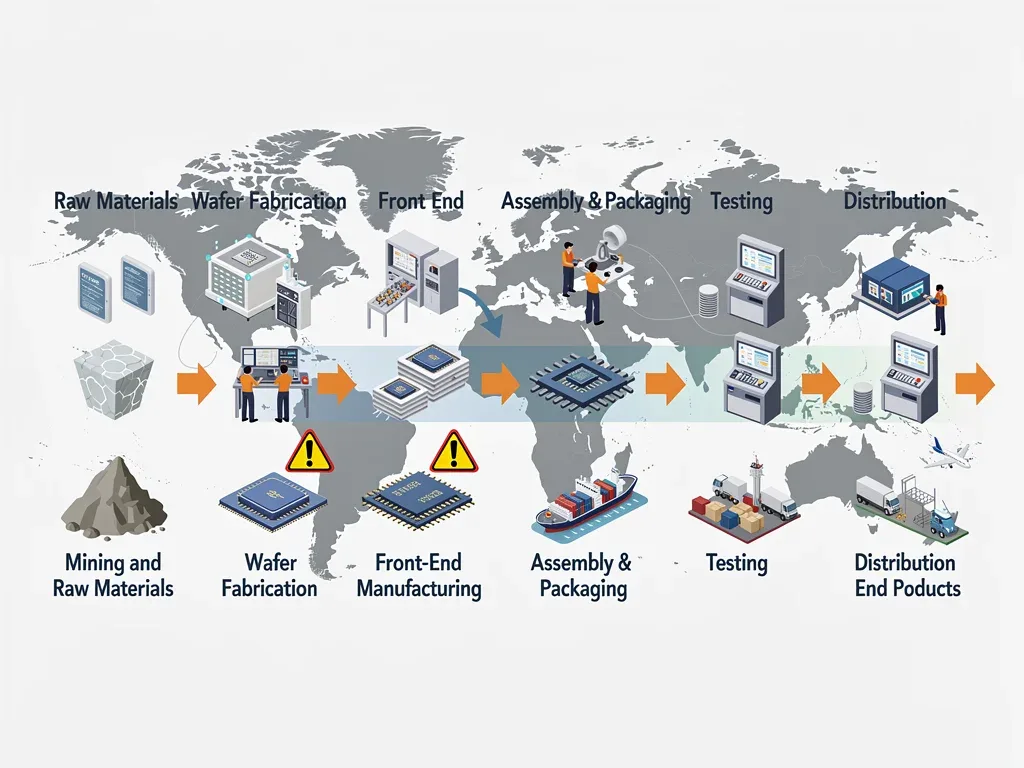
Geopolitically, the move underscores a broader trend of technological nationalism, where nations prioritize their own strategic industries. This could lead to increased competition for technological dominance and potentially strain diplomatic relations, particularly with countries that feel unfairly targeted by the new trade policies. The global response will be a key determinant of the tariff's ultimate success or failure.
impact on u.s. technology companies and consumers
The new 15% semiconductor import tariff will inevitably reverberate through the U.S. technology sector, affecting companies ranging from small startups to multinational giants, and ultimately impacting American consumers. Understanding these diverse effects is crucial for navigating the evolving market landscape.
For technology companies heavily reliant on imported strategic semiconductors, the immediate challenge will be managing increased input costs. This could force them to absorb higher expenses, reduce profit margins, or pass on the costs to consumers. Companies with robust domestic supply chains or those capable of quickly shifting to domestic suppliers may be better positioned to adapt.
challenges for tech companies
- Increased Production Costs: Direct impact on manufacturing expenses.
- Supply Chain Reconfiguration: The need to find new, potentially domestic, suppliers.
- Competitive Disadvantage: Higher costs could make U.S. products less competitive globally.
Consumers might experience higher prices for a wide array of electronic goods, from smartphones and laptops to cars and home appliances. Semiconductors are ubiquitous, and a cost increase at the manufacturing level often translates to higher retail prices. This could affect purchasing power and potentially dampen consumer demand for tech products.
Moreover, the tariff could influence innovation cycles. If companies face higher costs for essential components, they might allocate fewer resources to research and development, potentially slowing the pace of technological advancement. Conversely, if the tariff successfully stimulates domestic innovation, it could lead to new breakthroughs and products in the long run. The transition period will be critical for both businesses and consumers.
supply chain resilience and domestic manufacturing
A core objective of the National Trade Authority's 15% semiconductor import tariff is to enhance supply chain resilience and boost domestic manufacturing capabilities. The COVID-19 pandemic highlighted severe vulnerabilities in global supply chains, particularly for critical components like semiconductors, prompting a strategic re-evaluation.
By increasing the cost of imported strategic semiconductors, the NTA aims to create a more favorable environment for domestic production. This includes incentivizing the construction of new fabrication plants and expanding existing facilities within the United States. The long-term vision is to reduce dependence on foreign sources and create a more secure and stable supply of essential chips.
strategies for strengthening domestic supply chains
- Investment Incentives: Tax breaks and subsidies for U.S.-based semiconductor manufacturers.
- Workforce Development: Programs to train skilled labor for the semiconductor industry.
- Research Collaboration: Government and industry partnerships for advanced R&D.
However, building and scaling semiconductor manufacturing is a capital-intensive and time-consuming endeavor. It requires massive investments in infrastructure, highly specialized equipment, and a skilled workforce. The benefits of increased domestic capacity may not materialize for several years, posing challenges during the transition period.
The success of this initiative will hinge on sustained government support, private sector commitment, and the ability to attract and retain top talent. If successful, the U.S. could significantly de-risk its technological future, ensuring access to critical components even during geopolitical tensions or global crises. The tariff is a strong signal of commitment to this long-term strategic goal.
future outlook and policy adjustments
The implementation of the 15% semiconductor import tariff is not a static policy; its future outlook will depend heavily on its effectiveness, the global response, and the capacity for ongoing policy adjustments. The National Trade Authority will likely monitor key economic indicators and industry feedback closely.
One potential future scenario involves a gradual scaling back of tariffs once domestic manufacturing capacity reaches a sufficient level. This could be part of a phased approach to achieving supply chain independence without permanently burdening U.S. companies and consumers with higher costs. Flexibility in policy will be crucial.

factors influencing future policy decisions
- Domestic Production Growth: Rate of expansion in U.S. semiconductor manufacturing.
- Inflationary Impact: Monitoring consumer prices and overall economic stability.
- International Trade Relations: Responses from key trading partners and potential negotiations.
- Technological Advancements: Keeping pace with rapid changes in semiconductor technology.
Conversely, if the tariff does not achieve its intended goals or leads to unforeseen negative consequences, the NTA might consider alternative policy tools. These could include direct subsidies, research grants, or bilateral trade agreements designed to secure semiconductor supplies through diplomatic means rather than tariffs alone.
The global semiconductor industry is highly dynamic, characterized by rapid innovation and complex interdependencies. Any long-term strategy must be adaptable to these changes. The initial 15% tariff is a bold step, but its ultimate success will be measured by its ability to foster a robust and resilient domestic semiconductor ecosystem without unduly harming the broader economy or international relations. Continuous evaluation and strategic adjustments will be paramount.
| Key Point | Brief Description |
|---|---|
| Tariff Introduction | The National Trade Authority imposed a 15% tariff on strategic semiconductor imports to boost domestic production. |
| Economic Impact | Aims for job creation and resilience, but may cause higher costs and potential inflation for U.S. consumers. |
| Global Ramifications | Likely to trigger international responses, trade disputes, and supply chain realignments. |
| Supply Chain Goals | Strengthen U.S. self-sufficiency and reduce reliance on foreign semiconductor suppliers. |
Frequently asked questions about semiconductor import tariffs
What is the primary reason for the new 15% semiconductor import tariff?▼The main reason for the tariff is to enhance national security and bolster domestic semiconductor manufacturing. The National Trade Authority aims to reduce reliance on foreign supply chains for critical components, especially after recent global disruptions highlighted vulnerabilities.
Which types of semiconductors are affected by this tariff?▼The tariff specifically targets 'strategic' semiconductor imports. These include advanced logic chips, memory chips, specialized processors for defense, and analog/mixed-signal integrated circuits, all crucial for high-tech and national security applications.
How might this tariff impact U.S. consumers?▼U.S. consumers might experience higher prices for electronic goods. Companies importing these chips could pass increased production costs onto buyers, affecting prices of items like smartphones, laptops, and automobiles that rely heavily on semiconductors.
What are the potential global trade implications of this tariff?▼Globally, the tariff could lead to retaliatory measures from trading partners, trade disputes, and a realignment of global semiconductor supply chains. It underscores a trend towards technological nationalism and could strain diplomatic relations with affected countries.
Will this tariff guarantee increased domestic semiconductor production?▼While designed to incentivize domestic production, success is not guaranteed. Building fabs requires massive investment, time, and a skilled workforce. The tariff aims to create a favorable environment, but sustained government and private sector commitment is essential for long-term growth.
conclusion
The National Trade Authority's enforcement of a 15% semiconductor import tariff represents a landmark policy decision with far-reaching implications for the U.S. economy, global trade, and technological sovereignty. This strategic move, aimed at bolstering domestic manufacturing and securing critical supply chains, reflects a proactive approach to national security and economic resilience. While the tariff holds the promise of job creation, technological leadership, and reduced reliance on foreign suppliers, it also introduces challenges such as potential inflationary pressures and shifts in international trade dynamics. The success of this policy will depend on a delicate balance between fostering domestic growth and managing its broader economic and geopolitical consequences. As the global landscape continues to evolve, continuous monitoring and adaptive policy adjustments will be crucial to navigate the complex interplay of trade, technology, and national interest, ensuring the United States remains competitive and secure in the semiconductor industry.
