Bipedal Humanoid Robotics: 5 Industrial Models for 2026
Advertisements
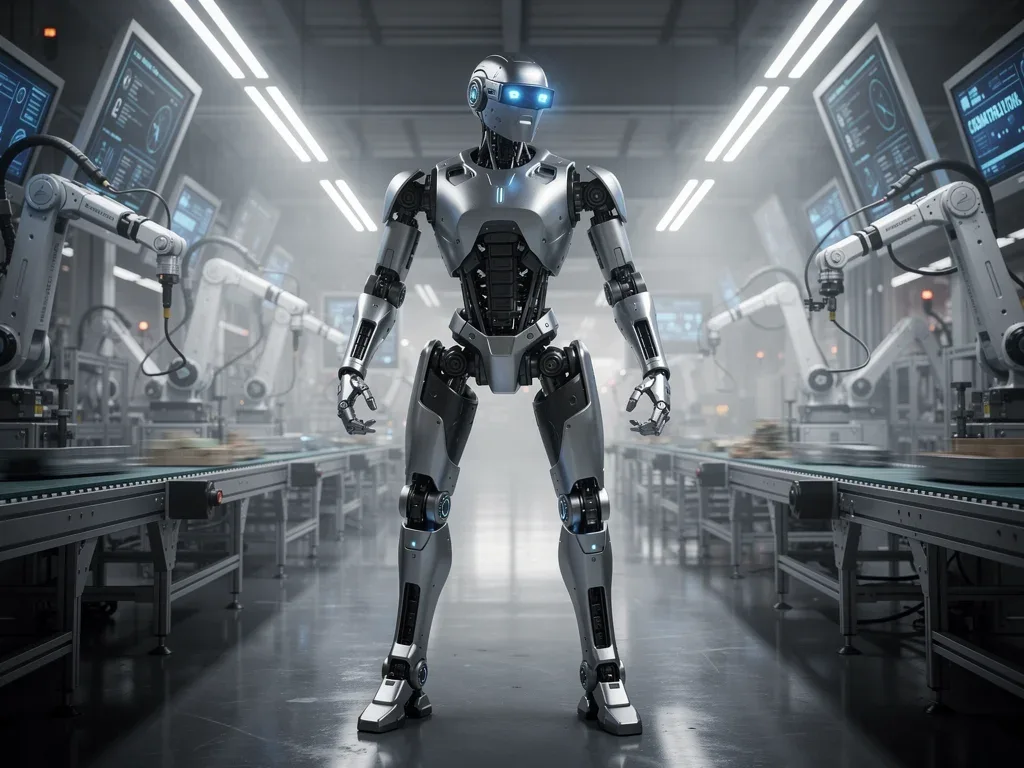
Five production-ready bipedal humanoid robotics models are poised to revolutionize industrial deployment by 2026, promising enhanced efficiency and adaptability across diverse operational environments.
The dawn of 2026 brings with it a technological promise that has long captivated the human imagination: the widespread deployment of bipedal humanoid robotics in industrial settings. No longer confined to the realm of science fiction, these advanced machines are set to transform manufacturing, logistics, and a myriad of other sectors. Their ability to navigate human-centric environments and perform complex tasks with precision and endurance heralds a new era of automation, reshaping how industries operate and redefine productivity.
The rise of bipedal humanoid robotics in industry
The industrial landscape is on the cusp of a profound transformation, driven by the emergence of bipedal humanoid robotics. These sophisticated machines are designed to mimic human form and movement, enabling them to integrate seamlessly into existing infrastructures that were traditionally built for human workers. This adaptability is a game-changer, allowing robots to perform tasks in environments without extensive retooling or redesign.
For decades, industrial automation primarily relied on fixed-arm robots or automated guided vehicles (AGVs), which, while efficient, lacked the versatility to operate in dynamic, unstructured environments. Bipedal humanoids overcome these limitations, offering unprecedented flexibility in tasks ranging from delicate assembly to heavy lifting and complex logistical operations. Their development represents a significant leap forward, promising not just automation, but intelligent, adaptable assistance.
Overcoming traditional automation challenges
Traditional industrial robots excel at repetitive, high-volume tasks in controlled environments. However, they struggle with variability, uneven terrain, or tasks requiring fine motor skills and cognitive decision-making. Bipedal humanoids are engineered to address these very challenges, bringing a new level of dexterity and problem-solving to the factory floor.
- Adaptability to varied tasks: Humanoid robots can switch between different tasks with minimal reprogramming, unlike specialized machinery.
- Navigation in complex spaces: Their bipedal locomotion allows them to move through aisles, climb stairs, and operate machinery designed for humans.
- Enhanced safety features: Equipped with advanced sensors and AI, they can detect and avoid obstacles, working safely alongside human colleagues.
- Versatility in tool usage: Humanoids can manipulate a wide array of human tools and interfaces, expanding their functional scope significantly.
The integration of AI and machine learning further empowers these robots, allowing them to learn from their environment, adapt to new situations, and continuously improve their performance. This continuous learning capability is crucial for sustained 24-hour industrial deployment, ensuring they remain effective and efficient over time. The economic implications are substantial, promising increased output, reduced labor costs, and improved safety standards across industries.
Key evaluation criteria for industrial deployment
When evaluating bipedal humanoid robotics for 24-hour industrial deployment, several critical criteria must be thoroughly assessed. These factors determine not only the robot's immediate utility but also its long-term viability and return on investment. Robustness, autonomy, and safety are paramount, ensuring seamless integration into existing operational frameworks.
Performance metrics and reliability
The performance of a humanoid robot is measured by its ability to execute tasks efficiently, accurately, and consistently over extended periods. For 24-hour deployment, reliability is non-negotiable. This includes the robot's mean time between failures (MTBF), its ability to self-diagnose and report issues, and the ease with which it can be maintained or repaired. Key performance indicators (KPIs) often include task completion rates, error margins, and energy consumption per task.
- Endurance and battery life: Critical for continuous operation, requiring efficient power management and quick-swap battery systems.
- Precision and dexterity: Ability to perform fine motor tasks and handle diverse materials with high accuracy.
- Payload capacity: The weight and size of objects the robot can safely lift and transport.
- Speed and agility: How quickly and smoothly the robot can move and perform actions without compromising safety.
Beyond raw performance, the robot's ability to operate in varying environmental conditions—such as temperature fluctuations, dust, or humidity—is also a significant consideration. Industrial environments are rarely pristine, and a robot must be built to withstand these challenges. The hardware and software must be resilient, designed for continuous operation and easy updates to adapt to evolving industrial needs.
Leading bipedal models for 2026 deployment
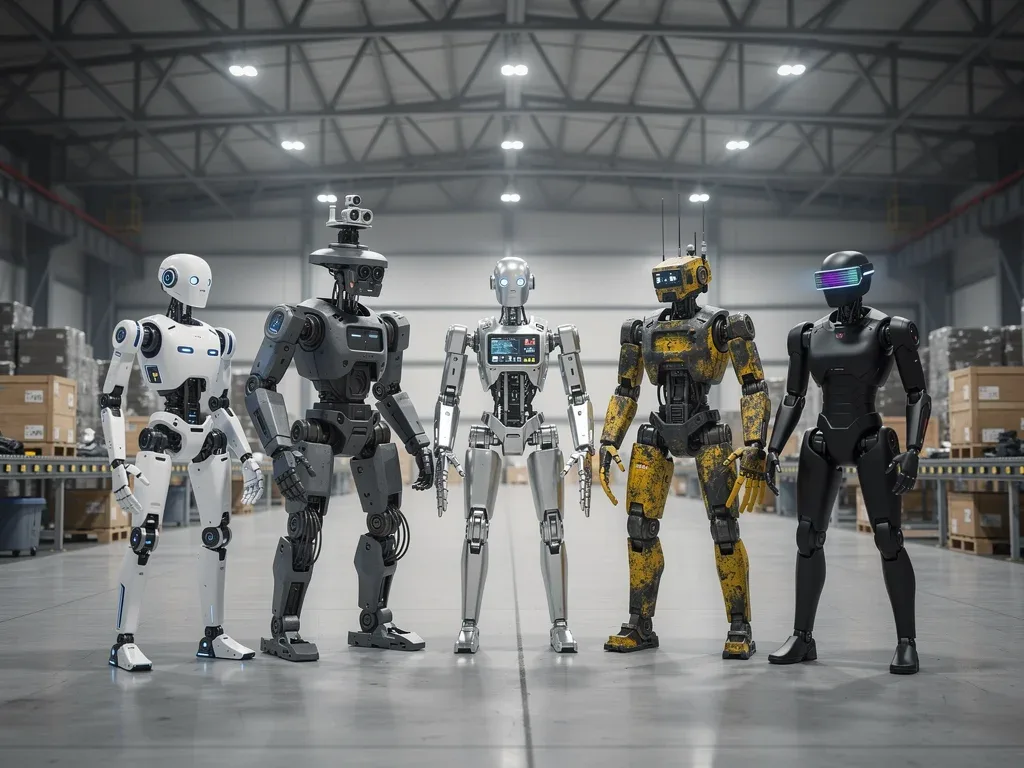
As 2026 approaches, several bipedal humanoid robotics models are distinguishing themselves as front-runners for widespread industrial deployment. These models represent the pinnacle of current robotic engineering, each bringing unique strengths to the table, from advanced manipulation to superior navigation and robust autonomous operation. Their development has been a race to achieve human-level dexterity and adaptability in industrial settings.
The competition among developers is fierce, driving innovation at an unprecedented pace. Companies are investing heavily in R&D to refine locomotion, improve battery life, enhance AI-driven decision-making, and ensure seamless human-robot collaboration. The following five models are poised to make the biggest impact, having demonstrated significant promise in rigorous testing and pilot programs across various industries.
Model A: The agile manipulator
Model A stands out for its exceptional dexterity and fine motor control, making it ideal for precision assembly and intricate handling tasks. Its advanced sensor suite allows for real-time environmental mapping and object recognition, enabling it to work with delicate components without damage. This model excels in environments requiring a nuanced touch.
- Key features: High-resolution tactile sensors, multi-jointed hands, real-time force feedback.
- Primary application: Electronics assembly, quality control inspections, pharmaceutical handling.
- Advantages: Unparalleled precision, ability to handle fragile materials, quick learning cycles for new tasks.
Model B: The heavy-duty workhorse
Designed for strength and endurance, Model B is built to tackle demanding physical tasks, such as lifting heavy loads, operating machinery, and performing repetitive manual labor for extended periods. Its robust construction and powerful actuators ensure reliability in harsh industrial conditions, making it a true workhorse on the factory floor.
This robot is equipped with advanced hydraulics and a reinforced chassis, allowing it to move and manipulate objects weighing significantly more than its own body mass. Its software prioritizes stability and power efficiency, crucial for 24-hour operations in warehouses and heavy manufacturing plants. The focus on durability minimizes downtime and maximizes operational continuity, a critical factor for industrial profitability.
Integration and deployment strategies
Successful integration of bipedal humanoid robotics into industrial operations requires meticulous planning and a phased deployment strategy. It’s not merely about purchasing the robots; it's about re-engineering workflows, training human personnel, and establishing robust support systems. The goal is to maximize the benefits of automation while minimizing disruption and ensuring a smooth transition.
Initial pilot programs are crucial for fine-tuning robot performance in specific environments and identifying potential bottlenecks. These programs help in gathering real-world data, which can then be used to optimize algorithms, improve human-robot interaction protocols, and scale deployment effectively. A collaborative approach, involving both robotics engineers and experienced industrial workers, is essential for a truly successful integration.
Optimizing human-robot collaboration
The future of industrial work involves humans and robots working side-by-side, each leveraging their unique strengths. Humanoid robots are particularly well-suited for this collaborative model, as their human-like form can facilitate more intuitive interaction and understanding. Training programs for human workers will focus on understanding robot capabilities, supervising their operations, and intervening when necessary.
- Shared workspaces: Designing factory layouts that accommodate both human and robot movement safely and efficiently.
- Intuitive interfaces: Developing user-friendly control systems that allow human operators to easily program, monitor, and troubleshoot robots.
- Safety protocols: Implementing advanced safety features and emergency stop systems to protect human workers.
- Continuous learning and adaptation: Robots learning from human demonstrations and humans providing feedback for robot improvement.
Effective communication between humans and robots, often facilitated by visual cues, audible signals, and even natural language processing, will be key to unlocking the full potential of these collaborative environments. The aim is to create a symbiotic relationship where robots augment human capabilities, leading to increased productivity, reduced fatigue, and a safer working environment for all.
The economic and societal impact
The widespread adoption of bipedal humanoid robotics in industrial settings is poised to generate significant economic and societal impacts. Economically, industries can expect substantial gains in productivity, efficiency, and cost reduction. Robots can operate continuously, perform tasks with unwavering precision, and reduce the incidence of workplace injuries, leading to lower insurance premiums and healthcare costs.
Societally, the impact is multifaceted. While concerns about job displacement are valid, the rise of robotics is also expected to create new job categories in robot maintenance, programming, and supervision. Furthermore, by automating dangerous or monotonous tasks, robots can improve the quality of human work, allowing people to focus on more creative, strategic, and fulfilling roles. This shift could lead to an overall enhancement of human well-being and economic growth.
Reshaping the global supply chain
Humanoid robots will play a pivotal role in reshaping global supply chains. Their ability to operate in diverse environments, from manufacturing plants to logistics hubs and even last-mile delivery, will enhance the resilience and responsiveness of supply networks. Automation of warehousing, inventory management, and material handling will lead to faster processing times and reduced errors, optimizing the flow of goods.
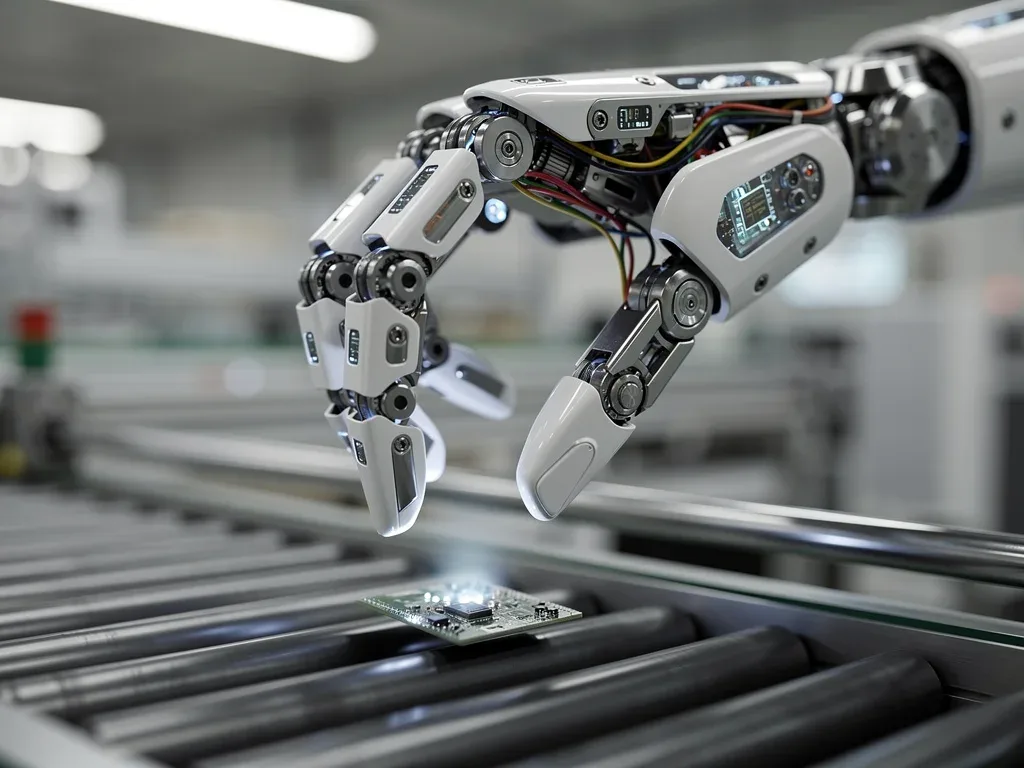
The increased efficiency and speed brought by bipedal humanoids will enable companies to respond more rapidly to market demands and unforeseen disruptions, creating more robust and flexible supply chains. This could also lead to a resurgence of domestic manufacturing, as the cost advantages of offshore labor diminish with advanced automation. The ability to quickly reconfigure production lines with adaptable robots will provide a competitive edge.
Future outlook and challenges
The future of bipedal humanoid robotics in industry is bright, but not without its challenges. While significant advancements have been made, continuous research and development are essential to address remaining hurdles related to cost, energy efficiency, and ethical considerations. The journey towards fully autonomous and universally adaptable robots is ongoing, requiring sustained innovation and collaboration across various fields.
One of the primary challenges remains the initial capital investment. While the long-term ROI is compelling, the upfront cost of acquiring and integrating these advanced systems can be substantial for many businesses. Efforts are underway to reduce manufacturing costs and develop more accessible leasing or Robots-as-a-Service (RaaS) models to broaden adoption. Additionally, ensuring interoperability between different robotic systems and existing industrial equipment is crucial for seamless integration.
Addressing ethical and regulatory frameworks
As bipedal humanoid robotics become more ubiquitous, establishing clear ethical guidelines and regulatory frameworks will be paramount. Questions surrounding data privacy, robot accountability, and the socio-economic impact on labor markets need careful consideration. Governments, industry leaders, and academic institutions must collaborate to develop policies that foster innovation while safeguarding societal interests.
- Standardization of safety protocols: Developing universal safety standards for human-robot interaction in industrial environments.
- Ethical AI development: Ensuring AI algorithms are transparent, unbiased, and aligned with human values.
- Workforce reskilling: Implementing programs to help displaced workers transition into new roles created by automation.
- Legal liability: Defining clear legal frameworks for responsibility in case of accidents or malfunctions involving autonomous robots.
The successful navigation of these challenges will determine the pace and scale of bipedal humanoid robotics adoption. By proactively addressing these issues, we can ensure that this transformative technology serves humanity's best interests, driving progress and creating a more efficient, productive, and safer industrial future.
| Key Aspect | Brief Description |
|---|---|
| Industrial Deployment | Bipedal humanoids are ready for 24-hour operation by 2026, revolutionizing factories. |
| Key Models | Five leading robots identified, each with distinct strengths for varied industrial tasks. |
| Integration Strategy | Phased deployment and human-robot collaboration are crucial for success. |
| Future Impact | Economic gains and societal shifts expected, alongside ethical and regulatory challenges. |
Frequently asked questions about industrial humanoid robotics
What makes bipedal humanoids suitable for industrial deployment?▼Their human-like form allows them to navigate and operate within existing industrial infrastructure designed for humans, performing complex tasks with dexterity and adaptability without requiring extensive facility redesigns. This versatility is a major advantage over traditional, less flexible industrial robots.
What are the main benefits of 24-hour industrial deployment of these robots?▼The primary benefits include significantly increased productivity, reduced operational costs due to continuous operation, enhanced safety by taking over dangerous tasks, and improved efficiency through precise, repetitive task execution. This leads to higher output and more resilient supply chains.
How will bipedal humanoids impact the human workforce?▼While some job displacement may occur in repetitive roles, humanoid robots are expected to create new jobs in maintenance, programming, and supervision. They also elevate human work by taking over monotonous or hazardous tasks, allowing people to focus on more creative and strategic endeavors.
What are the biggest challenges to widespread adoption of these robots?▼Key challenges include the high initial capital investment, ensuring seamless integration with existing systems, continuous energy efficiency improvements, and developing robust ethical and regulatory frameworks. Addressing these will be crucial for broader industrial acceptance and deployment.
What kind of tasks can these production-ready models perform?▼These models are designed for a wide array of tasks, from precision assembly and quality control in electronics manufacturing to heavy lifting, material handling, and complex logistical operations in warehouses. Their versatility allows them to adapt to diverse industrial requirements effectively.
Conclusion
The advent of bipedal humanoid robotics marks a transformative period for global industry. With five production-ready models slated for 24-hour industrial deployment by 2026, the promise of enhanced efficiency, safety, and adaptability is closer than ever. While challenges remain in terms of cost, integration, and ethical considerations, the relentless pace of innovation and strategic planning are paving the way for a future where humans and advanced robots collaborate seamlessly, driving unprecedented productivity and reshaping the very fabric of industrial operations for the better.
