Analyzing 2026 GDP Growth Rate of 2.1%: Strengths & Headwinds
Advertisements
The projected 2.1% GDP growth rate for 2026 reflects a complex interplay of robust core economic strengths and persistent structural headwinds in the United States, necessitating a nuanced understanding of underlying factors for accurate future economic assessments.
As we look towards 2026, understanding the nuances of the projected 2026 GDP growth rate of 2.1% is crucial for businesses, policymakers, and individuals alike. This seemingly modest figure belies a dynamic economic landscape, characterized by both enduring strengths and significant challenges. What exactly are the forces shaping this outlook, and how will they influence the American economy?
Understanding the 2026 GDP Growth Projection
The forecast of a 2.1% GDP growth rate for 2026 in the United States offers a snapshot into the anticipated economic trajectory. This figure, while not indicative of a boom, suggests a period of stable, albeit moderate, expansion following potentially volatile years. It reflects a consensus among many economists that the economy will continue to navigate a path of cautious recovery and adjustment.
Several factors contribute to this specific projection. Economic models take into account current fiscal policies, monetary stances, global economic conditions, and domestic consumer and business sentiment. A 2.1% growth rate implies a continuation of positive trends in some sectors, balanced by the dampening effects of ongoing structural issues that prevent more rapid acceleration.
The Role of Economic Models and Data
Economic projections like the 2.1% GDP growth rate are not arbitrary; they are the output of sophisticated econometric models that process vast amounts of historical and real-time data. These models consider:
- Consumer spending patterns and confidence indices.
- Business investment trends and capital expenditure plans.
- Government spending and fiscal stimulus measures.
- Net exports, influenced by global trade dynamics and currency valuations.
These inputs are constantly updated, leading to revised forecasts. The 2026 projection, therefore, represents the best current estimate given available information, acknowledging that unforeseen events can always alter the course.
Ultimately, a 2.1% growth rate signals an economy that is growing, creating jobs, and expanding output, but at a pace that demands attention to underlying vulnerabilities. It’s a rate that avoids recessionary concerns while also highlighting the need for strategic interventions to unlock higher potential.
Core Strengths Driving Economic Resilience
Despite the moderate overall growth projection, the U.S. economy possesses several fundamental strengths that provide a solid foundation and contribute significantly to its resilience. These core strengths are crucial in preventing deeper downturns and fostering sustained, even if gradual, progress. Understanding them helps contextualize the 2026 GDP growth rate of 2.1%.
Innovation and Technological Leadership
The United States remains a global leader in innovation and technological advancement. This is a perpetual engine of growth, driving productivity gains and creating new industries. From artificial intelligence to biotechnology and renewable energy, American companies are at the forefront of developing disruptive technologies.
This leadership translates into:
- Increased efficiency across various sectors.
- The creation of high-value jobs.
- Enhanced global competitiveness.
Investment in research and development (R&D) continues to be robust, ensuring a pipeline of future innovations that will contribute to economic output for years to come. This capacity for reinvention is a major stabilizing force.
Dynamic Labor Market and Consumer Spending
The U.S. labor market, while experiencing shifts, often demonstrates remarkable dynamism. A relatively flexible labor force, coupled with a culture of entrepreneurship, allows for quicker adaptation to economic changes. When employment levels are healthy, consumer spending, which accounts for a significant portion of GDP, tends to remain robust.
Consumer confidence, wage growth, and a strong savings rate in certain segments of the population provide a buffer against economic shocks. Even with inflationary pressures, the underlying demand from American consumers acts as a powerful economic stimulant.
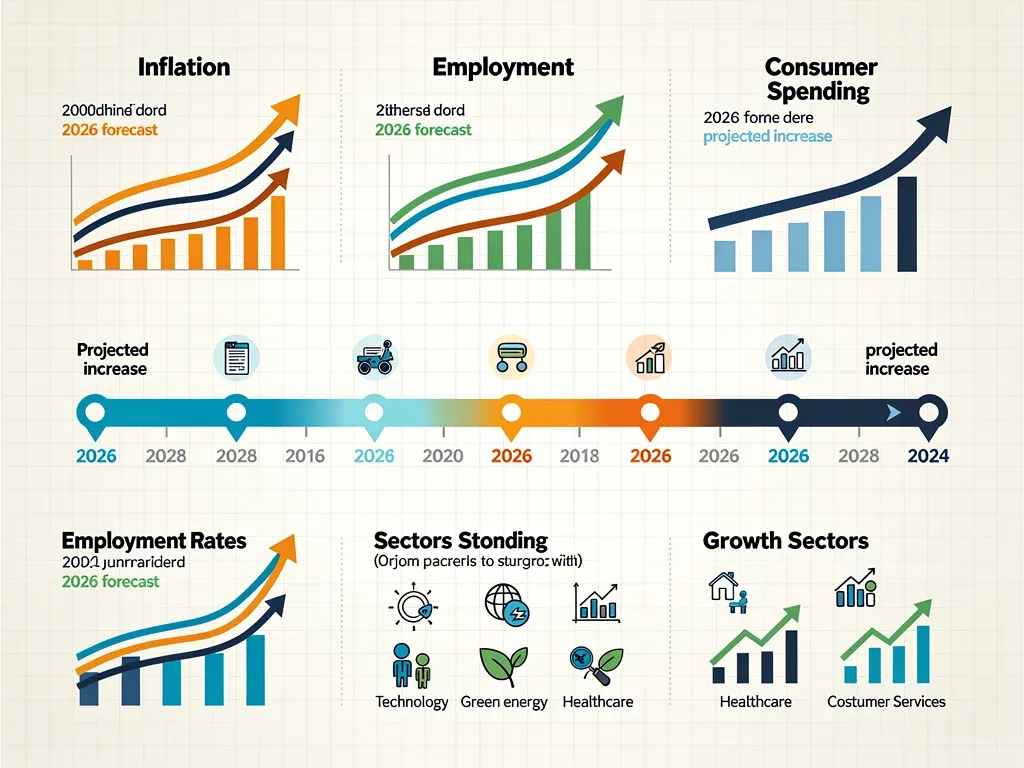
Furthermore, the diversity of the American economy, with strong sectors ranging from services to manufacturing, provides inherent stability. No single industry dominates to the extent that its downturn would collapse the entire system. This diversified structure helps cushion blows and allows for growth to emerge from different areas at different times.
In conclusion, the U.S. economy's intrinsic strengths in innovation, a dynamic labor market, and diversified sectoral contributions are pivotal in underpinning the projected 2.1% GDP growth for 2026, offering a stable base even amidst challenges.
Persistent Structural Headwinds Affecting Growth
While core strengths provide a foundation, the 2026 GDP growth rate of 2.1% is also shaped by significant structural headwinds that limit its upward potential. These are deep-seated issues that require long-term solutions and can exert a continuous drag on economic performance if left unaddressed. Understanding these challenges is key to a comprehensive economic outlook.
One of the most prominent headwinds is the evolving demographic landscape. An aging population, coupled with declining birth rates in some regions, can lead to a shrinking labor force relative to the dependent population. This places pressure on social security systems, healthcare, and overall productivity growth.
Inflationary Pressures and Monetary Policy
Persistent inflationary pressures continue to be a major concern. While central banks aim for price stability, global supply chain disruptions, energy price volatility, and strong demand can fuel inflation. To combat this, monetary policy often tightens, leading to higher interest rates.
Higher interest rates can:
- Increase borrowing costs for businesses and consumers.
- Dampen investment and spending.
- Potentially slow down economic growth.
The delicate balance between controlling inflation and avoiding a recession is a continuous challenge for policymakers, directly impacting the potential for higher GDP growth.
Geopolitical Instability and Global Trade
The global geopolitical landscape presents another significant headwind. Conflicts, trade disputes, and protectionist policies can disrupt international supply chains, raise commodity prices, and create uncertainty for businesses. The interconnectedness of the global economy means that instability in one region can have ripple effects worldwide, including on U.S. exports and imports.
Furthermore, the increasing frequency of extreme weather events and the broader challenges of climate change also pose economic risks. These can lead to infrastructure damage, agricultural losses, and increased insurance costs, all of which detract from overall economic productivity.
These structural headwinds, from demographic shifts to inflationary pressures and geopolitical uncertainties, collectively act as a brake on the U.S. economy, explaining why the 2026 GDP growth rate is projected at a moderate 2.1% despite underlying strengths.
The Impact of Fiscal and Monetary Policies
Government actions, both fiscal and monetary, play an indispensable role in shaping the economic environment and ultimately influencing the 2026 GDP growth rate of 2.1%. These policy levers are continuously adjusted in response to economic conditions, aiming to foster stability and growth while mitigating risks.
Fiscal policy, which involves government spending and taxation, can directly stimulate or cool down the economy. Large infrastructure projects, tax cuts, or increased social welfare spending can inject capital into the economy, boosting demand and employment. Conversely, measures to reduce national debt, such as spending cuts or tax increases, can have a contractionary effect.
Monetary Policy and Interest Rates
Monetary policy, primarily managed by the Federal Reserve, focuses on controlling the money supply and credit conditions. The primary tool is the federal funds rate, which influences interest rates throughout the economy. When the Fed raises rates, borrowing becomes more expensive, discouraging spending and investment, thereby aiming to curb inflation. Lowering rates has the opposite effect, encouraging economic activity.
For 2026, the trajectory of interest rates will be critical. If inflation remains elevated, the Fed might keep rates higher for longer, potentially restraining growth. If inflation subsides, there might be room for rate cuts, offering a boost to economic expansion. The balance between these actions is delicate and profoundly impacts economic outcomes.

Moreover, regulatory policies can also play a significant role. Regulations related to environmental protection, financial markets, and labor can affect business costs and investment decisions. The ongoing debate between promoting economic efficiency and ensuring social welfare often manifests in regulatory frameworks that have tangible economic consequences.
In essence, the ongoing interplay between fiscal stimulus, monetary tightening or easing, and regulatory environments will be a primary determinant of whether the economy can exceed or merely meet the projected 2.1% GDP growth rate in 2026. These policy decisions are complex, with long-lasting effects.
Sectoral Performance and Growth Drivers
A 2.1% GDP growth rate for 2026 is an aggregate figure that masks significant variations in performance across different economic sectors. While some industries may experience robust expansion, others might face stagnation or even contraction. Identifying these sectoral drivers and laggards is essential for a nuanced understanding of the overall economic picture.
The technology sector, particularly in areas like artificial intelligence, cloud computing, and cybersecurity, is expected to continue its growth trajectory. Investment in these areas remains strong, driven by both corporate demand for efficiency and consumer appetite for advanced products and services. This sector's innovation often has spillover effects, boosting productivity in other industries.
Manufacturing and Supply Chain Reshoring
The manufacturing sector could see mixed performance. While efforts towards supply chain reshoring and increased domestic production might provide a boost, challenges such as labor shortages and higher input costs could temper growth. Government incentives for strategic industries, like semiconductors and clean energy manufacturing, are likely to support specific segments.
The services sector, which constitutes the largest portion of the U.S. economy, will likely remain a primary growth engine. Healthcare, professional services, and leisure and hospitality are expected to contribute significantly, provided consumer confidence remains stable and employment levels are healthy. The shift towards experience-based consumption continues to fuel parts of this sector.
- Technology: Continued innovation in AI, cloud, and cybersecurity.
- Manufacturing: Boost from reshoring, but challenged by labor and costs.
- Services: Steady growth in healthcare, professional services, and leisure.
- Energy: Transition to renewables alongside traditional energy stability.
The energy sector will navigate the ongoing transition towards renewable sources while still relying on traditional fossil fuels. Investments in green energy infrastructure and technologies are set to grow, but global oil and gas prices will continue to influence overall economic stability and consumer spending power.
Ultimately, the diversified contributions from these various sectors, with technology and services often leading the charge, will collectively shape the U.S. economy's ability to achieve and potentially surpass the projected 2.1% GDP growth rate in 2026.
Navigating the Future: Opportunities and Risks
The projected 2026 GDP growth rate of 2.1%, while stable, also highlights a landscape rich with both opportunities for strategic growth and significant risks that could derail progress. Proactive identification and management of these factors will be crucial for businesses and policymakers.
One major opportunity lies in continued investment in infrastructure. Modernizing roads, bridges, public transit, and digital networks can enhance productivity, create jobs, and improve overall economic efficiency. Such investments have long-term benefits that can bolster future growth potential beyond the immediate projection.
Global Economic Landscape and Trade Agreements
The global economic landscape presents both opportunities and risks. New trade agreements or the strengthening of existing partnerships could open up new markets for U.S. goods and services, boosting exports. Conversely, escalating trade tensions or a slowdown in major global economies could reduce demand for American products, impacting growth.
Technological advancements, particularly in automation and AI, offer immense opportunities for productivity gains and the creation of new industries. However, they also pose risks related to job displacement and the need for significant workforce retraining to adapt to evolving demands. Addressing these transitions effectively will be vital.
- Infrastructure Investment: Potential for long-term productivity and job growth.
- Global Trade: Opportunities from new agreements, risks from tensions.
- Technological Adaptation: Productivity gains vs. workforce displacement.
- Sustainability Initiatives: New markets and jobs in green economy.
Furthermore, the transition to a greener economy presents significant opportunities for innovation and job creation in renewable energy, sustainable manufacturing, and energy efficiency. However, it also carries the risk of stranded assets in traditional industries and the need for substantial capital investment to facilitate the transition.
Effectively navigating these opportunities and risks will require adaptive policy-making, strategic business investments, and a focus on long-term human capital development. The ability to pivot and capitalize on emerging trends while mitigating potential pitfalls will largely determine whether the U.S. economy can achieve stable and sustainable growth in 2026 and beyond.
| Key Aspect | Brief Description |
|---|---|
| 2026 GDP Projection | The US economy is forecast to grow at a moderate 2.1%, signaling stable expansion. |
| Core Strengths | Innovation, dynamic labor market, and diverse sectors underpin economic resilience. |
| Structural Headwinds | Inflation, aging demographics, and geopolitical instability limit higher growth. |
| Policy Impact | Fiscal and monetary policies critically shape the economic trajectory. |
Frequently Asked Questions About 2026 GDP Growth
What does a 2.1% GDP growth rate signify for the U.S. economy in 2026?▼A 2.1% GDP growth rate suggests a stable but moderate expansion for the U.S. economy in 2026. It indicates continued economic activity, job creation, and increased output, without signaling a rapid boom or a significant slowdown, reflecting a balanced yet cautious outlook for the year.
What are the primary core strengths supporting this growth?▼Core strengths include robust innovation and technological leadership, a dynamic and adaptable labor market, and diversified economic sectors. These factors contribute to productivity gains, sustained consumer spending, and overall economic resilience, providing a strong foundation against potential shocks.
Which structural headwinds are most impactful on the 2026 GDP projection?▼Key structural headwinds include persistent inflationary pressures leading to tighter monetary policy, an aging demographic with potential labor force implications, and global geopolitical instability affecting supply chains and trade. These challenges can constrain higher growth rates.
How do fiscal and monetary policies influence the 2026 GDP growth?▼Fiscal policies (government spending, taxation) and monetary policies (interest rates, money supply by the Federal Reserve) are crucial. Their adjustments can either stimulate economic activity or temper inflation, directly impacting business investment, consumer spending, and the overall growth trajectory for 2026.
What sectors are expected to be key growth drivers in 2026?▼The technology sector (AI, cloud, cybersecurity) and the services sector (healthcare, professional services, leisure) are anticipated to be primary growth drivers. Manufacturing could see targeted boosts from reshoring efforts, while the energy sector navigates the transition to renewables.
Conclusion
Analyzing the 2026 GDP growth rate of 2.1% reveals an American economy poised for continued, albeit moderate, expansion. This trajectory is shaped by a powerful interplay of inherent strengths, such as unparalleled innovation and a resilient labor market, alongside formidable structural headwinds including persistent inflation, demographic shifts, and global uncertainties. The strategic application of fiscal and monetary policies, coupled with adaptive business strategies and targeted investments in key growth sectors, will be paramount in navigating this complex landscape. While the 2.1% projection suggests stability, the ability to capitalize on opportunities and mitigate risks will ultimately determine the long-term health and prosperity of the U.S. economy beyond 2026.
